
Table of Contents
A fitness equipment manufacturer should help you turn a purchasing brief into equipment that can be installed, operated, and supported in your actual facility. A polished catalog is useful, but it does not answer every question about product identity, quality checks, spare parts, packing, or delivery responsibilities. Those details become especially important when you are coordinating several machines, opening a new gym, or importing equipment for resale.
The most effective evaluation follows the order of the project: define the requirement, verify who will manufacture the equipment, assess representative models, agree the specification, and document acceptance. This approach gives suppliers a clear basis for quoting and gives your team a practical way to compare their responses. It also makes disagreements easier to resolve because the order is tied to evidence rather than assumptions.
This guide focuses on the decisions between a promising first conversation and a usable delivery. It explains what to request, how to organize the information, and which questions deserve a written answer before you commit to a production batch.
Define what your fitness equipment manufacturer must deliver
Start with the facility rather than a list of attractive machines. Describe whether the project is a commercial gym, personal training studio, hotel fitness room, corporate facility, or distribution order. Explain who will use the equipment, how they will be introduced to it, and what operating support will be available. These differences influence the equipment mix, adjustment requirements, documentation, and installation plan.
Separate mandatory requirements from preferences. Mandatory items might include the exercise role, an agreed installation envelope, readable operating instructions, or compatibility with an existing plate inventory. Preferred items might include a particular frame color, upholstery finish, or a visual match to another product range. Keeping the two categories separate prevents a cosmetic preference from obscuring a practical problem.
Send the same brief to every shortlisted supplier. Include your site plan, access restrictions, intended opening window, delivery destination, and the documents you expect with the order. Where measurements are incomplete, label them as provisional. A supplier should know which details are confirmed and which still require a site check.
Verify the company and the production relationship
Ask for the legal business name, business address, factory location, quotation issuer, and proposed contracting entity. Establish whether the business manufactures the quoted models, assembles them, sources them from another producer, or coordinates a mixed order. A distributor or trading company can provide useful service; the important point is that its role and responsibilities are clear.
A factory address alone does not establish where every component or finished machine originates. Ask which processes are performed on site and which are outsourced. Request a practical explanation of how an outsourced component is specified, inspected, and traced when a quality issue occurs. The purpose is to understand control of the order, not to assume that outsourcing automatically means lower quality.
For a remote review, ask for a live walkthrough that follows a representative product through identifiable areas. Compare what you see with the supplier’s explanation and the model documentation. Keep dated notes and unanswered questions. Treat photographs and videos as supporting evidence rather than substitutes for product evaluation or a clearly defined purchase specification.
Review the product range at model level
A broad catalog can simplify project coordination, but a range-level claim is not a specification for an individual machine. Obtain the exact model number, loading method, adjustment features, installed dimensions, operating clearance requirements, and included accessories for every selected item. Make sure the same identity appears on the quotation, packing list, manual, and equipment label.
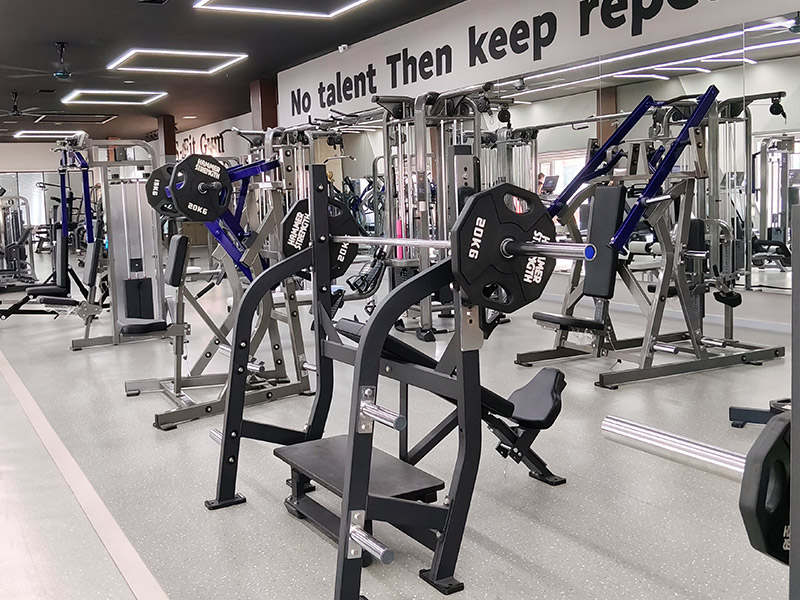
This matters when two versions share a similar name or appearance. A shoulder press with individual plate-loading points is different from a machine with a built-in weight stack. A product image may show optional storage horns or accessories that are not part of the quoted configuration. Ask the manufacturer to distinguish standard equipment from optional additions in writing.
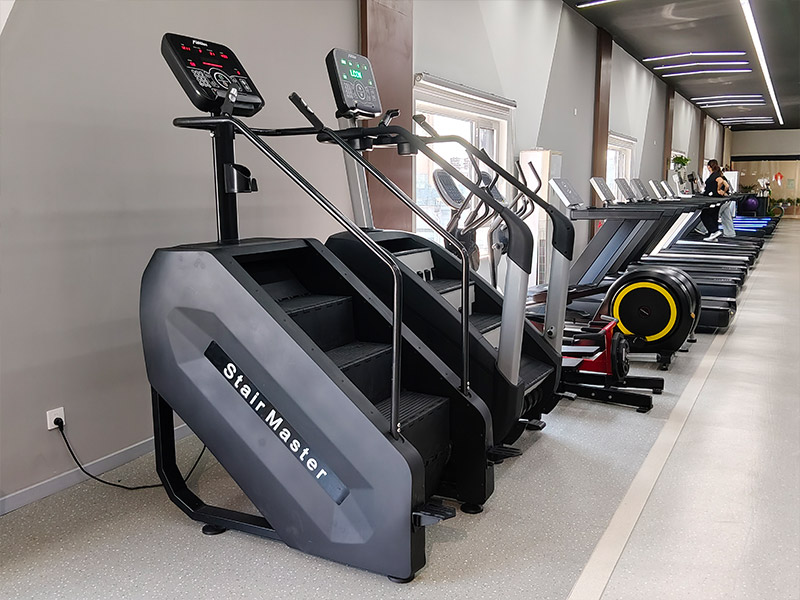
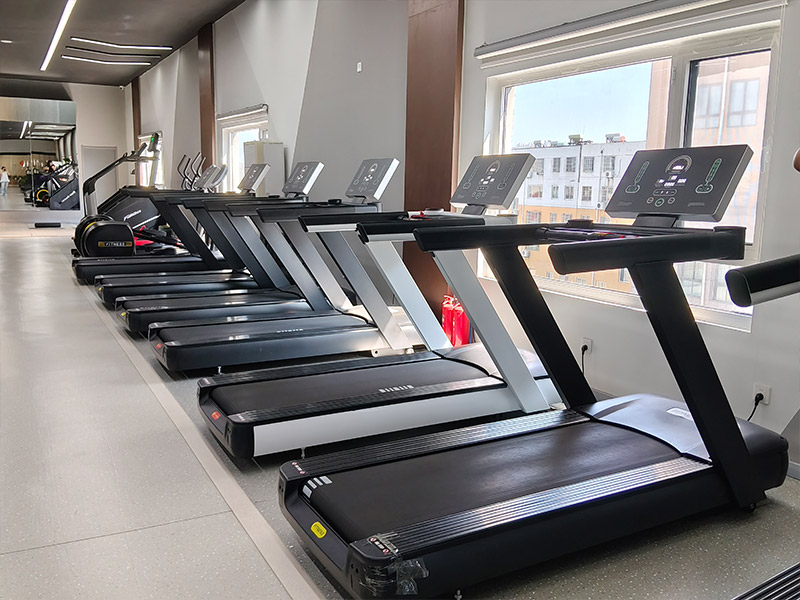
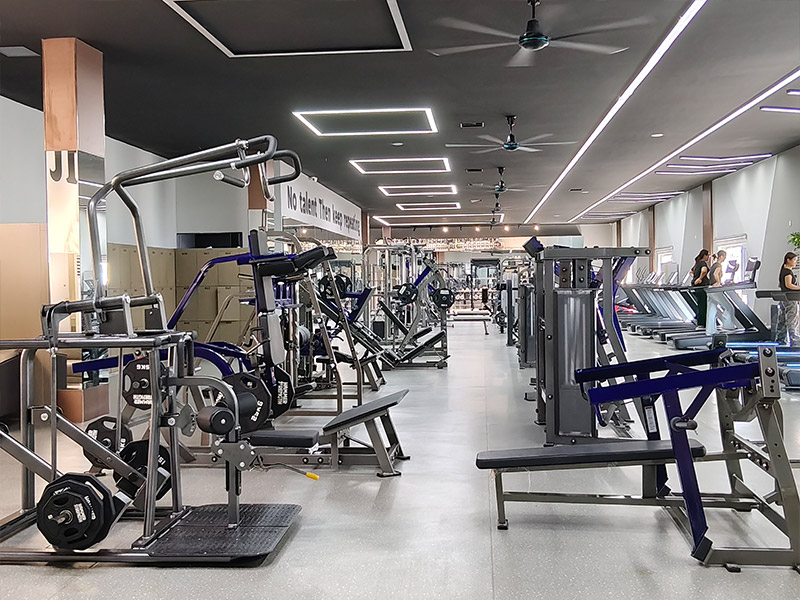
Use the current Zhining Fitness product catalog as a starting point for discussing a mixed strength and cardio order. Then request the specification for the exact models under consideration. Avoid treating a category description as confirmation of every feature, dimension, or service term across that category.
Make a factory audit answer specific questions
Organize an audit around the order’s main uncertainties. If repeatability matters, examine how parts are identified and how the approved configuration is communicated to production. If a finish is important, review the sample approval process and the method used to distinguish accepted work from items awaiting rework. If delivery timing is critical, ask how your batch is scheduled and what dependencies remain.
Ask the team to show relevant records rather than only equipment in the building. Useful examples include a production traveler, an inspection record, a nonconformance report with the sensitive customer details removed, and a packing checklist. These examples help explain how the process operates. They do not, by themselves, prove that a future order will meet every requirement.
Record findings in three groups: confirmed, awaiting evidence, and requiring a decision. Assign an owner and follow-up date to each open item. An audit becomes more useful when it produces a short, actionable closure list than when it ends with a large folder of photographs and no agreement about what remains unresolved.
Ask how quality checks connect to the equipment
Discuss incoming materials, manufacturing checks, assembly verification, and final inspection as connected stages. The manufacturer should be able to explain which checks apply to the selected model, who performs them, and how a failed check is handled. A general statement that equipment is inspected is less informative than a clear description of the relevant process.
Keep visual finish, functional operation, and documented testing distinct. A smooth coating and neat upholstery are useful observations, but they do not establish structural performance. Likewise, a machine moving smoothly during a short demonstration does not replace applicable testing or the supplier’s defined inspection plan. Ask for evidence that matches the particular claim being made.
For background on the scope of equipment standards, the ISO catalog describes general stationary training equipment safety requirements. Ask the supplier to identify the applicable standards, editions, model coverage, and supporting reports for your destination and use. Do not assume that a logo on a website confirms a particular machine’s compliance or that one report covers an entire catalog.
Evaluate a representative sample before a larger order
Select a sample that represents an important part of the intended order. A high-use station, a model with multiple adjustments, or a customized configuration may deserve particular attention. Agree whether the sample is a production unit, a demonstration unit, or an early development version, and document any differences from what would be supplied in quantity.
Use a consistent assessment sheet. Check identification, completeness, adjustment instructions, accessibility of setup points, apparent finish, and the intended movement with suitable supervision. Ask several intended user types and staff members to review the setup process. Their observations can reveal different fit and usability questions without pretending that a small trial proves suitability for everyone.
Write down the sample decision and any required changes. Photograph agreed details and give the approved configuration a revision reference. If a later batch differs, both parties need a reliable reference for the comparison. Avoid an informal approval such as “looks good” when you actually mean that several open items must still be resolved.
Turn customization into a controlled specification
Describe customization with identifiable choices: frame finish, upholstery material and color, branding artwork, labeling language, and agreed accessories. Where possible, approve physical samples or clear reference codes. Screen colors and lighting can change how a finish looks, so an image in a message should not be the only reference for a color-critical order.
Ask what a requested change affects. A different pad arrangement, adjustment system, frame geometry, or attachment may require more review than a cosmetic change. Confirm whether the revised design changes dimensions, instructions, testing evidence, spare parts, or production timing. Do not assume that a modification is minor simply because it appears small in a drawing.
Create a change log after specification approval. Each change should state what is changing, why, which models or quantities are affected, and who has approved the consequence. This protects both the buyer and manufacturer from building different versions of the same order based on separate email threads or outdated artwork files.
Compare quotations using the same scope
Build a comparison sheet with one row per exact model and separate columns for the configuration, quantity, accessories, packaging, transport scope, installation support, documentation, and warranty. Mark missing information explicitly. Two total prices cannot be meaningfully compared when one includes plates and storage while the other includes only the machine frame.
Identify assumptions that could change the order later. For example, clarify whether assembly is included, whether unloading equipment is arranged, whether replacement upholstery is available, and which documents accompany an export shipment. These questions improve the comparison without requiring the supplier to predict every future operating expense.
Avoid reducing the decision to a single advertised material or machine-weight figure. Ask how the complete model meets your agreed requirements and what evidence supports that answer. If the specification is unclear, obtain clarification before asking for a lower price. A small apparent saving can disappear when essential accessories or site work were omitted from the original scope.
Agree production milestones and communication
Ask for a schedule that distinguishes specification approval, material preparation, production, inspection, packing, dispatch, and the expected transport stage. Establish which milestones are estimates and which are commitments in the agreement. An order is easier to manage when a delay can be traced to a particular dependency rather than described only as “production is ongoing.”
Nominate one contact on each side and agree the update format. A concise update can identify completed work, the next milestone, open questions, and any change requiring a decision. Photographs are most useful when they identify the relevant model or batch and explain what the buyer is being asked to review.
Leave a documented route for exceptions. If an approved component becomes unavailable, the manufacturer should raise the proposed substitution and its consequences before using it. The buyer should respond through the agreed process rather than letting an unanswered message become an implied design approval. Good communication depends on clear decisions as well as frequent updates.
Review packing and site access together
Packaging should be planned around both transit and the delivery site. Request the packing dimensions, approximate handling weights, package identification, and assembly state for each item. Share doorway, corridor, lift, and unloading restrictions with the supplier before dispatch. A machine that fits the final training room may still be difficult to move through the building.
Ask which parts are protected, which are removed for transport, and how loose components are labeled. Confirm where the assembly instructions, hardware packs, and accessory lists will be found. A clearly identified hardware pack is more useful during installation than a collection of unmarked fasteners shared across several different machines.
Prepare the site before arrival. Identify who will receive the shipment, where packages will be checked, and where equipment can be stored while awaiting assembly. Discuss handling responsibilities with the relevant logistics and installation providers. Keep required access routes and emergency circulation available throughout the work; the delivery plan should not depend on improvised storage in busy walkways.
Use a written delivery and acceptance checklist
At receipt, compare package counts and identification with the shipping documents. Record visible package damage and missing items using the agreed reporting process. Photograph relevant evidence without discarding packaging that may be needed to investigate a transit issue. Distinguish a transport observation from a conclusion about how the damage occurred.
After assembly by the appropriate people, check the model identities, included accessories, instructions, adjustments, and completion of the manufacturer’s installation requirements. Keep incomplete or potentially unsafe equipment out of member use. A facility opening date should not replace the checks needed to release the equipment into service.
Close the acceptance process with an issue list and a responsible owner for each item. Specify what counts as resolution, such as a replacement component, a corrected label, or a further inspection. Retain the completed record alongside the order. This creates a useful starting point for later service discussions instead of relying on everyone’s memory of delivery day.
Plan after-sales support before you need it
Ask how to identify and order wear parts, which information is needed for a service request, and who will coordinate support in your location. Request the written warranty and read its model coverage, exclusions, responsibilities, and claim process. A general promise of after-sales service does not tell staff what to do when a station has to be taken out of use.
Create an equipment register with model and serial numbers, installation dates, manuals, and supplier contacts. Keep a record of staff orientation and service work. Our guide to finding a reliable gym equipment manufacturer provides further questions to use when reviewing the supplier relationship and its practical support arrangements.
Before selecting a fitness equipment manufacturer, consider whether its support process can work with your own staffing. A remote spare-parts service, a local technician network, and an on-site service agreement are different arrangements. Choose with those differences understood and documented, rather than treating the same word, “support,” as a promise of identical service.
Prepare a useful project inquiry
A strong inquiry gives the supplier enough context to respond with a relevant proposal. Include the facility type, approximate member profile, location, available plan, preferred equipment categories, and intended project timing. Explain whether you need a complete package, a small replacement order, or a sample for evaluation. Attach confirmed measurements and clearly identify provisional ones.
Ask for a response structured around the questions that matter to your decision: model selection, configuration, required space, included items, production assumptions, and service arrangements. If you are considering a mixed order, request a consolidated list that still identifies every exact model. This preserves clarity without turning the project into disconnected conversations about individual photographs.
You can learn about the company and its range through the Zhining Fitness manufacturer overview, then discuss your specific brief with the team. Use the proposal as the beginning of a documented review. The most useful next step is a clear answer to the remaining questions, whether that leads to a sample, an audit, a revised layout, or a detailed order specification.
Keep an evidence file for future orders
Save the approved specification, sample photographs, model list, inspection records, and final packing information in an organized project file. Give each version a date and a clear status. Staff should be able to distinguish a current approved drawing from an early proposal without having to reconstruct several months of messages. Keep personal and unrelated commercial information out of documents shared more widely than necessary.
When you reorder, use that file to identify what should remain consistent and what requires a fresh review. A repeated model number is useful, but it does not remove the need to confirm configuration, documentation, support, and any changes since the earlier batch. Ask the manufacturer to highlight revisions rather than assume that everyone remembers the original discussion.
Review the first order after the equipment has been in normal operation. Compare installation findings, staff questions, and service requests with the assumptions in the original brief. Share specific observations with the supplier and record agreed actions. This creates a better basis for the next project than rating the relationship only on whether the shipment arrived on time.
If you need fitness equipment or other services, please contact us!
Email: zhiningfitnessoffical@zhiningfitness.com
WhatsApp: +86 17852510552
Facebook: https://www.facebook.com/profile.php?id=61594381827546
Conclusion
Choosing a fitness equipment manufacturer is a sequence of evidence-based decisions. Define the project, verify the production relationship, review the exact models, approve a representative configuration, and agree how inspection, delivery, and support will work. Keep those decisions in a shared project record. A useful supplier relationship connects the approved specification with the equipment that arrives and the service process that follows. Start with a clear brief and ask for specific answers, so your next step is a considered sample, audit, or order rather than a decision based only on a catalog image.
FAQ
What should I ask a fitness equipment manufacturer before requesting a quote?
Share the facility type, delivery location, equipment roles, confirmed space information, and project timing. Ask for exact model identities, included accessories, installation requirements, documentation, and support terms. A consistent brief makes supplier responses easier to compare and exposes missing information before the order is finalized.
How can I evaluate a factory when I cannot visit in person?
Request an identifiable live walkthrough, model-specific documentation, relevant process records, and a representative sample where practical. Keep a list of open questions and the evidence needed to close them. Remote material supports the review, but it should not replace a defined specification or appropriate product evaluation.
Does in-house production automatically guarantee equipment quality?
No. Ask which processes are performed internally, how outsourced items are controlled, and which inspections and testing evidence apply to the selected model. The meaningful issue is how the manufacturer controls the approved specification and addresses nonconforming work, rather than a percentage or marketing statement alone.
What information should be included in an OEM equipment order?
Identify the models, quantities, configuration revision, approved finishes, artwork, labeling language, accessories, packing requirements, and acceptance process. Record changes after approval with their consequences and the affected items. This reduces the risk that different teams manufacture, inspect, or ship different interpretations of the same order.
How should after-sales service be reviewed before purchase?
Read the written model coverage, exclusions, responsibilities, and claim process. Ask how spare parts are identified, what information is required to report a fault, and who coordinates support in your location. Keep these answers with the equipment register so staff know what to do when a problem occurs.