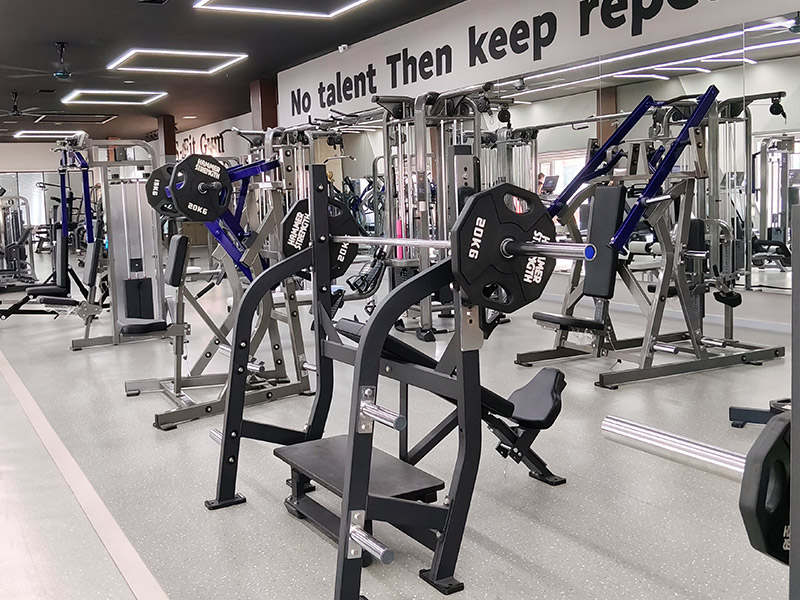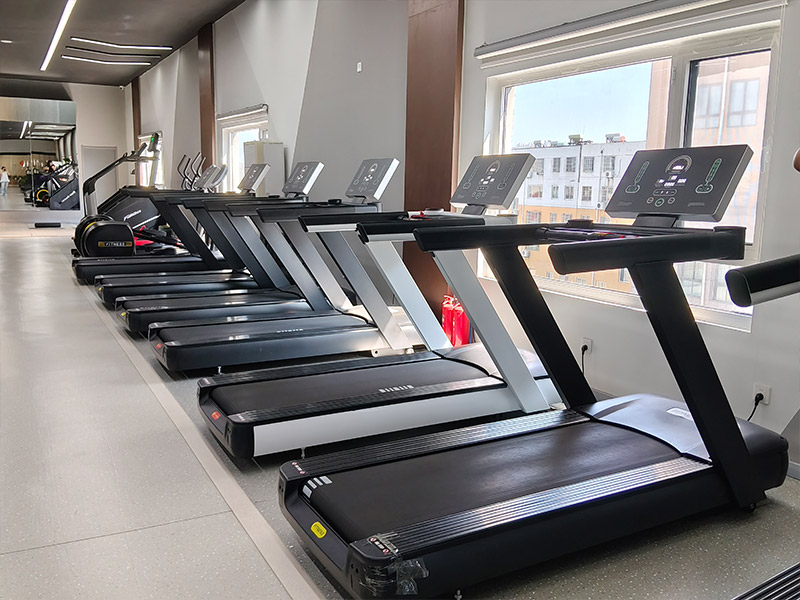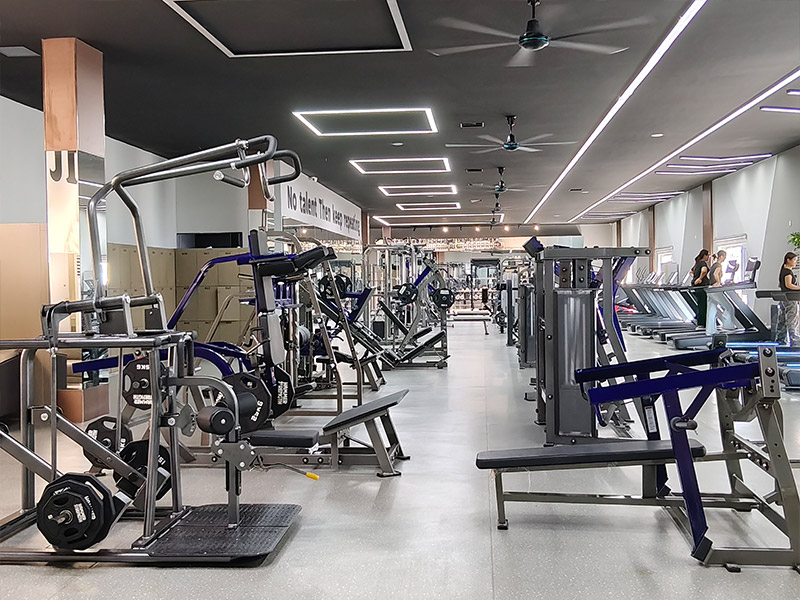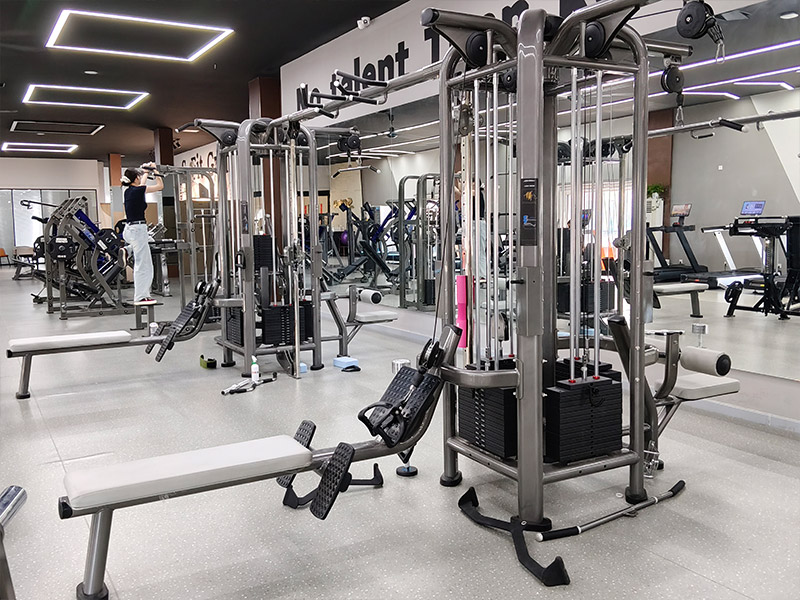
Introduction
Finding a reliable gym equipment manufacturer is one of the most important decisions for gym owners, fitness equipment distributors, wholesalers, and businesses planning to launch their own fitness brands. The right gym equipment manufacturer can provide durable products, consistent quality, competitive pricing, flexible customization, and dependable after-sales support. The wrong supplier, however, may cause production delays, inconsistent product quality, unexpected costs, and difficulties maintaining long-term customer relationships.
The global fitness industry continues to create opportunities for businesses that supply commercial gyms, home fitness users, hotels, sports facilities, and corporate wellness centers. As demand for strength training equipment grows, buyers have access to a wide range of manufacturers offering everything from individual weight benches and dumbbells to advanced multi station gym equipment, selectorized strength machines, and complete commercial gym solutions.
However, finding a gym equipment manufacturer that meets your business requirements is not always straightforward. Many suppliers advertise similar products, specifications, and manufacturing capabilities. Product photographs alone cannot demonstrate actual durability, production consistency, or the quality of a supplier’s customer service. Buyers must therefore evaluate manufacturers using clear criteria rather than relying exclusively on price or marketing claims.
A professional gym equipment manufacturer should understand the needs of its target market, maintain appropriate quality control procedures, provide clear technical specifications, and communicate effectively throughout the purchasing process. For B2B buyers, additional considerations include minimum order quantities, production capacity, private-label services, shipping arrangements, and long-term spare-part availability.
This guide explains how to find a reliable gym equipment manufacturer, evaluate product quality, compare suppliers, avoid common sourcing mistakes, and establish a productive long-term partnership. Whether you are purchasing equipment for a commercial fitness center or sourcing products for an international distribution business, these practical steps can help you make a more informed decision.
Understand Your Business Requirements Before Searching
Before contacting a gym equipment manufacturer, define exactly what your business needs. A clear purchasing plan makes it easier to identify suitable suppliers, compare quotations, and avoid spending time evaluating manufacturers that cannot meet your requirements.
Identify Your Target Market
Different customers require different types of fitness equipment. A commercial gym may prioritize durability, resistance range, user comfort, and ease of maintenance. A home fitness retailer may focus more on compact dimensions, affordable pricing, and convenient installation.
Distributors and wholesalers often need a broad product portfolio that can serve different customer segments. Private-label brands may place greater emphasis on product differentiation, customized branding, packaging, and consistent specifications across repeat orders.
Understanding your target market helps you choose a gym equipment manufacturer with relevant product experience.
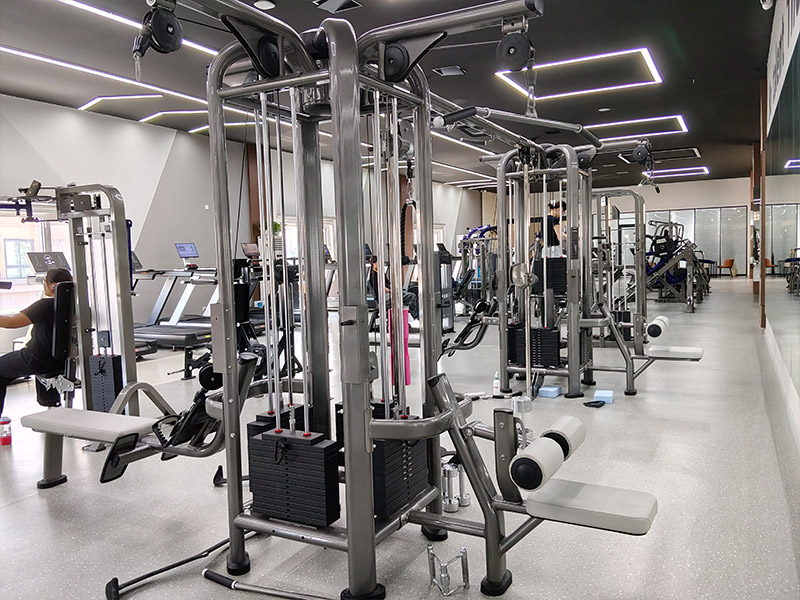
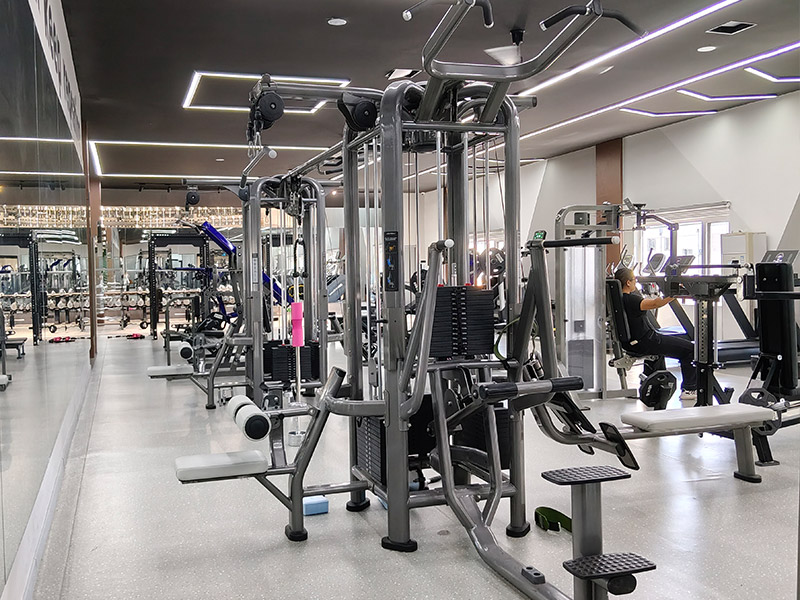
For example, if your customers primarily operate commercial gyms, you may want to focus on manufacturers offering selectorized strength machines, plate-loaded equipment, cable crossover systems, and multi station gym equipment. If your business serves home fitness users, adjustable benches, compact strength machines, dumbbells, and multifunctional training systems may be more relevant.
Define Your Product Categories
Create a list of the products you plan to purchase. Common categories include:
- Commercial strength training machines
- Multi station gym equipment
- Chest press and shoulder press machines
- Lat pulldown and seated row machines
- Leg extension and leg curl machines
- Cable crossover and functional training systems
- Weight benches and racks
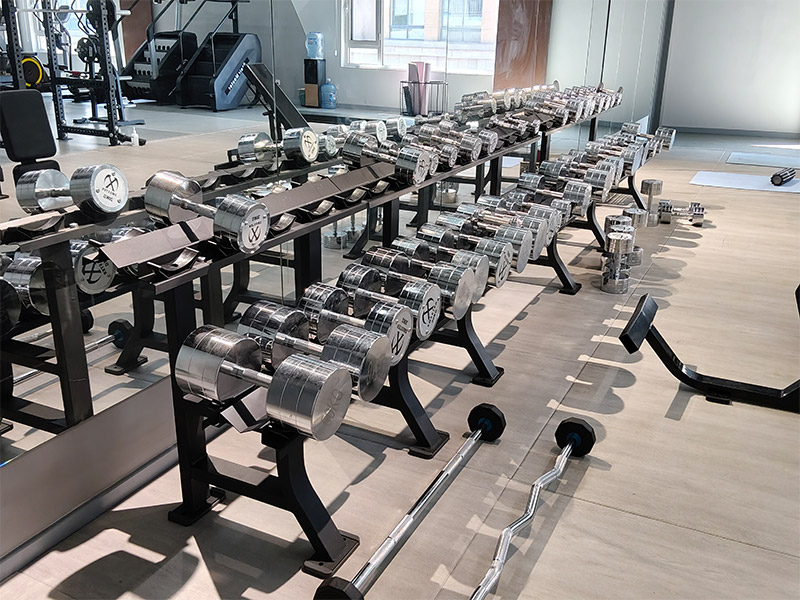
- Dumbbells, barbells, and weight plates
- Home gym systems
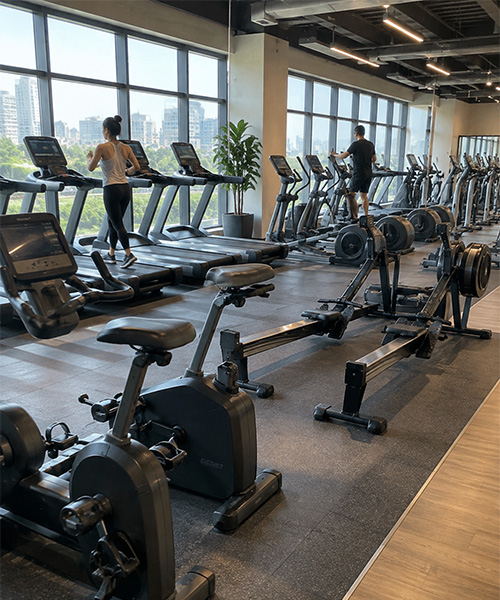
- Cardio equipment, where offered by the supplier
Not every gym equipment manufacturer specializes in every category. Some manufacturers focus on strength machines, while others produce free weights, cardio products, or complete fitness equipment collections.
Choosing a manufacturer with experience in your required categories can simplify communication and product development.
Establish Your Budget and Order Volume
Your budget should include more than the unit price quoted by the gym equipment manufacturer. Consider shipping, packaging, import duties, taxes, installation, spare parts, and other costs that may apply to your order.
You should also estimate the initial order quantity and expected future demand. Some manufacturers may accept small trial orders, while others specialize in larger wholesale or project-based purchases.
When discussing order quantities, ask about minimum order requirements, volume pricing, production lead times, and whether different models can be combined within one order.
A clear understanding of these requirements helps you identify a gym equipment manufacturer that fits your business model rather than selecting a supplier that is unsuitable for your purchasing scale.
Search for Gym Equipment Manufacturers Through Reliable Channels
Once your requirements are clear, begin searching for potential suppliers. Using several sourcing channels can help you compare manufacturers and reduce dependence on a single supplier listing.
Search Engine Research
Search engines can help you discover manufacturers through product categories, manufacturing terms, and business-specific keywords.
Useful search terms include:
- gym equipment manufacturer
- commercial gym equipment manufacturer
- strength equipment manufacturer
- fitness equipment factory
- gym machine supplier
- custom gym equipment manufacturer
- OEM gym equipment manufacturer
- private label fitness equipment manufacturer
- multi station gym equipment manufacturer
- wholesale gym equipment supplier
More specific searches can help narrow the results. For example, searching for a leg extension machine manufacturer may produce more relevant suppliers than using a broad term such as fitness equipment supplier.
Review the manufacturer’s website carefully. Look for product categories, company information, factory capabilities, technical specifications, certifications where applicable, and contact details.
A professional website can help establish initial credibility, but it does not prove manufacturing capability by itself. Further verification is necessary before placing a substantial order.
B2B Sourcing Platforms
B2B marketplaces can help buyers discover gym equipment manufacturers, compare product catalogs, and contact multiple suppliers.
These platforms may provide information about product specifications, company profiles, transaction history, or supplier verification. However, the available information varies, and platform verification should not replace independent due diligence.
When using a B2B platform, check whether the company identifies itself as a manufacturer, trading company, distributor, or a combination of these. A trading company may still be a suitable supplier, but buyers should understand who actually manufactures the products and who is responsible for quality control.
Ask for the factory address, company registration details where appropriate, product documentation, and evidence of manufacturing capabilities.
Industry Trade Shows
Fitness equipment trade shows allow buyers to inspect products directly and communicate with suppliers face to face. You can compare frame construction, upholstery, adjustment mechanisms, resistance smoothness, and product finishing in person.
Trade shows can also help you understand current product trends and discover manufacturers that may not appear prominently in online search results.
Prepare a list of questions before attending an exhibition. Ask about manufacturing capacity, customization, order quantities, production timelines, export experience, warranty coverage, and spare-part availability.
After the exhibition, compare the information collected from each gym equipment manufacturer and request written quotations for the products that meet your requirements.
Industry Referrals and Business Networks
Recommendations from gym owners, equipment distributors, fitness consultants, and other B2B buyers can provide useful sourcing leads.
A referral may help you identify suppliers that have experience serving businesses similar to yours. However, even a recommended gym equipment manufacturer should be evaluated independently because product requirements, order sizes, and service expectations differ between buyers.
Ask the person providing the referral about specific experiences, including product consistency, delivery reliability, communication, and after-sales support.
| Sourcing Channel | Main Advantage | Potential Limitation | Recommended Action |
|---|---|---|---|
| Search engines | Broad access to supplier websites | Search visibility does not prove reliability | Verify company and factory information |
| B2B platforms | Convenient supplier comparison | Listings may contain incomplete information | Check business status and product details |
| Trade shows | Direct product inspection | Travel and attendance costs | Prepare questions and compare suppliers |
| Industry referrals | Practical business feedback | Experiences may not match your needs | Verify the supplier independently |
| Industry directories | Useful for building a shortlist | Information may be outdated | Confirm current capabilities and contacts |
Using several channels helps you create a stronger shortlist of potential gym equipment manufacturers before moving to detailed supplier evaluation.
Verify That the Gym Equipment Manufacturer Is a Real Manufacturer
One of the most important sourcing steps is confirming whether a supplier actually manufactures gym equipment or primarily resells products made by other companies.
Both manufacturers and trading companies can serve legitimate business needs. The key is understanding the supplier’s role, capabilities, and responsibilities.
Request Company Information
Ask the gym equipment manufacturer for its registered business name, business address, official website, and relevant company documentation.
Where appropriate, confirm that the information is consistent across quotations, contracts, invoices, and payment instructions. Unexpected differences in company names or bank account details should be investigated before any payment is made.
For international transactions, verify the contracting entity and understand which legal business is responsible for fulfilling the order.
Request Factory Information
If the supplier claims to operate its own factory, ask for information about the manufacturing location, production processes, and facilities relevant to your products.
Depending on the product category, a gym equipment manufacturer may perform metal cutting, welding, machining, surface finishing, upholstery, assembly, testing, or final inspection.
Some manufacturers outsource selected processes to specialist partners. Outsourcing is not automatically a problem, but the supplier should explain which activities it controls and how it manages quality across the supply chain.
Arrange a Factory Audit or Video Inspection
A factory visit can provide a clearer understanding of manufacturing operations. If an in-person visit is not practical, request a live video tour showing relevant production areas, assembly operations, quality inspection, and finished products.
A recorded video or a collection of factory photographs may be useful for an initial review, but they may not establish that the facilities belong to the supplier or are currently operating as described.
For larger orders, consider an independent factory audit or inspection by a qualified third-party service provider.
Ask About Production Capacity
Production capacity matters when you need consistent deliveries or plan to expand your business.
Ask the gym equipment manufacturer about normal production lead times, monthly output for relevant products, peak-season scheduling, and the process for managing large or urgent orders.
Capacity claims should be evaluated in relation to the specific product. A supplier may manufacture many products but have limited capacity for a particular machine model or customized design.
Review Previous Projects
Ask for examples of products or projects that are relevant to your requirements. Commercial gym installations, distributor orders, and customized equipment projects may demonstrate experience with your target market.
Where possible, request references from business customers or evidence of repeat orders. Confirm that any case studies or customer references are authentic and that the supplier has permission to share the information.
A reliable gym equipment manufacturer should be able to explain its experience without making unsupported claims.
Evaluate Product Quality and Manufacturing Standards
Product quality is one of the strongest indicators of whether a gym equipment manufacturer can support your business over time. Fitness equipment must withstand repeated movement, resistance, and user interaction, so the quality of materials and construction deserves careful attention.
Inspect Frame Construction
The frame provides the structural foundation of most strength training machines. Buyers should examine the manufacturer’s specifications for materials, dimensions, structural design, and load ratings where applicable.
Inspect welds, connection points, base stability, protective finishes, and the overall consistency of the frame. Visible defects or inconsistent finishing may justify further investigation, although appearance alone cannot establish structural performance.
For commercial equipment, ask the gym equipment manufacturer about the intended usage environment, applicable product standards, and any relevant load or durability testing.
Check Cable and Pulley Systems
Many strength machines use cables and pulleys to transfer resistance. Their quality influences movement smoothness, noise, and long-term maintenance requirements.
During product testing, check whether the cable travels consistently through the intended range. Look for unusual friction, jerking, excessive slack, or irregular movement.
Ask the gym equipment manufacturer about cable specifications, pulley materials, bearing design, inspection procedures, and recommended replacement intervals.
Review Upholstery and Adjustment Mechanisms
Seats, backrests, and pads should provide appropriate support and withstand repeated use. Upholstery should be securely fitted and suitable for the intended cleaning routine.
Adjustment mechanisms are equally important. Seat slides, locking pins, starting-angle controls, and other moving parts should operate smoothly and remain securely in position.
If your products will serve users of different heights and body types, confirm that the adjustment range is appropriate.
Request Quality Control Documentation
A professional gym equipment manufacturer should be able to explain its quality control process. Depending on the product, this may include incoming material inspection, in-process checks, dimensional verification, assembly inspection, functional testing, and final product inspection.
Ask how defects are recorded, how nonconforming products are handled, and whether inspection records can be provided for your order.
If the manufacturer claims compliance with a specific standard or holds a certification, request the relevant documentation and confirm that it applies to the company, product, or process in question.
Do not assume that every certification applies to every product. Verify the scope, issuing organization, validity, and relevance to your destination market.
Test a Product Sample
Whenever practical, test a sample before placing a large order. A sample allows you to evaluate product usability and compare the actual equipment with the manufacturer’s specifications.
For strength training machines, examine the resistance movement, seat adjustment, handle comfort, assembly instructions, and finishing quality. For larger orders, consider whether an independent inspection is appropriate before shipment.
| Quality Area | What to Examine | Why It Matters |
|---|---|---|
| Frame | Materials, welds, stability, and finish | Supports structural reliability |
| Cables and pulleys | Smoothness, wear resistance, and movement | Affects resistance performance |
| Upholstery | Padding, stitching, and surface durability | Influences comfort and service life |
| Adjustment mechanisms | Ease of use and secure locking | Supports fit and consistent operation |
| Resistance system | Load selection and movement consistency | Affects training usability |
| Product assembly | Component alignment and fasteners | Helps identify manufacturing defects |
| Documentation | Specifications, instructions, and applicable test reports | Supports verification and compliance |
| Final inspection | Functional checks and defect handling | Helps maintain order consistency |
A reliable gym equipment manufacturer should be willing to discuss quality in specific, verifiable terms rather than relying only on general claims such as premium quality or world-class manufacturing.
Compare Product Range and Customization Capabilities
A manufacturer’s product range can affect how efficiently you manage purchasing, inventory, branding, and future expansion.
If your business needs several types of fitness equipment, working with a suitable supplier that offers complementary products may simplify procurement. However, a broad catalog is only useful when the manufacturer can maintain appropriate quality across the products you purchase.
Evaluate the Core Product Range
Review whether the gym equipment manufacturer offers the categories you need now and may need in the future.
For a commercial strength equipment business, relevant products may include chest press machines, shoulder press machines, lat pulldown stations, seated row machines, leg extension machines, leg curl machines, functional trainers, and multi station gym equipment.
A consistent product range can help you develop a coordinated equipment package for commercial gyms or distributors.
Ask whether products share common design standards, finishes, upholstery options, and replacement components where relevant. Consistency can make it easier to maintain a unified brand image.
Understand OEM and ODM Services
OEM and ODM services are important for businesses that want to sell fitness equipment under their own brands or develop customized products.
OEM services generally involve manufacturing products according to the buyer’s specifications or an agreed design. ODM services generally involve adapting or branding a manufacturer’s existing design, although exact service definitions vary by supplier.
A gym equipment manufacturer offering these services may support logo placement, product colors, packaging, labels, or certain design modifications.
Before proceeding, clarify which customization options are available, who owns the design and tooling, what approvals are required, and how changes may affect cost and production time.
Confirm Minimum Order Quantities
Customization may require a minimum order quantity. For example, custom upholstery colors, branded packaging, or special components may be practical only when the order reaches a certain volume.
Ask the manufacturer to distinguish standard products from customized products and explain the minimum order requirements for each.
If you are testing a new market, consider starting with standard products or a limited trial order before committing to extensive customization.
Discuss Product Development
If you need a unique machine design, discuss the development process before placing an order.
Clarify the responsibilities for drawings, specifications, prototype development, testing, design approval, and changes. Make sure both parties understand how revisions will affect cost, production time, and intellectual property.
A capable gym equipment manufacturer should be able to explain the technical limitations of a proposed design rather than promising every requested feature without evaluation.
Assess Communication and Customer Service
Communication quality can strongly influence the success of an international sourcing relationship. Even a manufacturer with suitable products may become difficult to work with if it responds slowly, provides inconsistent information, or fails to communicate production changes.
Evaluate Response Quality
During the initial inquiry, pay attention to how clearly the gym equipment manufacturer answers your questions.
A useful response should address product specifications, pricing, customization, order quantity, lead time, and other relevant requirements. If a supplier repeatedly avoids specific questions, ask for clarification before proceeding.
You should also evaluate whether the supplier understands your target market and purchasing priorities.
Confirm the Main Contact Person
Identify the person responsible for quotations, order confirmation, production updates, shipping arrangements, and after-sales service.
For complex or high-volume orders, establish a clear communication process. Confirm which channels will be used for formal approvals and which documents will serve as the official record of agreed specifications.
This reduces the risk of misunderstandings when different departments or team members are involved.
Request Written Confirmation
Important details should be documented in writing, including product models, specifications, quantities, customization, packaging, prices, production timelines, inspection requirements, and delivery terms.
Verbal agreements can be difficult to verify when problems arise. A written quotation and contract help both parties understand their responsibilities.
A professional gym equipment manufacturer should be willing to confirm key details before production begins.
Review Problem-Solving Ability
Questions about defects, delivery delays, or customization limitations can reveal how a supplier handles challenges.
Ask how the manufacturer manages nonconforming products, replacement parts, warranty claims, and production changes. The objective is not to expect that problems will never occur, but to understand whether the supplier has a clear process for resolving them.
Compare Pricing, Minimum Orders, and Total Cost
Price is an important part of supplier selection, but the lowest quotation does not always represent the best value. A reliable gym equipment manufacturer should provide pricing that is clear enough for buyers to understand what is included and what additional expenses may apply.
Request Comparable Quotations
When comparing manufacturers, request quotations for the same product configuration and order quantity. Confirm whether the quoted price includes accessories, packaging, documentation, and any customization.
Differences in specifications can make two apparently similar quotations difficult to compare. A lower price may reflect a different resistance system, fewer accessories, different materials, or a different packaging arrangement.
Ask each gym equipment manufacturer to identify the exact model and specifications covered by the quotation.
Understand Minimum Order Quantities
Minimum order quantities can influence cash flow, inventory planning, and product testing.
Some suppliers may accept small orders for standard products, while custom manufacturing may require a larger commitment. Ask whether mixed-model orders are possible and whether volume discounts apply to specific quantities.
Choose an order structure that matches your forecast rather than purchasing excessive inventory solely to achieve a lower unit price.
Calculate the Landed Cost
For international orders, the total landed cost may include:
- Product purchase price
- Customization and tooling costs
- Packaging and handling
- Inland transportation
- International freight
- Cargo insurance, where applicable
- Import duties and taxes
- Customs clearance and destination handling
- Installation and assembly
- Initial spare parts or maintenance supplies
Not every cost applies to every transaction. The correct calculation depends on the delivery terms, destination country, product classification, and agreed responsibilities.
Ask the gym equipment manufacturer and relevant logistics providers to clarify which expenses are included in the quotation.
Consider Long-Term Value
A product that costs less initially may require more frequent repairs or have a shorter useful life. Conversely, a more expensive product may not provide better value if its additional features are unnecessary.
Evaluate construction quality, maintenance needs, warranty coverage, replacement-part availability, and the suitability of the equipment for its intended environment.
For commercial gym owners and distributors, long-term reliability can be more valuable than a small reduction in the initial purchase price.
| Cost Factor | Questions to Ask | Business Impact |
|---|---|---|
| Unit price | What exact specifications are included? | Determines the base purchasing cost |
| Minimum order | What quantity is required? | Influences inventory and cash flow |
| Customization | Are there tooling or setup charges? | Affects product launch costs |
| Packaging | Is export packaging included? | Influences protection and shipping cost |
| Freight | Which transport options are available? | Affects delivery cost and timing |
| Import charges | Which duties and taxes may apply? | Influences landed cost |
| Warranty | Which defects and components are covered? | Affects potential repair expenses |
| Spare parts | How much do replacement components cost? | Influences maintenance planning |
Comparing the total cost of ownership helps you select a gym equipment manufacturer that fits your financial and operational goals.
Review Warranty, Spare Parts, and After-Sales Support
After-sales support is an important factor when evaluating a gym equipment manufacturer, particularly for commercial buyers and international distributors.
Fitness equipment contains moving parts that may require inspection, adjustment, or replacement over time. Clear warranty terms and access to suitable components can reduce disruption when maintenance is needed.
Understand Warranty Coverage
Ask the manufacturer to provide written warranty terms before placing an order.
Review the coverage period, included components, exclusions, claim procedures, and whether labor, shipping, or replacement installation is covered. Different components may have different warranty conditions.
Do not assume that a statement such as a long warranty means every component is covered for the same period. Request a breakdown where necessary.
Confirm Spare-Part Availability
Common service items may include cables, pulleys, upholstery, grips, selector pins, bearings, and adjustment components, depending on the equipment design.
Ask the gym equipment manufacturer how replacement parts are ordered, whether parts are kept in stock, and what lead times are typical.
For international buyers, confirm how parts can be shipped and whether technical documentation is available to help identify the correct component.
Ask About Technical Assistance
Some products may require assembly, adjustment, or periodic maintenance. Confirm whether the supplier provides installation instructions, maintenance manuals, product diagrams, and technical support.
For large commercial installations, ask whether professional installation or remote technical guidance is available and whether additional fees apply.
Establish a Defect Resolution Process
Before ordering, clarify how the manufacturer handles products that arrive damaged, fail inspection, or do not match the agreed specifications.
The contract should define relevant inspection procedures, notification deadlines, evidence requirements, and possible remedies.
A clear process helps both parties respond to problems more efficiently and reduces uncertainty during international transactions.
Check Export Experience and Shipping Capability
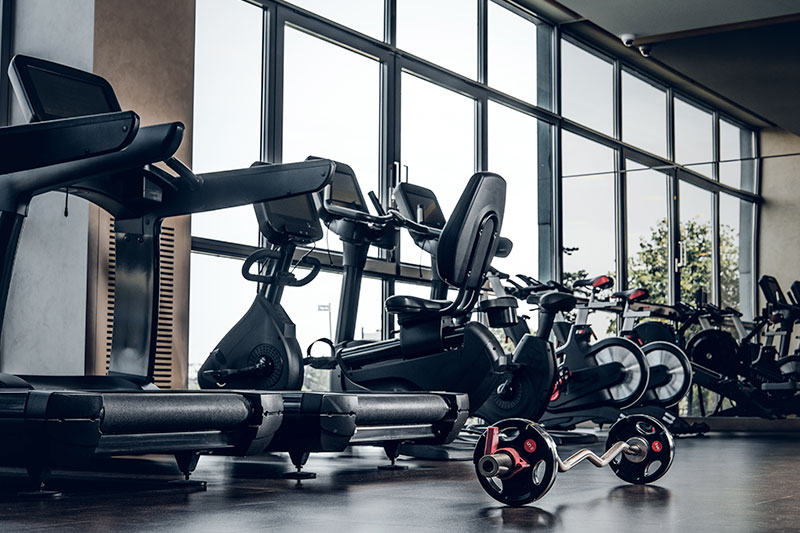
If you are importing gym equipment, the supplier’s export experience can influence how smoothly your order reaches its destination.
Large fitness machines may require careful packaging, coordinated transportation, and specific documentation. A gym equipment manufacturer familiar with international orders may be better prepared to explain the process and coordinate with logistics partners.
Confirm Export Documentation
Ask which export and shipping documents the supplier can provide. Depending on the transaction and destination, these may include a commercial invoice, packing list, transport documents, certificate of origin, or other required paperwork.
Product-specific compliance documentation may also be necessary in some markets. Confirm requirements with the relevant authorities, customs broker, or qualified compliance professional rather than assuming that one document is sufficient for every country.
Review Packaging Quality
Fitness equipment can contain heavy metal components, cables, moving parts, and upholstered surfaces. Appropriate packaging helps protect the product during handling and transport.
Ask how the gym equipment manufacturer prepares products for shipment, protects vulnerable components, and identifies packages. For large orders, request packaging specifications or photographs of a completed export shipment.
If possible, agree on packaging requirements before production begins.
Clarify Delivery Terms
Confirm the agreed delivery terms and which party is responsible for freight, insurance, customs clearance, unloading, and other logistics activities.
International commercial transactions often use Incoterms to define the responsibilities of buyers and sellers. Make sure the quotation specifies the agreed rule and named place or port where applicable.
Do not assume that the quoted product price includes delivery to your warehouse.
Plan Production and Shipping Timelines
Ask for an estimated production schedule and shipping plan. Lead times can vary according to order size, customization, production workload, and transport conditions.
For a gym opening or large installation project, build a reasonable contingency into the schedule. Confirm how the supplier will communicate changes and whether partial shipments are possible if agreed.
Common Mistakes to Avoid When Choosing a Gym Equipment Manufacturer
Even experienced buyers can encounter sourcing problems when they focus on only one aspect of supplier selection. Avoiding the following mistakes can improve purchasing decisions and reduce unnecessary risk.
Choosing Only by the Lowest Price
A low quotation can be attractive, but it should not be the only deciding factor. Differences in materials, construction, specifications, packaging, and warranty terms may explain price variations.
Compare the complete product offering and evaluate whether the supplier can meet your quality and delivery requirements.
Trusting Product Photographs Without Verification
Product images can help buyers understand a machine’s appearance, but they cannot prove the quality of materials, resistance performance, or manufacturing consistency.
Request technical specifications, videos, samples, and independent inspections where appropriate.
Failing to Confirm Specifications
A purchase order should identify the exact product model, dimensions, materials where relevant, resistance system, included accessories, finish, packaging, and other agreed requirements.
Without clear specifications, buyers and manufacturers may have different expectations about what will be delivered.
Skipping Sample Evaluation
For substantial orders, failing to test a sample can increase the risk of discovering problems only after shipment.
When feasible, approve a representative sample or first production unit before the supplier proceeds with the full order.
Ignoring After-Sales Support
A gym equipment manufacturer may offer attractive prices but provide limited help with repairs, replacement parts, or warranty claims.
Evaluate the supplier’s service arrangements before placing an order, especially if your business depends on equipment availability.
Ordering Too Much Too Soon
A large initial order may reduce unit pricing but increase inventory and cash-flow risk. If you have not tested a product or confirmed demand, consider a smaller initial order when commercially feasible.
Use actual sales performance and customer feedback to guide future purchasing quantities.
Build a Long-Term Partnership with Your Gym Equipment Manufacturer
Finding a reliable gym equipment manufacturer is not only about completing one transaction. For distributors, wholesalers, commercial gym operators, and private-label brands, a long-term supplier relationship can improve purchasing efficiency and product consistency.
Share Clear Forecasts
Where possible, provide the manufacturer with realistic purchasing forecasts. This can help both parties plan production, materials, and delivery schedules.
Forecasts should be distinguished from confirmed orders so that the supplier understands which quantities are commitments and which are estimates.
Standardize Product Specifications
Maintain clear product specifications for each model you purchase. Include approved materials, dimensions, finishes, accessories, packaging, and any customization requirements.
Using consistent specifications can reduce the risk of receiving different versions of the same product across repeat orders.
Review Supplier Performance
Evaluate the gym equipment manufacturer periodically using measurable indicators such as delivery performance, product defect rates, response times, warranty handling, and spare-part availability.
Discuss recurring problems openly and agree on practical corrective actions. Regular performance reviews can help both businesses improve the working relationship.
Plan Product Development Together
If your business expands, you may want to introduce new strength machines, functional training products, or complete equipment packages.
A supplier that understands your market and communicates effectively may help you evaluate product opportunities, adapt existing designs, or plan customized solutions.
Any development project should include clear specifications, responsibilities, approval procedures, cost estimates, and delivery milestones.
Maintain Professional Documentation
Keep copies of quotations, contracts, product specifications, approved samples, inspection records, invoices, and shipping documents.
Good documentation makes it easier to manage repeat orders, resolve disputes, and verify that products meet agreed requirements.
If you need fitness equipment or other services, please contact us!
Email: zhiningfitnessoffical@zhiningfitness.com
WhatsApp: +86 17852510552
Facebook: https://www.facebook.com/profile.php?id=61594381827546
Conclusion
Finding a reliable gym equipment manufacturer requires a structured approach that goes beyond comparing prices or reviewing product photographs. Buyers should first define their business needs, identify suitable suppliers, and verify whether manufacturers have the relevant production capabilities.
Product quality should be evaluated through technical specifications, frame construction, resistance performance, adjustment mechanisms, upholstery, and quality control procedures. Buyers should also examine customization options, minimum order quantities, communication quality, warranty coverage, spare-part availability, and export experience.
For international B2B buyers, calculating the total landed cost is particularly important. Product pricing, packaging, freight, import charges, installation, and maintenance can all influence the long-term value of a purchase.
A reliable gym equipment manufacturer should be able to provide clear documentation, explain its manufacturing processes, confirm agreed specifications, and communicate effectively when challenges arise. Sample testing and independent inspection can provide additional confidence before a large order is shipped.
Ultimately, the best gym equipment manufacturer is the supplier that consistently meets your product requirements, supports your business goals, and offers a practical foundation for long-term cooperation. By using a clear evaluation process and documenting expectations carefully, you can reduce sourcing risks and build a more dependable fitness equipment supply chain.
FAQ
How Can I Find a Reliable Gym Equipment Manufacturer?
You can find a reliable gym equipment manufacturer through search engines, B2B sourcing platforms, industry trade shows, professional referrals, and industry directories. Shortlist potential suppliers, verify their business and manufacturing information, review product specifications, request quotations, and evaluate samples or arrange inspections before placing a large order.
What Should I Check Before Choosing a Gym Equipment Manufacturer?
Check the manufacturer’s production capabilities, product quality, technical documentation, quality control procedures, customization services, minimum order quantities, pricing, warranty coverage, and spare-part availability. For international orders, also review export experience, packaging, shipping arrangements, and the supplier’s communication quality.
Is It Better to Buy Directly from a Gym Equipment Manufacturer?
Buying directly from a gym equipment manufacturer may provide more direct communication about product specifications, customization, production schedules, and quality requirements. However, a qualified distributor or trading company may offer useful sourcing, logistics, or service support. The best choice depends on your order size, product requirements, budget, and preferred purchasing process.
How Do I Verify the Quality of a Gym Equipment Manufacturer’s Products?
Request technical specifications, quality control documentation, and relevant testing or certification records. Inspect the frame, cables, pulleys, upholstery, adjustment mechanisms, and resistance performance. When practical, test a sample or use an independent inspection service to verify that the products meet the agreed specifications.
What Questions Should I Ask a Gym Equipment Manufacturer Before Ordering?
Ask about product specifications, production capacity, minimum order quantities, pricing, customization, lead times, packaging, warranty terms, spare parts, and after-sales support. You should also clarify payment terms, inspection procedures, delivery responsibilities, and the process for handling defective or nonconforming products before confirming the order.