Introduction
The fitness industry continues to evolve as gym owners, fitness center operators, hotel managers, and commercial fitness investors look for better ways to attract members and improve training experiences. In 2026, investing in the right commercial gym equipment is more important than ever. Modern fitness facilities need equipment that combines durability, versatility, safety, performance, and long-term value.
Whether you are opening a new fitness center, upgrading an existing gym, or expanding a fitness equipment distribution business, choosing the right commercial gym equipment can directly influence customer satisfaction, operational efficiency, and profitability. From strength training machines and free weights to cardio equipment and functional training systems, every purchase should support your target audience and business objectives.
Unlike home fitness equipment, commercial gym equipment is designed for frequent use by multiple users throughout the day. It must withstand demanding training sessions, maintain stable performance, and provide a comfortable workout experience for people with different fitness levels. For this reason, purchasing decisions should consider not only the initial price but also construction quality, maintenance requirements, available space, and expected service life.
This guide explores the commercial gym equipment worth investing in for 2026, explains which machines deliver the greatest practical value, and provides useful advice for building a well-equipped commercial fitness facility. By understanding current training needs and evaluating equipment based on long-term performance, gym owners can make smarter purchasing decisions and create a competitive fitness environment.
Why Commercial Gym Equipment Is Worth Investing in for 2026
Commercial gym equipment is a fundamental investment for any professional fitness facility. The right combination of machines and training accessories helps gyms serve different customer groups, optimize floor space, and deliver consistent workout experiences.
In 2026, gym owners should focus on equipment that offers practical functionality rather than purchasing machines simply because they look impressive. A successful fitness facility needs a balanced selection of strength equipment, free weights, cardio machines, and specialized training stations.
Growing Demand for Professional Strength Training
Strength training remains an important part of many fitness programs. Members want to build muscle, improve physical performance, increase strength, and support general health. As a result, commercial gyms need reliable strength training equipment that accommodates beginners, experienced lifters, and personal training clients.
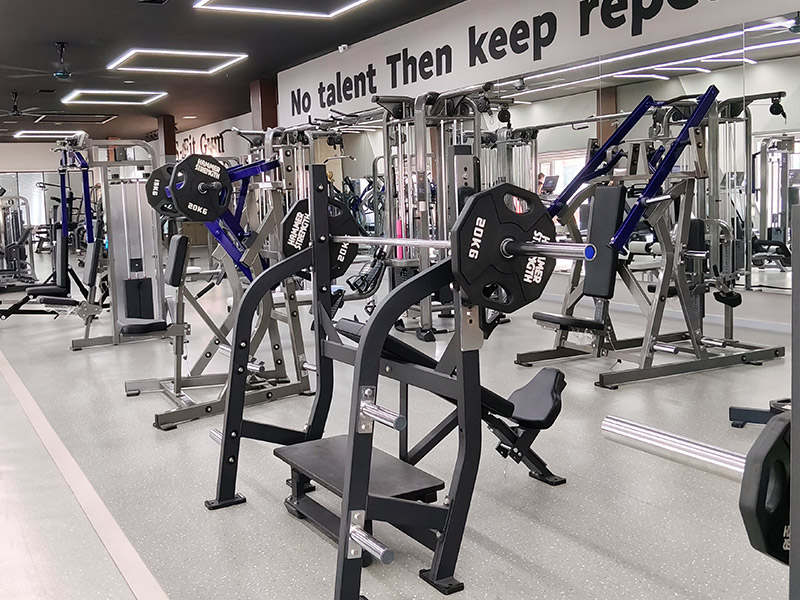
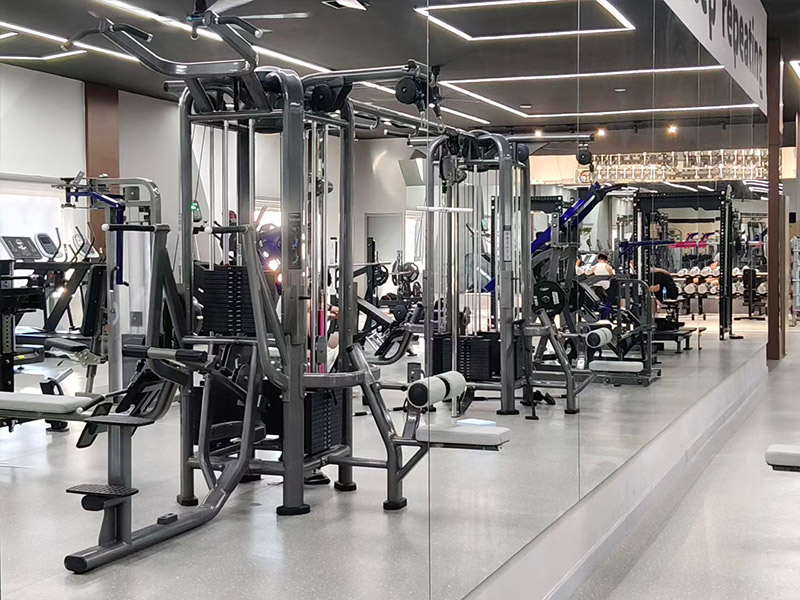
Commercial strength equipment includes chest press machines, shoulder press machines, lat pulldown machines, rowing machines, leg extension machines, leg curl machines, and multifunctional cable stations. These machines help members train specific muscle groups while maintaining controlled movement patterns.
For gym operators, investing in commercial strength training equipment can improve the overall quality of the training area. A carefully selected range of machines allows members to follow structured workout programs without depending entirely on free weights.
Long-Term Value Matters More Than Initial Price
The cheapest commercial gym equipment is not always the most economical choice. Equipment used throughout the day must withstand repeated loading, frequent adjustments, and continuous movement.
A low-cost machine may require more maintenance, replacement parts, or early replacement if its construction is unsuitable for commercial use. In comparison, well-designed commercial gym equipment may offer better long-term value through stronger frames, reliable mechanical components, durable upholstery, and accessible maintenance points.
Before making a purchase, gym owners should compare the total cost of ownership, including the purchase price, shipping, installation, maintenance, replacement parts, and expected service life.
Better Equipment Supports Member Retention
Members are more likely to enjoy their training experience when a gym provides comfortable, dependable, and easy-to-use equipment. Long waiting times, unstable machines, worn upholstery, and limited exercise options can negatively affect customer satisfaction.
Investing in suitable commercial gym equipment helps create a more professional environment. Multiple stations for popular exercises can reduce congestion, while adjustable machines can accommodate different body sizes and training abilities.
Equipment quality also influences the gym’s reputation. A clean, organized, and well-maintained facility communicates professionalism and encourages members to continue using the gym.
Commercial Strength Training Equipment Worth Buying
Strength training equipment should be a priority for most commercial fitness facilities. It supports muscle development, resistance training, rehabilitation-oriented exercise under appropriate professional supervision, and general physical conditioning.
The ideal selection depends on the gym’s size, membership profile, budget, and training focus. However, several categories of commercial gym equipment offer strong practical value across a wide range of facilities.
Chest Press Machines
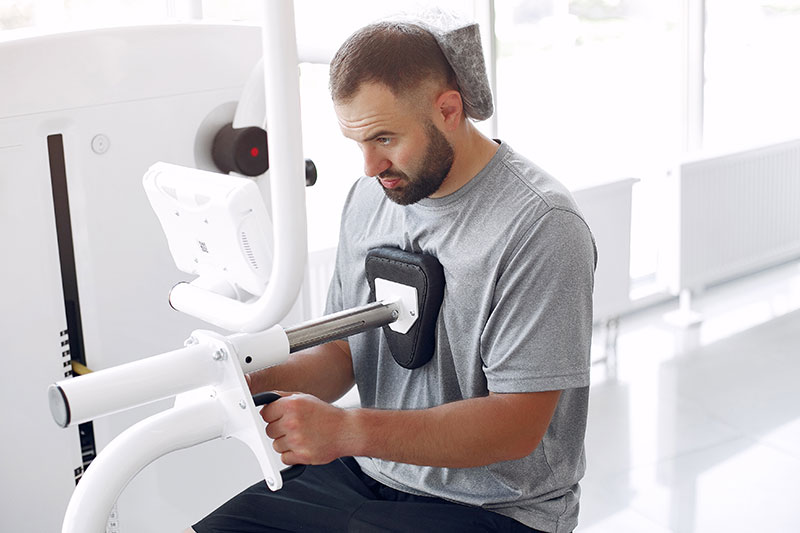
<PRIVATE_PERSON>Chest press machines are among the most useful pieces of commercial gym equipment for upper-body strength training. They primarily target the pectoral muscles, with assistance from the triceps and anterior deltoids.
Compared with free-weight bench pressing, machine-based chest presses provide a guided movement path that many beginners find easier to learn. They can also help experienced members train with consistent positioning and controlled resistance.
Common options include:
- Horizontal chest press machines
- Incline chest press machines
- Decline chest press machines
- Iso-lateral chest press machines
- Seated chest press machines
Iso-lateral machines allow the arms to move independently, depending on the design. This arrangement can support unilateral training and help users identify differences in strength between the left and right sides.
For commercial gyms, chest press machines are particularly valuable because chest training is popular among a broad range of members. Purchasing durable machines with adjustable seats, comfortable handles, and stable resistance systems can improve the training experience.
Lat Pulldown and Rowing Machines
Back training equipment is essential for a complete strength training area. Lat pulldown machines and rowing machines support different pulling movements that target the latissimus dorsi, trapezius, rhomboids, and other muscles involved in upper-body pulling.
A lat pulldown machine allows users to perform vertical pulling exercises, while seated and plate-loaded rowing machines emphasize horizontal pulling patterns. Offering both types gives members more options for developing their backs.
Commercial gym equipment in this category should feature a stable frame, smooth cable movement where applicable, secure weight systems, and comfortable contact points. Adjustable thigh pads and seating positions are also important because users vary in height and body proportions.
Gyms with sufficient space may consider several back-training stations, especially if they serve members who follow structured bodybuilding or strength programs.
Shoulder Press Machines
Shoulder press machines are valuable additions to commercial gym equipment collections because they provide a dedicated station for shoulder-focused training.
Depending on the design, these machines may use selectorized weight stacks, plate-loaded resistance, or independent lever arms. Each configuration offers different benefits.
Selectorized shoulder press machines are convenient for facilities serving beginners and general fitness members because resistance can be adjusted quickly. Plate-loaded machines may appeal to experienced lifters who prefer a more traditional strength training experience.
When evaluating shoulder press equipment, consider seat adjustment, starting position, handle orientation, range of motion, and ease of entry and exit. A well-designed machine should allow users to adopt a comfortable position without unnecessary strain.
Leg Extension and Leg Curl Machines
Lower-body training deserves the same attention as upper-body training. Leg extension machines primarily target the quadriceps, while leg curl machines target the hamstring muscles.
These machines are widely used in bodybuilding programs, general fitness routines, and structured strength training. They provide accessible ways to train the front and back of the thighs without requiring users to master complex free-weight movements.
Commercial gym equipment for lower-body training should have sturdy frames, adjustable pads, clear adjustment markings, and resistance settings that suit different abilities.
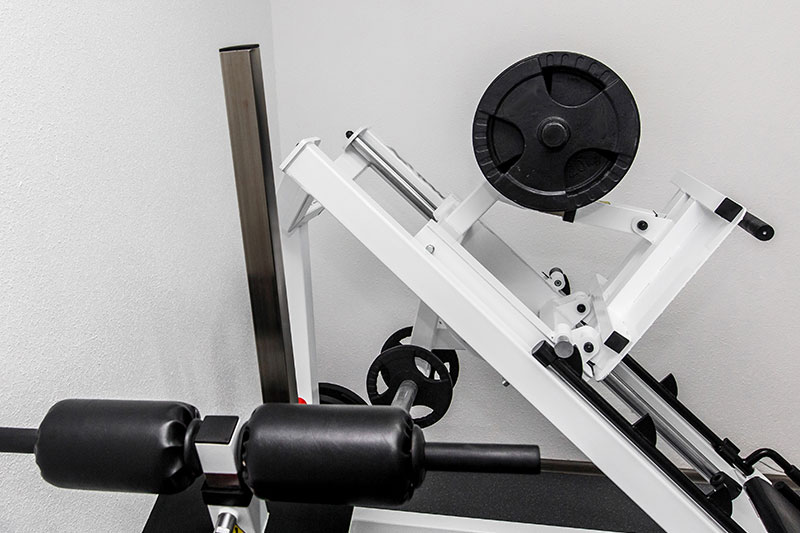
Gyms with limited budgets may prioritize a leg extension and seated or lying leg curl machine before investing in more specialized lower-body stations. Facilities focused on bodybuilding may benefit from a wider selection of leg presses, hack squats, and other plate-loaded machines.
Cable Crossover and Functional Trainer Systems
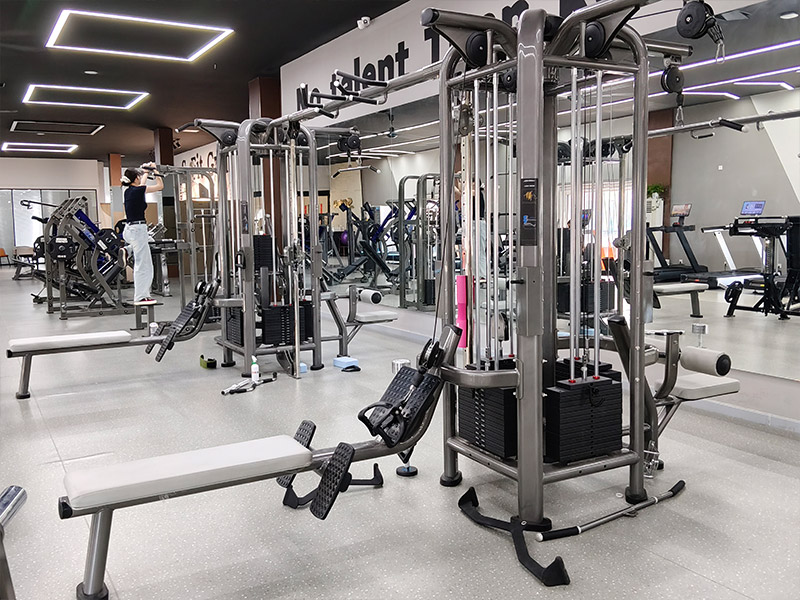
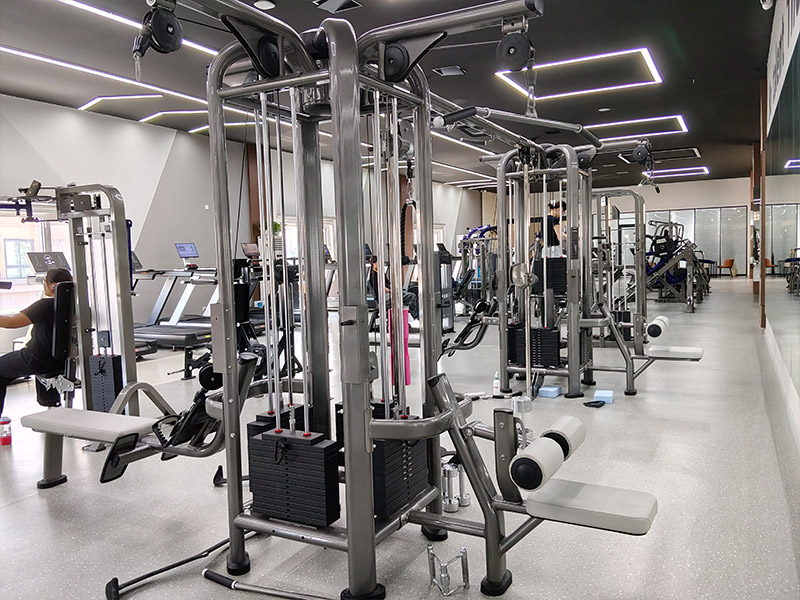
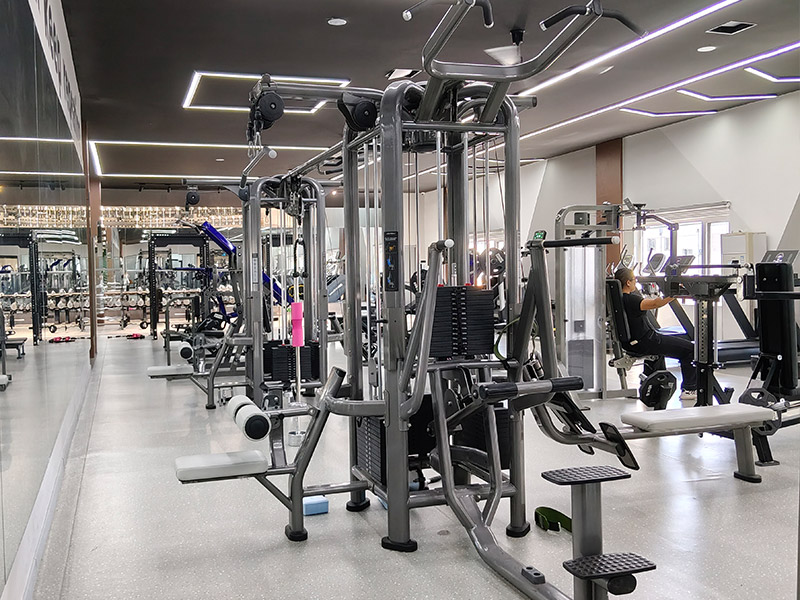
Cable crossover systems and functional trainers are versatile investments for modern commercial gyms. Depending on their configuration, they can support chest flyes, cable rows, triceps pushdowns, biceps curls, face pulls, rotational exercises, and many other movements.
A dual-adjustable pulley system allows users to change cable height and perform exercises from different angles. This versatility makes the equipment useful for personal training, general strength development, and functional exercise programs.
For facilities with limited floor space, a well-designed functional trainer can provide many exercise options in a relatively compact area. Before buying, check pulley smoothness, cable specifications, adjustment mechanisms, weight-stack capacity, and available accessories.
Commercial Free Weights and Benches
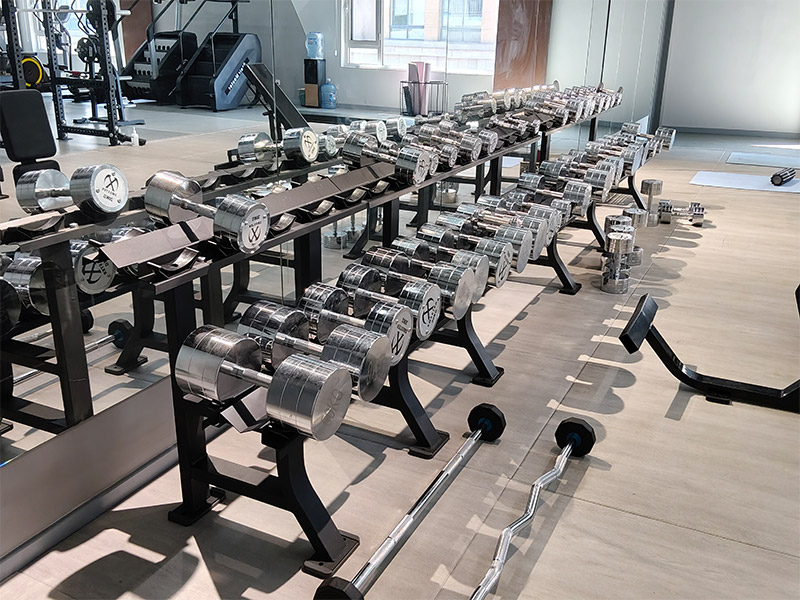
Free weights remain an essential part of commercial gym equipment collections. Dumbbells, barbells, weight plates, adjustable benches, and squat racks support exercises that cannot always be replicated by machines.
A practical free-weight area should include several dumbbell weight ranges, secure storage racks, benches, barbells, and appropriate plate storage. The selection should reflect the strength levels and training preferences of the intended membership.
Commercial-grade benches should have stable bases, durable upholstery, secure adjustment mechanisms, and sufficient load ratings for their intended use. Barbells and weight plates should be suitable for the exercises and loading conditions expected in the facility.
Free weights offer excellent exercise variety, but they require thoughtful layout planning. Adequate spacing, clear walking routes, secure storage, and suitable flooring help improve safety and operational efficiency.
Best Cardio Commercial Gym Equipment for 2026
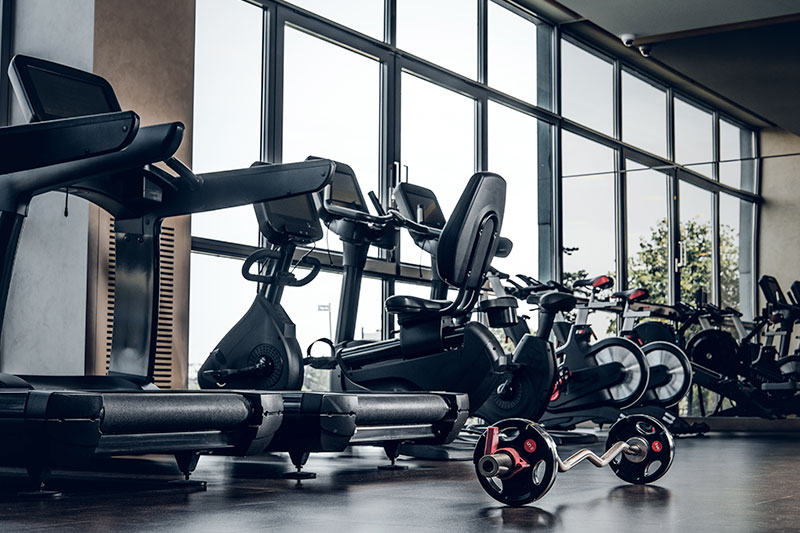
Cardio equipment remains an important part of commercial fitness facilities. It supports aerobic exercise, warm-ups, conditioning sessions, and low-impact training options.
The best cardio investment depends on the gym’s target market. A performance-oriented training center may prioritize air bikes and rowing machines, while a hotel gym may focus on treadmills, stationary bikes, and ellipticals that are simple to use.
Commercial Treadmills
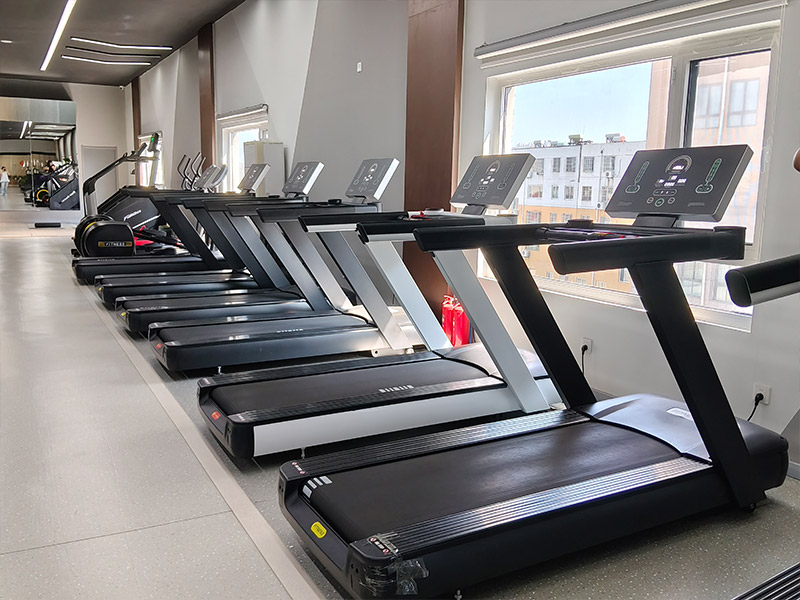
Commercial treadmills are among the most recognizable pieces of cardio equipment. They support walking, jogging, interval training, and running programs for different fitness levels.
For commercial use, treadmill selection should consider motor specifications, continuous-use suitability, running surface dimensions, cushioning, speed range, incline range, emergency stop features, and maintenance access.
A treadmill intended for a busy fitness club should be designed for the expected daily operating hours and user volume. A model suitable for occasional residential use may not be appropriate for a facility where multiple members use the same machine throughout the day.
Commercial treadmills with intuitive controls can also improve accessibility for new members. Clear displays, convenient speed adjustments, and straightforward workout programs help users begin training confidently.
Stationary Bikes and Indoor Cycling Bikes
Stationary bikes are useful commercial gym equipment for members who want cardiovascular exercise with less impact than running. They can be suitable for warm-ups, endurance sessions, and lower-impact fitness routines.
Upright bikes, recumbent bikes, and indoor cycling bikes serve somewhat different purposes. Upright bikes offer a familiar riding position, recumbent bikes provide back-supported seating, and indoor cycling bikes are designed for cycling-style workouts.
Commercial facilities should evaluate seat adjustability, pedal security, resistance control, frame stability, and ease of cleaning. For gyms offering instructor-led cycling classes, purchasing multiple compatible bikes can help create a consistent group training experience.
Elliptical Trainers
Elliptical trainers provide a smooth, low-impact movement pattern that combines elements of walking, climbing, and running. Many models include moving handles to engage the upper body during exercise.
They can appeal to members who prefer alternatives to treadmill running. For commercial gym equipment buyers, important considerations include stride length, resistance range, handle comfort, console usability, frame stability, and service requirements.
Because elliptical trainers can occupy substantial floor space, gym owners should compare the machine’s dimensions with the intended layout before purchasing.
Commercial Rowing Machines
Rowing machines combine cardiovascular conditioning with resistance-based movement involving the legs, back, arms, and core. They can be used for steady-state training, intervals, warm-ups, and group conditioning sessions.
Commercial rowing machines are particularly useful for facilities that emphasize athletic performance or functional fitness. Some models can be stored vertically or positioned more efficiently when not in use, making them attractive for smaller training areas.
Before investing, check resistance consistency, seat movement, handle ergonomics, footrest adjustment, frame stability, and maintenance requirements.
Air Bikes and Stair Climbers
Air bikes and stair climbers provide additional training options for gyms that want to diversify their cardio selection.
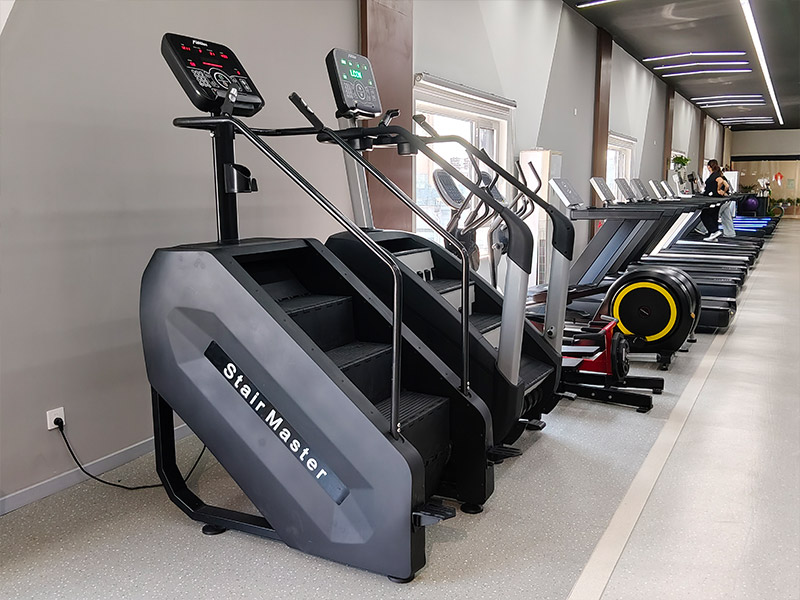
Air bikes are often used for interval training because resistance increases with the user’s effort. Stair climbers simulate repeated stair stepping and can provide challenging cardiovascular workouts.
These machines may be particularly attractive to experienced fitness enthusiasts, performance athletes, and members who want varied conditioning sessions.
However, specialized cardio equipment should be purchased according to actual demand. A gym should first establish a dependable core selection before allocating too much budget to equipment used by a smaller portion of its membership.
Commercial Gym Equipment Comparison Table
The following table compares common commercial gym equipment categories by their primary functions, main advantages, and typical applications.
| Equipment Category | Primary Function | Main Advantage | Suitable Facilities |
|---|---|---|---|
| Chest press machine | Upper-body pushing strength | Guided resistance and easy setup | Commercial gyms, fitness clubs |
| Lat pulldown machine | Vertical pulling strength | Accessible back training | Fitness centers, hotels |
| Rowing machine | Horizontal pulling strength | Supports back development | Strength gyms, fitness clubs |
| Shoulder press machine | Shoulder strength | Dedicated pressing station | Commercial gyms |
| Leg extension machine | Quadriceps training | Isolated lower-body exercise | Fitness clubs, bodybuilding gyms |
| Leg curl machine | Hamstring training | Dedicated hamstring exercise | Commercial gyms |
| Functional trainer | Multi-angle resistance training | High exercise versatility | Small and large fitness facilities |
| Dumbbells and benches | Free-weight training | Broad exercise selection | Nearly all strength gyms |
| Commercial treadmill | Walking and running | Familiar cardiovascular exercise | Fitness clubs, hotels |
| Stationary bike | Cycling-based cardio | Low-impact exercise options | Hotels, clubs, studios |
| Elliptical trainer | Low-impact cardio | Smooth full-body movement | General fitness facilities |
| Air bike | High-intensity conditioning | Effort-responsive resistance | Performance gyms, studios |
| Stair climber | Stepping-based cardio | Challenging lower-body conditioning | Full-service fitness clubs |
The table provides a starting point rather than a universal purchasing order. A gym serving general fitness members may need more cardio machines, while a bodybuilding facility may achieve greater value by prioritizing strength equipment and free weights.
How to Choose Commercial Gym Equipment That Delivers Long-Term Value
Buying commercial gym equipment requires more than comparing product photographs and purchase prices. A reliable purchasing process considers the facility’s operational requirements, member expectations, available budget, and long-term maintenance needs.
Identify Your Target Customers
Start by defining the primary audience for the facility. Different customer groups have different training needs, and those needs should determine which commercial gym equipment deserves the largest share of the budget.
For example, a bodybuilding gym may need a broad range of plate-loaded machines, free weights, and dedicated strength stations. A community fitness club may require a more balanced combination of resistance machines, cardio equipment, and functional training accessories.
A hotel fitness room generally benefits from compact equipment that is easy to use and suitable for a variety of guests. A personal training studio may prioritize adjustable benches, dumbbells, cable systems, and multifunctional equipment.
Understanding the target audience reduces the risk of purchasing expensive machines that receive little use.
Evaluate Construction Quality
Construction quality affects the stability, durability, and maintenance requirements of commercial gym equipment.
When evaluating strength machines, examine frame materials, weld quality, connection points, moving components, upholstery, and resistance mechanisms. For cable machines, check the cable routing, pulleys, adjustment points, and availability of replacement parts.
Cardio equipment requires its own evaluation criteria. Treadmills should be assessed for running surface quality, drive systems, control components, and service accessibility. Bikes and ellipticals should provide stable movement and appropriate adjustment options.
Ask suppliers for product specifications, operating instructions, warranty terms, and maintenance guidance. When possible, request demonstrations or inspect representative units before placing a large order.
Compare Total Cost of Ownership
The purchase price represents only one part of the total investment. Shipping, customs duties where applicable, installation, maintenance, replacement components, and downtime can affect the actual cost of owning commercial gym equipment.
A simple comparison can help buyers evaluate competing products.
| Cost Factor | Questions to Ask |
|---|---|
| Purchase price | Does the quotation include all required accessories? |
| Shipping | Are freight, packaging, and delivery charges included? |
| Installation | Is professional assembly required? |
| Maintenance | What routine inspections and servicing are needed? |
| Spare parts | Are commonly replaced components readily available? |
| Warranty | Which parts and service costs are covered? |
| Downtime | How quickly can faults be diagnosed and repaired? |
| Service life | Is the product designed for the intended commercial workload? |
A supplier offering a lower initial price may not offer the best overall value if parts are difficult to obtain or maintenance is complicated. Buyers should compare equivalent specifications and commercial-use requirements rather than focusing exclusively on headline prices.
Check Warranty and After-Sales Support
Commercial gym equipment operates under demanding conditions, making after-sales support an important purchasing consideration.
Before placing an order, confirm the warranty period, coverage for major components, service procedures, spare-parts availability, and technical support arrangements. Buyers should also understand whether installation, routine maintenance, and shipping for replacement components are included.
For international buyers, communication and logistics are particularly important. Suppliers should be able to provide clear documentation, product specifications, operating instructions, and practical guidance for maintaining the equipment.
Reliable support can reduce the impact of equipment downtime and help gym operators maintain a consistent member experience.
Choose Equipment That Fits Your Floor Plan
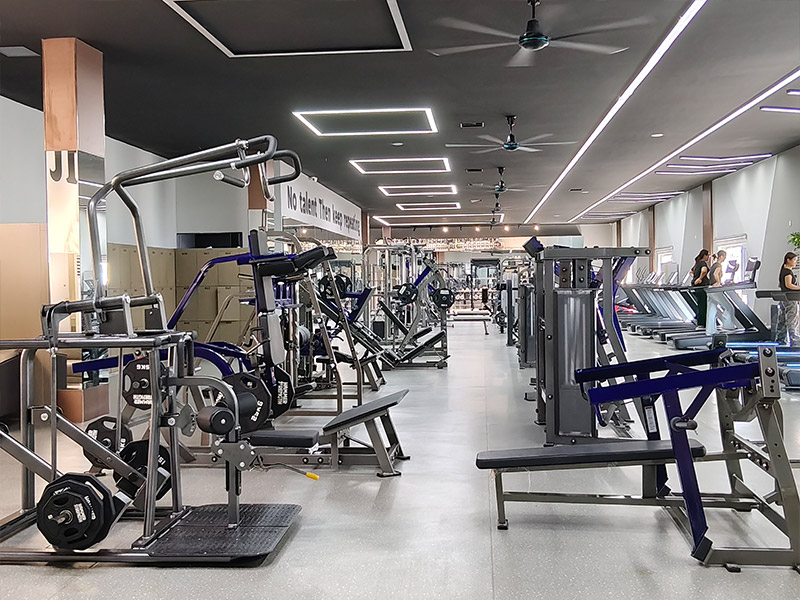
A well-designed gym layout allows members to move between training stations without unnecessary congestion. Purchasing commercial gym equipment without measuring the available space can create operational problems even when the machines themselves are high quality.
Measure the room carefully and account for machine dimensions, operating clearance, user movement, access routes, and storage areas. Consider ceiling height for equipment with tall frames or overhead movement requirements.
Group related equipment together where practical. For example, place dumbbell racks and benches in a dedicated free-weight zone, while positioning treadmills and bikes in a separate cardio area.
Allow enough space for safe use and maintenance. Follow the manufacturer’s clearance recommendations, applicable building requirements, and relevant safety standards.
How Much Should You Budget for Commercial Gym Equipment in 2026?
There is no single budget that suits every fitness facility. The cost of commercial gym equipment depends on the size of the gym, product specifications, equipment quantity, shipping arrangements, installation requirements, and the level of service included.
Instead of setting a budget based only on the number of machines, gym owners should divide their available funds into functional categories.
Build a Balanced Equipment Budget
A practical budget should cover the major training needs of the intended membership. For many general fitness facilities, these include strength machines, free weights, cardio equipment, functional training accessories, and installation or maintenance costs.
The following allocation is an illustrative planning model, not a market-price benchmark.
| Budget Category | Illustrative Allocation | Purpose |
|---|---|---|
| Strength training machines | 35% | Build a complete resistance training area |
| Cardio equipment | 25% | Support cardiovascular fitness |
| Free weights and benches | 15% | Provide flexible strength training options |
| Functional training equipment | 10% | Support varied exercises and personal training |
| Delivery and installation | 10% | Prepare equipment for operation |
| Initial maintenance and contingency | 5% | Cover early servicing and unexpected costs |
| Total | 100% | Full equipment project budget |
This allocation should be adjusted according to the business model. A strength-focused gym may spend more on resistance machines and free weights, while a hotel gym may place greater emphasis on compact cardio equipment.
Prioritize Essential Equipment First
When funds are limited, purchase the equipment needed to deliver a complete training experience before expanding into niche categories.
For a general commercial gym, the initial list may include:
- A basic selection of chest, back, shoulder, and leg machines.
- Dumbbells, barbells, weight plates, benches, and secure storage.
- A suitable number of treadmills, bikes, or other core cardio machines.
- A cable station or functional trainer.
- Essential flooring, safety accessories, and maintenance supplies.
This approach helps the facility open with a useful equipment range rather than spending too much on a few premium machines while leaving major training needs unaddressed.
After observing membership patterns, gym operators can expand the collection according to actual demand.
Balance Quantity and Quality
Purchasing too few machines may create queues during peak hours, while buying too many can consume capital and floor space without producing sufficient value.
Gym owners should estimate peak-hour attendance, the popularity of different exercises, and the number of members likely to train simultaneously. This information helps determine how many units of each machine are appropriate.
For example, a busy facility may need multiple treadmills and benches, while a smaller studio may achieve better results with a compact selection of versatile commercial gym equipment.
The objective is to create a reliable, balanced training environment while maintaining sufficient financial flexibility for future expansion.
Commercial Gym Equipment Trends to Watch in 2026
Fitness facilities continue to adapt to changing member preferences, available technology, and operational requirements. When choosing commercial gym equipment in 2026, buyers should consider developments that improve practical usability rather than following every new trend.
Space-Efficient and Multifunctional Equipment
Commercial real estate can be expensive, especially in urban areas. As a result, many gym operators need equipment that delivers a wide range of training options without occupying excessive floor space.
Functional trainers, adjustable benches, compact cable systems, and carefully selected multifunctional stations can help maximize the usefulness of a limited training area.
Space efficiency does not mean sacrificing safety. Every machine must have adequate operating clearance and suit the intended exercises.
Improved Ergonomics and Adjustability
Members differ in height, limb length, mobility, training experience, and exercise preferences. Equipment that accommodates these differences can make a facility more accessible and comfortable.
Adjustable seats, clearly marked settings, comfortable handles, suitable starting positions, and independent movement arms can improve the usability of strength machines.
When evaluating commercial gym equipment, buyers should consider how easily different users can adjust the machine. Complicated adjustment mechanisms may discourage members from using equipment correctly.
Data-Enabled Training and Connected Consoles
Some modern cardio machines provide workout tracking, digital displays, connectivity features, and integration with training platforms. These features can help members monitor their workouts and give facilities additional ways to support engagement.
However, connected technology should be evaluated according to actual business needs. Gym owners should compare subscription requirements, software compatibility, data privacy considerations, maintenance costs, and the expected usefulness of the features.
A machine with reliable core functions may be a better investment than a more expensive model whose digital features add little value for the target audience.
Durability and Maintenance-Friendly Design
Equipment downtime can interrupt training routines and create additional operating costs. Maintenance-friendly designs are therefore important for commercial fitness facilities.
Accessible service panels, replaceable wear components, clear maintenance instructions, and readily available spare parts can make equipment easier to manage.
Buyers should also establish a preventive maintenance schedule that covers routine inspections, cleaning, lubrication where required, and checks of fasteners, cables, moving parts, and safety systems.
Flexible Training Environments
Many gyms now combine traditional strength training with functional exercise, conditioning, and personal training. Commercial gym equipment that supports multiple training styles can help operators adapt their services without repeatedly redesigning the entire facility.
For example, a functional training zone may include adjustable pulleys, benches, dumbbells, resistance accessories, and suitable open floor space. This combination supports individual workouts and trainer-led sessions.
The best equipment strategy depends on the facility’s identity. A specialist strength gym does not need to imitate every trend, but it should ensure its equipment collection supports the training experiences its members expect.
Common Mistakes to Avoid When Buying Commercial Gym Equipment
Even experienced buyers can make costly mistakes when planning a commercial fitness facility. A structured purchasing process helps reduce risk and improve long-term value.
Choosing Equipment Based Only on Price
Low prices can be attractive, particularly when purchasing large quantities. However, price alone does not reveal whether equipment is suitable for repeated commercial use.
Buyers should compare specifications, construction, warranty coverage, service support, and expected maintenance needs. The goal is to find commercial gym equipment that meets the facility’s requirements at a reasonable total cost.
Ignoring Member Demand
A gym can spend heavily on equipment that looks impressive but receives little use. This can happen when purchasing decisions are based on personal preferences rather than the needs of the intended customer base.
Research local competitors, identify the target audience, and determine which training categories are essential. For an existing gym, equipment usage patterns and member feedback can help identify gaps in the current collection.
Overlooking Installation and Clearance Requirements
Some equipment requires specialized installation, secure anchoring, particular flooring, or sufficient overhead clearance. Failing to plan these requirements can delay opening or create safety problems.
Review technical drawings, shipping dimensions, installation instructions, and operating clearances before finalizing the order.
Buying Too Much Specialized Equipment Too Early
Specialized machines can be useful, but they may not justify their cost in a new facility without established demand.
A better approach is to begin with essential commercial gym equipment and expand after collecting information about member preferences and equipment utilization.
This strategy allows gym owners to direct additional investment toward machines that demonstrably improve the training experience.
Neglecting Preventive Maintenance
Even durable commercial gym equipment requires routine care. Ignoring maintenance can lead to premature wear, unexpected breakdowns, and unnecessary safety risks.
Develop a written maintenance schedule, assign responsibility for inspections, document faults, and follow manufacturer guidance. Remove defective equipment from service until it has been appropriately inspected and repaired.
How to Find a Reliable Commercial Gym Equipment Manufacturer or Supplier
Choosing a reliable supplier is just as important as choosing the right machines. A professional manufacturer or distributor should provide clear product information, consistent communication, and appropriate support throughout the purchasing process.
Review Product Range and Manufacturing Capabilities
Start by examining whether the supplier offers the commercial gym equipment categories your facility needs. A supplier with a suitable product range may simplify purchasing, shipping coordination, and future expansion.
If you are buying directly from a manufacturer, review its production capabilities, quality management processes, product development experience, and ability to meet the required specifications.
For large orders, request detailed product catalogs and technical documentation. Confirm dimensions, resistance systems, materials, available configurations, and any customization options before making a final decision.
Request Clear Specifications and Quotations
A professional quotation should identify the equipment models, quantities, specifications, included accessories, pricing, packaging, delivery terms, and warranty conditions.
Avoid comparing quotations that cover different products or service levels. A lower quotation may exclude important accessories, installation support, or other costs.
International buyers should also confirm payment terms, production lead times, shipping arrangements, import requirements, and documentation before placing an order.
Evaluate Quality Control and After-Sales Service
Ask how the supplier checks equipment quality before shipment and what documentation is available. Depending on the equipment, relevant checks may include frame inspection, assembly verification, functional testing, and inspection of moving or resistance components.
Confirm the procedure for reporting defects, ordering spare parts, and obtaining technical support. If the equipment will be installed in a busy gym, the supplier’s ability to help resolve issues can be particularly important.
Consider Customization and Future Expansion
Some commercial fitness facilities want equipment that matches their branding, color scheme, or layout. Depending on the supplier, customization options may include upholstery colors, frame finishes, logos, or selected configuration changes.
Before requesting customization, confirm minimum order quantities, additional costs, production lead times, and the availability of matching equipment for future purchases.
A supplier capable of supporting expansion may be valuable as the business grows and the facility adds new training areas.
Commercial Gym Equipment Investment Checklist for 2026
Before placing an order, review the following checklist to ensure the planned purchase supports your operational needs.
| Checklist Item | What to Confirm |
|---|---|
| Target customers | Equipment selection matches member needs |
| Training coverage | Strength, cardio, and functional exercise are appropriately covered |
| Product quality | Construction and components suit commercial use |
| Specifications | Dimensions, capacity, and adjustment options are documented |
| Space planning | Layout includes operating clearance and access routes |
| Budget | Purchase, shipping, installation, and maintenance are considered |
| Warranty | Coverage and exclusions are clearly explained |
| Spare parts | Replacement components can be sourced |
| Supplier reliability | Communication and technical support meet expectations |
| Safety | Installation and use follow relevant instructions and standards |
| Future growth | Equipment choices support planned expansion |
This checklist can help gym owners compare suppliers consistently and avoid making rushed purchasing decisions. It is especially useful when evaluating several commercial gym equipment quotations or coordinating a large facility project.
If you need fitness equipment or other services, please contact us!
Email: zhiningfitnessoffical@zhiningfitness.com
WhatsApp: +86 17852510552
Facebook: https://www.facebook.com/profile.php?id=61594381827546
Conclusion
Investing in the right commercial gym equipment in 2026 requires a clear understanding of member needs, equipment quality, available space, and long-term operating costs. Rather than purchasing machines based only on appearance or price, gym owners should build a balanced collection that supports strength training, cardiovascular exercise, and functional movement.
Chest press machines, lat pulldown machines, rowing stations, shoulder press machines, leg extension and leg curl machines, functional trainers, free weights, treadmills, and stationary bikes can all provide practical value when selected for the right facility.
The best investment strategy begins with essential equipment, prioritizes durability and ease of maintenance, and expands according to real customer demand. Careful supplier evaluation, clear specifications, suitable warranty coverage, and a preventive maintenance plan can further protect the investment.
Whether you are opening a new fitness center, upgrading an established club, or sourcing equipment for multiple locations, the goal is to choose commercial gym equipment that delivers reliable performance and supports a professional training environment. By balancing quality, functionality, versatility, and cost, businesses can make informed purchasing decisions and build facilities that remain competitive in 2026 and beyond.
FAQ
What commercial gym equipment should a new gym buy first?
A new gym should prioritize essential strength machines, dumbbells, barbells, benches, a cable station, and a suitable selection of cardio equipment. The exact combination depends on the target audience, available floor space, and budget. Starting with versatile, frequently used equipment helps establish a complete training environment before adding specialized machines.
What is the difference between commercial gym equipment and home gym equipment?
Commercial gym equipment is generally designed for more frequent use, higher user turnover, and the demands of a professional fitness facility. It may feature more robust construction, commercial-use specifications, and service arrangements suited to busy environments. Home gym equipment is typically intended for lower usage levels, although the exact differences vary by product and manufacturer.
How can gym owners choose durable commercial gym equipment?
Gym owners should evaluate frame construction, component quality, movement smoothness, adjustment mechanisms, resistance systems, warranty terms, and spare-parts availability. Requesting detailed specifications and reviewing maintenance requirements can help buyers determine whether a product is suitable for the expected workload.
Is multifunctional commercial gym equipment a good investment?
Multifunctional equipment can be a good investment for facilities with limited space or diverse training requirements. Functional trainers, adjustable benches, and versatile cable systems can support many exercises within a relatively small footprint. Buyers should still confirm that the equipment provides the required resistance, stability, and adjustment options.
How often should commercial gym equipment be maintained?
Commercial gym equipment should be inspected and maintained according to the manufacturer’s instructions, usage intensity, and operating environment. Daily visual checks and cleaning may be appropriate for busy facilities, while more detailed inspections should follow the recommended maintenance schedule. Any equipment with a suspected safety defect should be removed from service until it has been inspected and repaired appropriately.