Introduction
A commercial shoulder press machine is an essential piece of strength training equipment for modern gyms, fitness centers, health clubs, hotels, corporate fitness facilities, and rehabilitation-oriented training spaces. As demand for structured strength training continues to grow, gym owners need equipment that delivers consistent performance, supports different fitness levels, and provides long-term value. A commercial shoulder press machine meets these needs by offering a controlled and effective way to train the shoulders and related upper-body muscles.
Unlike free-weight shoulder exercises that require users to stabilize the load throughout the movement, a commercial shoulder press machine provides a guided pressing path. This design helps users focus on shoulder strength, develop better movement control, and perform repetitions with greater consistency. For commercial fitness facilities, the machine also offers practical advantages, including adjustable resistance, straightforward operation, and efficient use of training space.
Investing in a commercial shoulder press machine is not simply about adding another product to a gym floor. It is about improving the overall training experience, expanding the range of available exercises, and creating a more complete strength training environment. The right machine can serve beginners who are learning basic pressing movements, experienced lifters who want to build upper-body strength, and personal trainers who need reliable equipment for structured workout programs.
For gym owners and equipment distributors, choosing a commercial shoulder press machine also involves evaluating durability, ergonomics, maintenance requirements, supplier reliability, and total ownership cost. A machine that looks attractive but cannot withstand frequent daily use may become an expensive liability. By contrast, a well-designed commercial shoulder press machine can support regular training sessions and contribute to a professional gym environment for years.
This guide explains why a commercial shoulder press machine is a worthwhile investment, what benefits it provides, which features matter most, and how to select equipment that fits your facility’s needs.
What Is a Commercial Shoulder Press Machine?
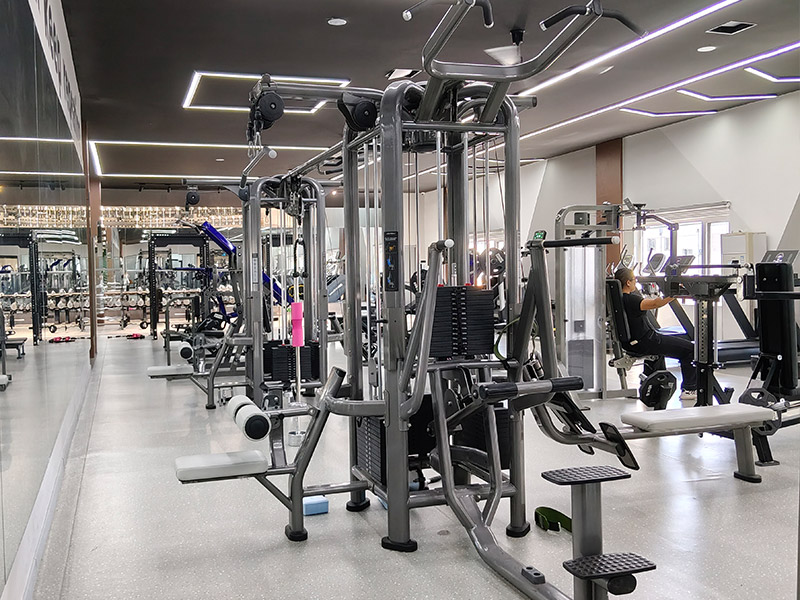
A commercial shoulder press machine is a strength training device designed primarily to develop the deltoid muscles, which form the rounded shape of the shoulders. Depending on its design, the machine may also engage the triceps and upper chest during pressing movements.
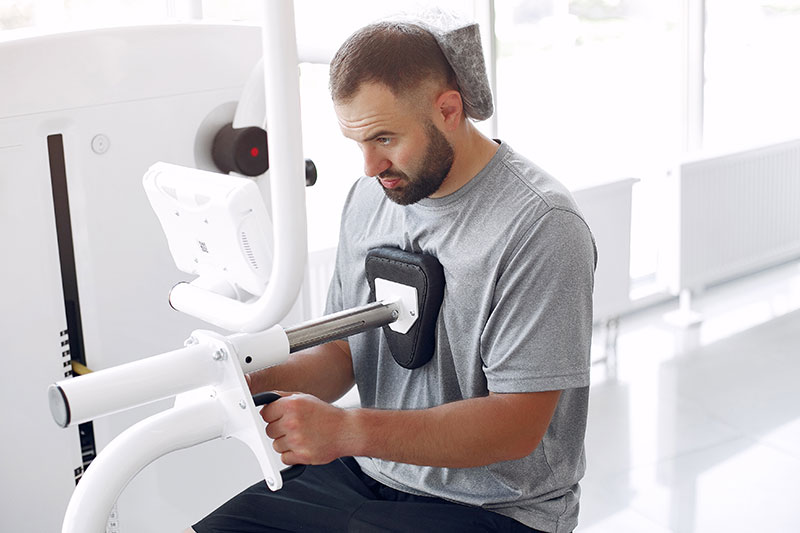
The user sits on a seat, positions their hands on the handles, and pushes the resistance upward or forward and upward along a guided movement path. The seat height, handle position, and resistance level can usually be adjusted to accommodate different body sizes and strength levels.
Commercial shoulder press machines are designed for environments where equipment may be used repeatedly throughout the day. Compared with many basic home fitness models, commercial units typically emphasize structural stability, durable upholstery, robust resistance systems, and components suitable for frequent use.
The main purpose of a commercial shoulder press machine is to provide a repeatable pressing movement that allows users to train the shoulders without needing to balance a barbell or dumbbells independently. This can make the machine particularly useful in busy facilities where members have different levels of lifting experience.
Common Types of Commercial Shoulder Press Machines
Different commercial shoulder press machines use different resistance systems and movement designs. Understanding these differences helps gym owners select equipment that matches their members’ needs.
| Machine Type | Main Characteristics | Suitable Facilities |
|---|---|---|
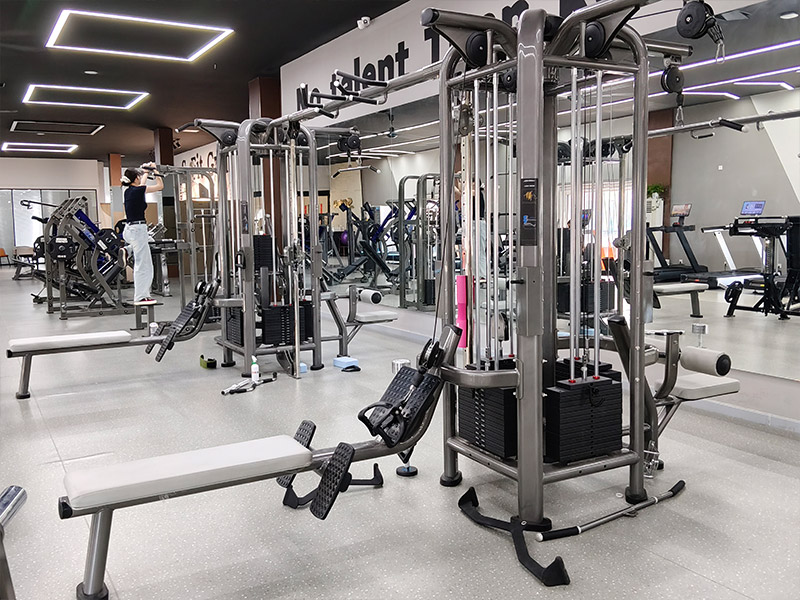
| Selectorized shoulder press machine | Uses a weight stack selected with a pin | Commercial gyms, health clubs, hotels |
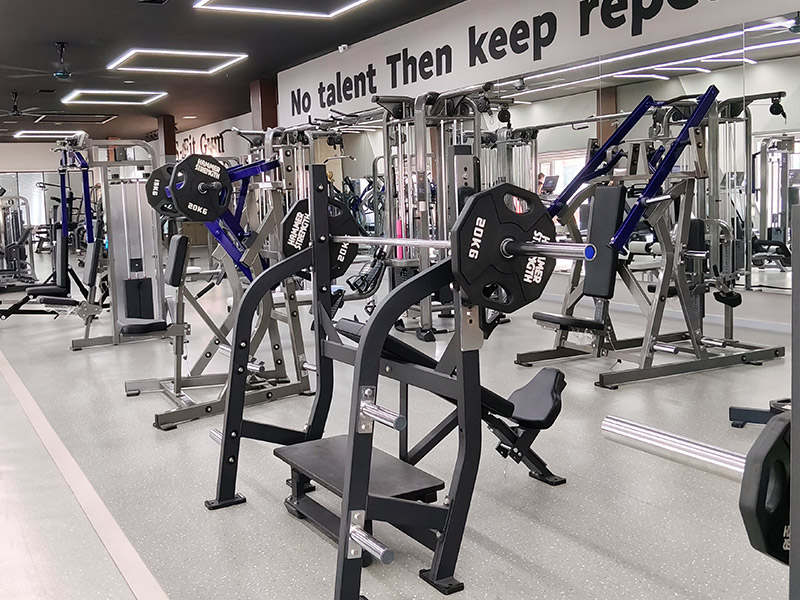
| Plate-loaded shoulder press machine | Uses weight plates to provide resistance | Strength gyms, bodybuilding facilities |
| Independent-arm shoulder press machine | Allows each arm to move separately | Commercial gyms, performance training facilities |
| Iso-lateral shoulder press machine | Supports independent movement on both sides, depending on the design | Strength-focused gyms and bodybuilding centers |
| Adjustable shoulder press machine | Offers multiple adjustment positions for different users | Multi-purpose fitness centers |
| Compact commercial shoulder press machine | Uses a space-conscious frame design | Small gyms and studio facilities |
The most appropriate commercial shoulder press machine depends on the training style, available floor space, member demographics, and equipment budget.
Selectorized models are often attractive to facilities serving a broad range of members because users can change resistance quickly. Plate-loaded models may appeal to experienced lifters who prefer loading weight plates and training with a strength-focused setup.
Independent-arm designs can help users identify and address differences between the left and right sides. However, the actual movement, resistance curve, and range of motion depend on the specific machine design, so buyers should evaluate the equipment directly rather than relying on product names alone.
Why a Commercial Shoulder Press Machine Is Worth the Investment
A commercial shoulder press machine provides several benefits that extend beyond shoulder training. It can improve the completeness of a gym’s equipment offering, support structured workout programs, and create a more accessible training experience for a wider range of members.
It Provides Effective Shoulder Muscle Training
The primary advantage of a commercial shoulder press machine is its ability to support focused shoulder training. The deltoids are involved in lifting the upper arms, while the triceps assist with extending the elbows during the pressing movement.
A properly designed commercial shoulder press machine allows users to perform repeated pressing movements against adjustable resistance. This makes it suitable for progressive strength training, where users gradually increase resistance or training volume as their ability improves.
The anterior deltoids, located at the front of the shoulders, are heavily involved in many overhead pressing movements. The middle deltoids may contribute to the movement depending on the pressing path and arm position. The triceps assist throughout the pressing phase, while other muscles help stabilize the shoulder girdle and torso.
A commercial shoulder press machine does not replace every shoulder exercise. Lateral raises, rear-delt movements, and other exercises can help address different shoulder functions. However, the machine offers an important foundation for pressing strength and can complement a balanced upper-body program.
For commercial gyms, this versatility makes the commercial shoulder press machine useful for beginners, general fitness members, and experienced strength trainees.
It Offers a More Controlled Training Experience
Free-weight overhead pressing requires users to control the weight in multiple directions while maintaining balance and coordination. A commercial shoulder press machine guides the movement through a defined path, which may make the exercise easier to learn for people who are unfamiliar with overhead pressing.
This controlled setup can be particularly useful in commercial fitness environments where members have different training backgrounds. Beginners can concentrate on learning the movement and selecting an appropriate resistance level instead of managing the additional balance demands of free weights.
A guided movement path does not automatically make every exercise safe. Users still need to adjust the seat correctly, select suitable resistance, maintain controlled repetitions, and avoid forcing the shoulders into uncomfortable positions. Nevertheless, a well-designed commercial shoulder press machine can make the basic pressing movement more straightforward for many users.
For personal trainers, this can also improve coaching efficiency. Trainers can demonstrate the exercise, explain the correct setup, and observe the user’s technique without needing to provide the same level of assistance that may be required during heavy free-weight pressing.
It Supports Progressive Overload
Progressive overload is a fundamental principle of strength training. It involves gradually increasing the demands placed on muscles through changes in resistance, repetitions, sets, training frequency, or movement control.
A commercial shoulder press machine can support progressive overload by allowing users to increase resistance in manageable increments. Selectorized models make this process especially convenient because the user can change the selected weight without removing or adding individual plates.
For example, a beginner might start with a light resistance level and perform controlled sets with a comfortable number of repetitions. As strength and technique improve, the user can gradually increase the load while maintaining appropriate movement quality.
Experienced users can also use a commercial shoulder press machine to add training volume after compound free-weight exercises or to perform controlled accessory work.
Progressive overload should not mean increasing the weight at every workout regardless of technique. The most effective approach is to adjust training demands according to the user’s performance, recovery, and goals.
It Makes Strength Training More Accessible
Commercial gyms serve people with different ages, body sizes, physical capabilities, and training experience. Equipment that is easy to adjust and operate can help facilities serve these groups more effectively.
A commercial shoulder press machine with a suitable seat adjustment range, accessible handles, clearly marked resistance, and a comfortable starting position can accommodate a wider variety of users.
For someone who is new to strength training, a machine-based exercise may feel less complicated than pressing dumbbells overhead. More experienced users can use the same machine for focused muscle development or additional training volume.
This broad usability helps make the commercial shoulder press machine a practical addition to general fitness facilities rather than equipment reserved exclusively for advanced lifters.
However, no single machine is appropriate for every user. People with shoulder pain, limited mobility, or specific medical restrictions may need individualized guidance from a qualified healthcare professional or exercise specialist.
Key Benefits for Commercial Gyms and Fitness Centers
The value of a commercial shoulder press machine should be evaluated from both the user’s perspective and the facility owner’s perspective.
It Expands the Gym’s Strength Training Selection
A balanced gym needs equipment that covers major muscle groups and movement patterns. While chest press machines train pushing strength from a different angle, a commercial shoulder press machine focuses on overhead pressing and helps complete an upper-body strength training area.
Adding this machine allows gym owners to offer more exercise choices without requiring every member to rely on dumbbells or barbells.
A commercial shoulder press machine can be positioned alongside chest press machines, lat pulldown machines, seated row machines, and lateral raise equipment. This arrangement creates a more organized upper-body training zone and helps members move between exercises more efficiently.
For facilities that already offer a broad selection of cardio equipment, adding well-chosen strength machines can also improve the balance of the overall equipment mix.
It Supports Multiple Fitness Goals
A commercial shoulder press machine is suitable for several training objectives when used appropriately.
| Training Goal | How the Machine Can Help | Important Consideration |
|---|---|---|
| General strength | Provides adjustable resistance for pressing exercises | Increase loads gradually |
| Muscle development | Supports repeated sets targeting the shoulders and triceps | Combine with balanced shoulder exercises |
| Beginner fitness | Offers a guided movement path | Teach correct seat and handle setup |
| Accessory training | Adds shoulder work after compound exercises | Manage total training volume |
| General conditioning | Can be included in circuit-based workouts | Choose a manageable load and pace |
| Strength maintenance | Allows structured resistance training | Adjust training to individual capability |
A commercial shoulder press machine can be included in different training programs, but the program should match the user’s goals and experience. Muscle development generally requires appropriate training volume, sufficient effort, progressive overload, nutrition, and recovery. Strength improvement also depends on consistency and exercise technique.
It Helps Personal Trainers Deliver Structured Programs
Personal trainers often need reliable equipment that can be adjusted quickly between clients. A commercial shoulder press machine can simplify exercise setup and make it easier to record training loads from one session to the next.
For example, a trainer working with a beginner may focus on learning the movement, establishing comfortable positioning, and maintaining controlled repetitions. For a more experienced client, the trainer may use the same machine to provide additional shoulder volume after a primary pressing exercise.
The machine can also be included in supersets, upper-body circuits, or full-body programs. Because resistance changes are often straightforward, it may be useful in training sessions where time and equipment availability are important.
A well-organized training area with a dependable commercial shoulder press machine can therefore support both independent workouts and coached sessions.
It Can Improve Member Satisfaction
Member satisfaction depends on many factors, including cleanliness, staff support, facility atmosphere, equipment availability, and the overall training experience.
A commercial shoulder press machine contributes to this experience when it is comfortable, stable, intuitive to use, and well maintained. Members are more likely to appreciate equipment that accommodates different body sizes and allows resistance adjustments without unnecessary difficulty.
Comfortable upholstery, clearly marked adjustment points, ergonomic handles, and a smooth movement path can all contribute to a better user experience.
For gym owners, these details are worth considering during purchasing decisions. A low purchase price may be less attractive if the machine causes repeated complaints, requires frequent repairs, or is difficult for members to use correctly.
How a Commercial Shoulder Press Machine Works the Target Muscles
Understanding muscle involvement can help gym owners and trainers explain the machine’s purpose and position it within a balanced strength training program.
Primary Muscles Worked
The deltoid muscles are the main target of a commercial shoulder press machine. These muscles cover the shoulder joint and contribute to different movements of the upper arm.
The anterior deltoid is typically highly involved in pressing the arms upward. The contribution of the middle deltoid depends on the machine’s handle position, pressing angle, and movement path.
The triceps brachii assist by extending the elbows as the user presses the handles away from the starting position. The upper chest may also contribute to some pressing variations, depending on the angle of movement.
Other muscles around the shoulder blades and torso help maintain a stable body position. Their involvement varies according to the machine design and the user’s technique.
Why Movement Design Matters
Not every commercial shoulder press machine produces the same movement experience. Some designs position the handles slightly in front of the body, while others use a more vertical pressing path. Handle spacing and grip orientation can also differ.
These design details influence how users position their shoulders and elbows. A machine that works comfortably for one person may feel awkward for another because of differences in arm length, torso size, shoulder mobility, and individual anatomy.
When comparing commercial shoulder press machines, buyers should evaluate the starting position, range of motion, handle spacing, seat adjustment, and overall comfort.
A suitable design should allow the user to begin the exercise without excessive reaching or forcing the shoulders into an uncomfortable position. The machine should also allow a controlled return to the starting position without abrupt resistance changes.
Essential Features to Look for in a Commercial Shoulder Press Machine
Choosing a commercial shoulder press machine requires more than comparing its appearance or advertised maximum load. Several practical features determine whether the equipment will remain useful in a demanding fitness environment.
Heavy-Duty Frame Construction
Frame construction is one of the most important considerations for a commercial shoulder press machine. The frame must withstand repeated loading, movement, and adjustments throughout daily operation.
Buyers should examine the main structural materials, frame dimensions, joint construction, welding quality, and overall stability. The machine should feel solid during the pressing movement, with no unexpected rocking or excessive structural movement.
A larger frame is not automatically better. The design should provide sufficient strength while allowing practical installation and comfortable access. Buyers should also consider the intended user capacity, resistance system, and manufacturer’s published specifications.
Before purchasing a commercial shoulder press machine, ask the supplier for relevant technical documentation and information about structural testing where available.
Ergonomic Seat and Backrest
Seat design has a direct effect on user positioning. An adjustable seat helps users align their shoulders with the handles and establish a comfortable starting position.
The backrest should support a stable posture without unnecessarily restricting movement. Upholstery should be durable enough for frequent use and comfortable for repeated training sessions.
When inspecting a commercial shoulder press machine, check whether the adjustment mechanism is easy to operate and whether the seat remains stable under load. Adjustment labels should be easy to understand, and the seat should not require excessive effort to reposition.
These features are especially important for gyms that serve members with a wide range of heights and body proportions.
Comfortable and Secure Handles
Handles are the primary point of contact between the user and the resistance system. Their spacing, diameter, grip texture, and orientation can affect comfort and control.
A commercial shoulder press machine may offer neutral-grip handles, overhand grips, or multiple grip positions depending on its design. Different grip positions can change the movement experience, so buyers should assess whether the available options suit their target users.
Handles should feel secure without being excessively rough. Their position should allow users to press without needing to reach too far or place their wrists in an uncomfortable position.
Smooth Resistance and Movement
A quality commercial shoulder press machine should provide a controlled and consistent movement throughout its intended range.
For selectorized models, buyers should inspect the weight stack, guide rods, cables, pulleys, adjustment pin, and cable routing. The resistance should move smoothly, and the weight stack should return without excessive impact.
For plate-loaded models, the loading sleeves, pivot points, bearings, and lever arms should be appropriately designed for the machine’s intended use.
A machine that feels smooth during an initial demonstration should still be assessed for maintenance requirements, replacement parts, and long-term performance under repeated commercial use.
Adjustable Resistance
The resistance system should match the training needs of the facility.
A commercial shoulder press machine with a selectorized weight stack may offer fast adjustments and convenient transitions between users. A plate-loaded machine allows users to add or remove plates according to the available loading increments.
The appropriate option depends on member preferences, staffing, training style, and the surrounding equipment mix.
| Feature | Selectorized Machine | Plate-Loaded Machine |
|---|---|---|
| Resistance adjustment | Usually changed with a pin | Changed by adding or removing plates |
| Transition between users | Generally quick | May require more time |
| Storage requirements | Includes an integrated weight stack | Requires compatible weight plates |
| Typical user experience | Convenient for varied fitness levels | Often preferred by strength-focused users |
| Maintenance considerations | Cables, pulleys, stack guides, and pins | Bearings, pivots, loading sleeves, and frame |
| Purchasing considerations | Weight increments and stack capacity | Plate compatibility and loading capacity |
Both designs can work well in commercial environments. Buyers should compare the complete machine rather than assuming that one resistance system is always superior.
Durable Upholstery and Finish
Commercial shoulder press machines experience frequent contact with sweat, cleaning products, clothing, and repeated movement. Upholstery and surface finishes therefore affect both appearance and service life.
Look for upholstery designed for regular commercial use, secure stitching, firm padding, and a finish that can be cleaned according to the manufacturer’s instructions.
The frame coating should be suitable for the intended environment. Facilities near coastal areas or in humid locations may need to pay particular attention to corrosion protection and cleaning practices.
A durable finish can help the machine maintain a professional appearance, but long-term performance still depends on regular cleaning, inspections, and proper maintenance.
Commercial Shoulder Press Machine vs. Free Weights
A commercial shoulder press machine and free weights can both play valuable roles in shoulder training. The better option depends on the user’s goals, training experience, and the requirements of the facility.
Main Differences
A commercial shoulder press machine guides the movement through a defined path. Dumbbells and barbells require users to control the load more independently, placing different demands on balance, coordination, and stabilization.
For beginners, the guided path may make the movement easier to understand. For experienced lifters, free weights can provide additional exercise variations and movement challenges.
A commercial shoulder press machine is also useful when a gym wants to provide a consistent exercise setup that multiple members can use throughout the day.
| Comparison Factor | Commercial Shoulder Press Machine | Dumbbell Shoulder Press | Barbell Shoulder Press |
|---|---|---|---|
| Movement path | Guided by the machine design | Independently controlled | Independently controlled |
| Setup | Seat and resistance adjustments | Requires suitable dumbbells and positioning | Requires a barbell and appropriate setup |
| Balance demands | Generally lower | Higher | Higher |
| Resistance changes | Pin adjustment or plate loading | Change dumbbells | Change plates |
| Training variety | Depends on machine design | Many grip and angle variations | Several standing and seated variations |
| Space requirements | Dedicated machine footprint | Dumbbell storage and training space | Barbell area and suitable clearance |
| Typical commercial use | Structured machine-based training | Flexible free-weight training | Compound strength training |
These comparisons are general rather than absolute. A plate-loaded commercial shoulder press machine may require more setup than a selectorized model, and free-weight training can be adapted to many skill levels with suitable instruction.
Why Many Gyms Need Both
A complete strength training area should not depend on one equipment category alone. Machines and free weights provide different training experiences and can complement one another.
A commercial shoulder press machine offers a consistent pressing option, while dumbbells can be used for unilateral work and variations in grip or movement path. Barbells may support strength-focused programs that involve more independent stabilization.
For gym owners, investing in a commercial shoulder press machine does not mean reducing the value of free weights. Instead, it expands the available choices and helps members select exercises that match their experience and training preferences.
How to Choose the Right Commercial Shoulder Press Machine
The best commercial shoulder press machine is one that fits the facility’s target customers, operating conditions, available space, and long-term budget.
Identify Your Target Users
Start by considering who will use the machine most frequently.
A general commercial gym may need equipment that accommodates beginners, intermediate trainees, and experienced lifters. A bodybuilding gym may place greater emphasis on movement feel, loading capacity, and independent-arm designs. A hotel fitness room may prioritize compact dimensions, simple adjustments, and low-maintenance operation.
For a rehabilitation-oriented facility, equipment selection should be based on professional assessment and the needs of the intended users rather than general gym preferences.
Defining the target user group helps buyers compare commercial shoulder press machines according to practical requirements instead of focusing only on appearance or advertised features.
Measure Available Floor Space
Before ordering a commercial shoulder press machine, measure the intended installation area carefully.
The footprint should include not only the machine’s published dimensions but also the space needed for users to enter, adjust the seat, perform the exercise, and leave safely. Buyers should consider nearby equipment, walkways, emergency access, and any local facility requirements.
A machine that fits tightly into an empty floor plan may become inconvenient when users are exercising or moving between stations.
When buying multiple machines, create a layout plan that accounts for equipment dimensions, user movement, and maintenance access. This can help reduce installation problems and improve the overall flow of the gym.
Compare Technical Specifications
Technical specifications help buyers understand whether a commercial shoulder press machine meets their operating requirements.
Important details include overall dimensions, machine weight, resistance type, weight stack capacity or plate-loading arrangement, adjustment range, maximum user capacity, and warranty coverage.
Specifications should be compared consistently across suppliers. For example, the weight of the machine itself should not be confused with its resistance capacity. Buyers should also clarify whether listed dimensions include protruding handles, loading sleeves, or other components.
The following checklist can help organize the evaluation process.
| Evaluation Item | Questions to Ask |
|---|---|
| Frame | What materials and structural design are used? |
| Dimensions | What is the complete operating footprint? |
| Resistance | Is the machine selectorized or plate-loaded? |
| User adjustment | Can users of different heights achieve a comfortable position? |
| Movement | Does the pressing path feel smooth and controlled? |
| Upholstery | Is the material designed for frequent commercial use? |
| Maintenance | Which components require routine inspection? |
| Spare parts | Are replacement cables, bearings, pads, and other parts available? |
| Warranty | Which parts and labor costs are covered? |
| Delivery | What are the packaging, shipping, and installation arrangements? |
A detailed comparison helps buyers identify differences that may not be obvious in product photographs.
Test the Machine Before Ordering
Whenever possible, test a commercial shoulder press machine in person or request a demonstration from the supplier.
Check whether the starting position feels natural, the seat adjusts easily, the handles are comfortable, and the resistance moves smoothly. Users should be able to perform the intended movement without excessive reaching or awkward shoulder positioning.
If an in-person test is not possible, ask for detailed product videos, adjustment demonstrations, dimensions, and technical documentation. It can also be helpful to request references from commercial customers who have used the equipment over time.
Testing should focus on both user comfort and practical maintenance. A machine may feel good during a brief demonstration but still have limitations in adjustment range, cleaning access, or replacement-part availability.
Understanding the Cost of a Commercial Shoulder Press Machine
Price is an important purchasing factor, but the lowest initial quote does not necessarily represent the best investment.
The total cost of a commercial shoulder press machine includes the purchase price, shipping, import duties where applicable, installation, maintenance, replacement parts, and any downtime caused by equipment problems.
Initial Purchase Price
The price of a commercial shoulder press machine varies according to its design, resistance system, construction, finish, features, and supplier. A selectorized machine with an integrated weight stack may have a different price structure from a plate-loaded unit.
Buyers should compare machines with similar specifications and commercial-use requirements. A price comparison between equipment with significantly different construction or resistance capacity may be misleading.
Request a detailed quotation that identifies the included accessories, packaging, warranty, and any additional charges.
Shipping and Installation Costs
International buyers should consider the full delivered cost rather than the factory price alone.
A commercial shoulder press machine may require substantial packaging to protect its frame, upholstery, moving parts, and finish during transportation. Freight costs depend on shipment size, destination, transport method, and current logistics conditions.
Buyers should confirm whether the quotation includes shipping, customs-related charges, local delivery, unloading, assembly, and installation. These items may be priced separately.
Clear shipping arrangements can reduce unexpected costs and help facilities plan their installation schedules more accurately.
Maintenance and Downtime
Regular maintenance helps protect the equipment investment and maintain a consistent user experience.
A commercial shoulder press machine may require periodic inspection of fasteners, pivots, cables, pulleys, adjustment mechanisms, upholstery, and other components depending on its design. The maintenance schedule should follow the manufacturer’s instructions.
Downtime also has a cost. If a machine becomes unusable and replacement parts are unavailable, members may lose access to the equipment and staff may need to adjust training programs.
For this reason, the availability of technical support and replacement components should be considered alongside the purchase price.
Evaluate Long-Term Value
A practical purchasing decision considers expected service life, usage frequency, maintenance requirements, and member satisfaction.
For example, a slightly more expensive commercial shoulder press machine may provide better value if it has more suitable adjustments, a stronger support arrangement, easier maintenance, or more reliable access to spare parts.
This does not mean that the most expensive machine is always the best choice. The goal is to select equipment that meets the facility’s needs without paying for features that provide little practical benefit.
Maintenance Tips for a Commercial Shoulder Press Machine
Proper maintenance is essential for preserving performance, appearance, and usability. Even a well-built commercial shoulder press machine needs regular inspection when it is used frequently.
Perform Routine Visual Inspections
Staff should inspect the machine regularly for loose fasteners, visible damage, unusual movement, worn upholstery, and other signs of deterioration.
For selectorized equipment, the inspection should include the weight stack, cables, pulleys, guide rods, and adjustment pin. For plate-loaded equipment, inspect loading sleeves, pivot points, bearings, and other moving components according to the manufacturer’s maintenance guidance.
Any damaged component that could affect safe operation should be addressed promptly. The machine should not remain in service if a significant defect makes its use unsafe.
Keep the Machine Clean
Sweat, dust, and cleaning-product residue can affect the appearance and condition of gym equipment.
Clean the commercial shoulder press machine using products and methods recommended by the manufacturer. Avoid harsh chemicals that could damage upholstery, coatings, labels, or other components.
Pay attention to the seat, backrest, handles, adjustment points, and other areas that users touch frequently. A consistent cleaning routine supports hygiene and helps maintain the professional appearance of the facility.
Follow the Recommended Maintenance Schedule
Different machines have different maintenance requirements. Follow the manufacturer’s instructions for inspecting moving components, tightening fasteners, lubricating approved parts, and replacing worn items.
Do not apply lubricant indiscriminately. Some components require specific products, while others may be designed to operate without additional lubrication.
Keep a maintenance record that identifies inspection dates, repairs, replacement parts, and recurring issues. These records help facility managers identify patterns and plan maintenance before minor problems lead to extended downtime.
Train Staff to Report Problems
Gym staff should know how to recognize unusual noises, unstable movement, damaged upholstery, loose handles, and resistance problems.
A simple reporting procedure can help ensure that issues are communicated quickly. Staff should also know when to remove a machine from service and contact a qualified technician.
Maintenance is not only a technical responsibility. Clear communication among trainers, cleaning staff, facility managers, and service providers helps protect the long-term value of a commercial shoulder press machine.
Common Mistakes When Buying a Commercial Shoulder Press Machine
Even experienced gym owners can make purchasing mistakes when decisions are based on incomplete information.
Choosing Only by Price
A low-cost commercial shoulder press machine may look attractive, but buyers should examine its construction, movement quality, warranty, and service arrangements before making a decision.
A machine that requires frequent repairs or does not suit the facility’s members may create higher long-term costs than expected.
Compare products with similar specifications and consider the total cost of ownership rather than focusing exclusively on the initial quote.
Ignoring Ergonomics
A machine may have a robust frame and attractive finish but still be uncomfortable for many users.
Seat adjustment, handle spacing, starting position, and pressing path should all be evaluated. Poor ergonomics can discourage use and make it difficult for members to perform the intended movement comfortably.
Whenever possible, test the commercial shoulder press machine with users of different heights and body proportions before placing a large order.
Overlooking Spare Parts
Commercial equipment is expected to withstand frequent use, but wear and maintenance are inevitable.
Buyers should confirm whether common replacement components are available and how quickly the supplier can provide them. Ask about the availability of cables, pulleys, upholstery, bearings, adjustment pins, and other parts relevant to the machine’s design.
A supplier that offers clear technical support can help reduce the disruption caused by repairs.
Buying Equipment That Does Not Fit the Facility
A large strength machine may not be the best option for a compact studio or hotel gym.
Before ordering a commercial shoulder press machine, review the floor plan, member needs, nearby equipment, and available maintenance access. Consider whether the machine fills a genuine gap in the equipment selection or duplicates functions that are already adequately covered.
Purchasing decisions should support the facility’s overall training strategy rather than being driven by product appearance alone.
Why Supplier Selection Matters
The manufacturer or supplier plays an important role in the long-term performance of a commercial shoulder press machine.
A reliable supplier should provide clear specifications, accurate product information, consistent communication, suitable packaging, and reasonable after-sales support. Buyers should also understand the warranty terms and the process for requesting technical assistance.
Evaluate Manufacturing Capability
Gym owners and distributors should assess whether the manufacturer has experience producing equipment for commercial use.
Useful information may include factory facilities, production processes, quality inspection procedures, product testing, and experience serving gyms or fitness equipment distributors.
Product photographs alone do not establish manufacturing quality. Buyers should request supporting documentation and ask specific questions about materials, construction, inspection, and maintenance.
If the supplier offers multiple strength machines, it may also be helpful to evaluate whether the product range supports a consistent equipment layout and appearance across the facility.
Review Quality Control
Quality control helps ensure that a commercial shoulder press machine meets the intended specifications before shipment.
Buyers can ask how the manufacturer checks frame construction, moving components, resistance systems, upholstery, and final assembly. They should also clarify how product issues are documented and resolved.
For large orders, written specifications and agreed inspection procedures can help reduce misunderstandings between the buyer and supplier.
Confirm After-Sales Support
After-sales support is particularly important when a commercial shoulder press machine is part of a busy gym’s daily operation.
Before purchasing, confirm the warranty period, covered components, exclusions, technical support channels, and spare-part ordering process. International buyers should also clarify how service issues are handled when the supplier is located in another country.
A supplier’s ability to communicate clearly and provide practical assistance can be just as important as the machine’s initial specifications.
How to Use a Commercial Shoulder Press Machine Correctly
Correct setup and controlled movement help users get more from a commercial shoulder press machine. The following steps provide general guidance, although the manufacturer’s instructions and individual needs should always take priority.
Adjust the Seat
Set the seat height so the handles begin at a comfortable position near shoulder level, according to the machine’s design. Users should not need to lift their shoulders excessively or reach awkwardly to grasp the handles.
The back should remain supported where the machine provides a backrest. Feet should be positioned securely on the floor or designated supports.
Select Appropriate Resistance
Choose a load that allows controlled repetitions without excessive body movement or loss of technique.
Beginners should start conservatively and become familiar with the movement before increasing resistance. More experienced users should also avoid selecting a load that forces them to shorten the movement or use momentum.
Press With Control
Grip the handles securely and press upward along the machine’s intended movement path. Avoid suddenly locking the elbows or shrugging excessively to complete a repetition.
The shoulders should remain in a comfortable position, and the torso should stay stable against the seat or backrest as intended by the machine design.
Return Slowly
Lower the handles under control rather than allowing the resistance to drop quickly. Use a comfortable range of motion that does not force the shoulders into a painful or unstable position.
Stop the exercise if it causes sharp pain or unusual symptoms. People with existing shoulder problems or relevant medical restrictions should seek appropriate professional guidance before training.
Include the Machine in a Balanced Program
A commercial shoulder press machine works best as part of a broader training plan. A balanced shoulder program may include pressing movements, lateral raises, rear-delt exercises, and other movements selected according to the user’s goals and capabilities.
Training volume should be adjusted to the individual’s experience, recovery, and overall workload. The machine should support the program rather than replace all other forms of upper-body training.
Commercial Shoulder Press Machine for Different Business Models
Different fitness businesses have different purchasing priorities. Understanding these differences can help buyers choose a machine that delivers practical value.
Commercial Gyms
General commercial gyms often need equipment that serves a wide range of users. A selectorized commercial shoulder press machine may be useful because members can change resistance quickly and operate the machine with relatively simple setup.
Durability, ease of cleaning, user adjustment, and spare-part availability are particularly important when equipment is used throughout the day.
Strength and Bodybuilding Gyms
Strength-focused facilities may prioritize movement feel, loading options, frame stability, and independent-arm designs.
A plate-loaded commercial shoulder press machine may fit these requirements, particularly when members prefer to use weight plates and train with heavier resistance.
However, buyers should evaluate the actual movement and loading design rather than assuming that every plate-loaded machine offers the same experience.
Hotels and Corporate Fitness Rooms
Hotel gyms and corporate fitness spaces may have limited floor area and may serve users with varied training experience.
A compact commercial shoulder press machine with intuitive adjustments may be suitable if it fits the facility’s space and strength training objectives.
Buyers should also consider maintenance access, cleaning requirements, delivery arrangements, and whether the machine complements the other equipment available.
Fitness Equipment Distributors
Distributors may need commercial shoulder press machines that meet the requirements of different customer groups.
In addition to product quality and pricing, distributors should evaluate the manufacturer’s production capacity, packaging, technical documentation, spare-part support, and ability to maintain consistent specifications across orders.
Clear communication is especially important when products are being supplied to multiple gyms or markets.
If you need fitness equipment or other services, please contact us!
Email: zhiningfitnessoffical@zhiningfitness.com
WhatsApp: +86 17852510552
Facebook: https://www.facebook.com/profile.php?id=61594381827546
Conclusion
Investing in a commercial shoulder press machine can help gyms expand their strength training options, support shoulder development, and provide members with a controlled and accessible pressing exercise. Its guided movement path, adjustable resistance, and suitability for different training programs make it a valuable addition to many commercial fitness environments.
The right commercial shoulder press machine should do more than look professional on the gym floor. It should provide a comfortable range of motion, stable construction, appropriate resistance, practical adjustments, and manageable maintenance requirements. Gym owners should also consider floor space, member needs, shipping costs, warranty terms, and access to replacement parts before making a purchase.
When comparing products, evaluate the complete package rather than relying only on the initial price. A well-selected commercial shoulder press machine can support daily training, improve equipment variety, and deliver long-term value when paired with proper use and regular maintenance.
For gym owners, distributors, and fitness facility managers, a thoughtful purchasing process is the best way to identify a commercial shoulder press machine that matches business goals and user expectations.
FAQ
What Muscles Does a Commercial Shoulder Press Machine Work?
A commercial shoulder press machine primarily targets the deltoid muscles of the shoulders. The triceps assist with elbow extension, while other muscles help stabilize the shoulder girdle and torso. The exact muscle involvement depends on the machine’s movement path, handle position, and the user’s technique.
Is a Commercial Shoulder Press Machine Suitable for Beginners?
Yes, a commercial shoulder press machine can be suitable for beginners because its guided movement path may make the pressing exercise easier to learn. Beginners should start with manageable resistance, adjust the seat correctly, and maintain controlled repetitions. Anyone with shoulder pain or relevant medical restrictions should seek appropriate professional guidance.
How Much Space Does a Commercial Shoulder Press Machine Need?
The required space depends on the machine’s dimensions and design. Buyers should account for the complete equipment footprint, user access, the movement area, nearby machines, and maintenance clearance. Always review the manufacturer’s dimensions and create a floor plan before installation.
Should a Gym Choose a Selectorized or Plate-Loaded Shoulder Press Machine?
A selectorized commercial shoulder press machine usually allows users to change resistance quickly, making it practical for facilities serving many different members. A plate-loaded model may appeal to strength-focused users who prefer adding weight plates. The best choice depends on the facility’s training style, available space, budget, and member preferences.
How Can a Gym Extend the Life of a Commercial Shoulder Press Machine?
Regular cleaning, scheduled inspections, correct use, and timely replacement of worn components can help extend the service life of a commercial shoulder press machine. Follow the manufacturer’s maintenance instructions, keep records of repairs, and address unusual noises, loose components, or resistance problems promptly.