Introduction
Multi station gym equipment has become an essential solution for people who want to train multiple muscle groups with one versatile fitness system. Whether you are setting up a home gym, managing a commercial fitness center, or equipping a hotel gym, multi station gym equipment can provide an efficient way to perform a wide variety of strength training exercises without purchasing a separate machine for every movement.
Unlike single-function gym machines, multi station gym equipment combines several exercise stations or training functions into one integrated system. Depending on the design, users can perform chest presses, lat pulldowns, seated rows, leg extensions, leg curls, cable exercises, and other strength movements using the same piece of equipment. This versatility makes multi station gym equipment an attractive option for users who want comprehensive workouts while making efficient use of available floor space.
The growing demand for flexible fitness solutions has also made multi station gym equipment increasingly relevant to commercial gyms, residential fitness rooms, apartment complexes, corporate wellness centers, and sports facilities. Buyers want equipment that supports different fitness levels, accommodates multiple training goals, and offers dependable performance over time.
However, not all multi station gym equipment offers the same capabilities. Some systems are designed for basic home workouts, while others feature multiple independent stations for commercial environments. Differences in frame construction, resistance systems, adjustment options, cable configurations, safety features, and overall dimensions can significantly affect the training experience.
Choosing the right multi station gym equipment requires a clear understanding of your training objectives, available space, intended users, and budget. This guide explores the benefits of multi station gym equipment, the exercises it supports, the features buyers should evaluate, and the factors that influence long-term value.
Whether you are a fitness enthusiast or a commercial equipment buyer, understanding these considerations can help you select multi station gym equipment that supports complete full body training.
What Is Multi Station Gym Equipment?
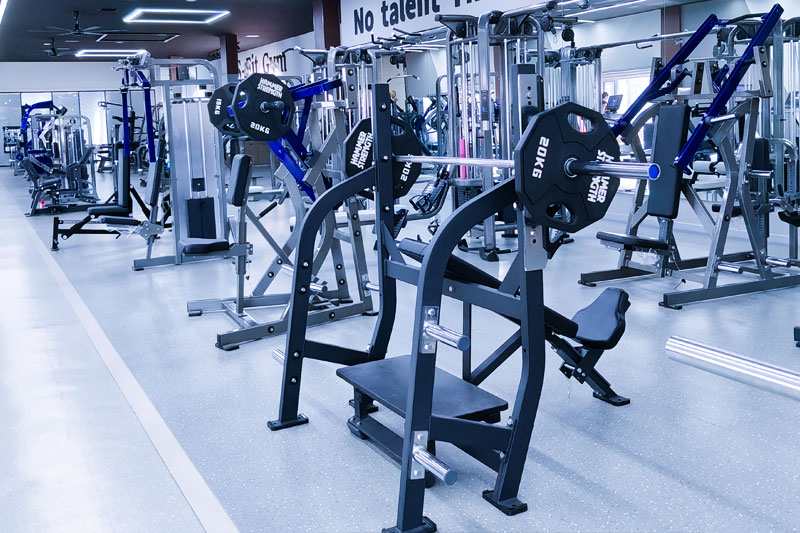
Multi station gym equipment is an integrated strength training system that allows users to perform multiple exercises using a shared frame, resistance system, or collection of connected training stations. Instead of relying on separate machines for individual muscle groups, users can move between different exercise functions within one equipment setup.
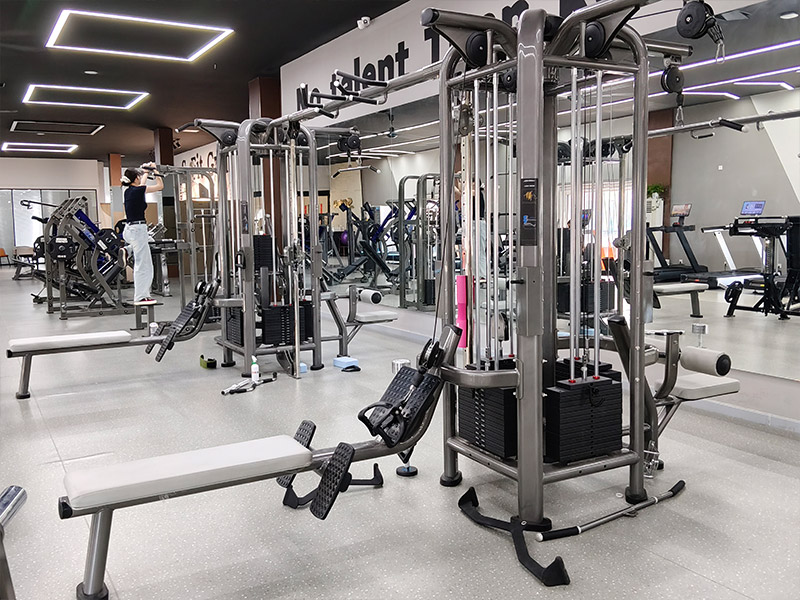
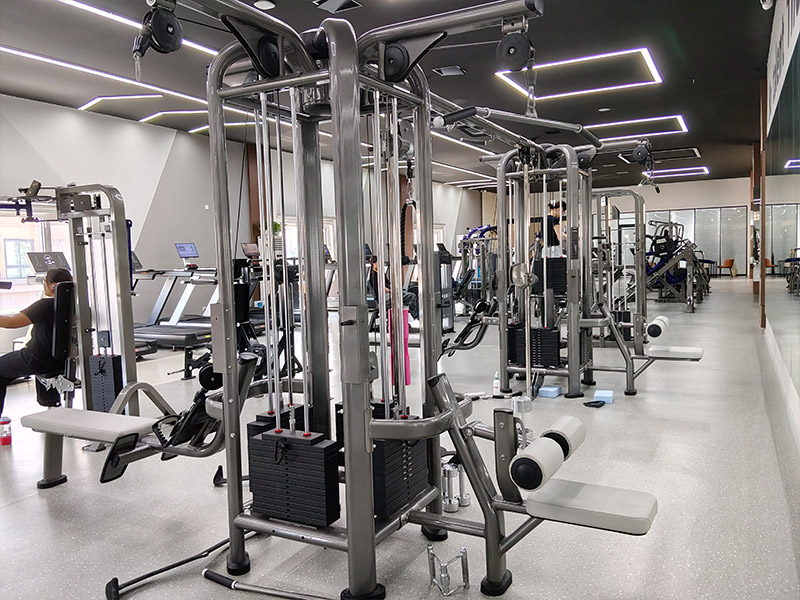
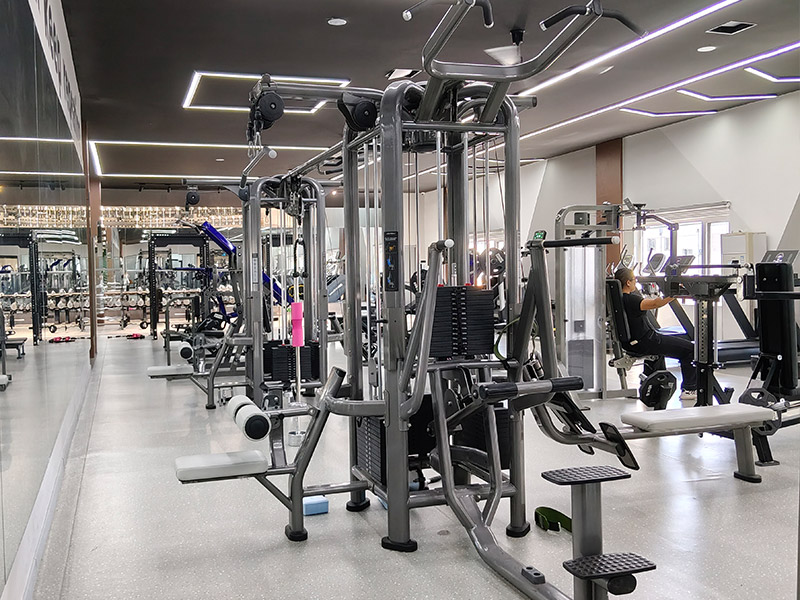
The exact design depends on the model. A compact system may include a chest press, lat pulldown, low pulley, and leg developer. A larger commercial system may provide several independent workout stations, allowing multiple users to exercise simultaneously.
Most multi station gym equipment uses one or more of the following resistance systems:
- Weight stack resistance: Users select the desired resistance with a pin connected to a stack of weight plates.
- Plate-loaded resistance: Users add weight plates to designated loading points.
- Cable and pulley resistance: Cables transfer resistance through pulleys to handles, bars, or other attachments.
- Lever-based resistance: Levers guide the movement and transfer resistance through a mechanical system.
- Combined resistance systems: Some machines integrate several resistance types into one training station.
The primary advantage of multi station gym equipment is versatility. A well-designed system can support exercises for the chest, back, shoulders, arms, legs, and core. Users can also adjust the resistance and exercise selection to suit their experience and goals.
For commercial facilities, multi station gym equipment can simplify equipment planning and create a more organized strength training area. For home users, it can provide access to a broad range of exercises without requiring a large collection of individual machines.
Main Components of Multi Station Gym Equipment
Although designs vary, most systems include several important components that influence performance, comfort, and durability.
| Component | Main Function | What Buyers Should Check |
|---|---|---|
| Main frame | Supports the machine and user | Structural stability and construction quality |
| Weight stack or loading system | Provides exercise resistance | Resistance range and loading convenience |
| Cable and pulley system | Transfers resistance | Smooth movement and component quality |
| Seats and backrests | Support users during exercise | Comfort, adjustability, and durability |
| Handles and attachments | Connect users to the resistance system | Grip comfort and exercise compatibility |
| Adjustment mechanisms | Accommodate different users | Ease of operation and secure locking |
| Leg developer | Supports selected leg exercises | Padding, movement path, and adjustability |
| Safety components | Help control movement and setup | Secure connections and appropriate safeguards |
The quality of these components directly affects how useful multi station gym equipment will be in daily training. Buyers should review the specifications of the complete system instead of judging a machine by its appearance alone.
Why Multi Station Gym Equipment Is Ideal for Full Body Training
Full body training involves exercises that target the major muscle groups throughout the body. A balanced program may include pushing, pulling, knee-dominant, hip-dominant, and core movements.
Multi station gym equipment can support many of these exercises through one integrated system. Although the exact exercise selection depends on the model, a versatile setup can provide an efficient foundation for a comprehensive strength training routine.
Train Multiple Muscle Groups
One of the biggest advantages of multi station gym equipment is its ability to support exercises for several muscle groups.
A chest press station targets the chest, shoulders, and triceps. A lat pulldown station emphasizes the back and biceps. A low pulley can support seated rows and other pulling movements, while a leg extension attachment focuses on the quadriceps.
When the system includes suitable attachments and resistance options, users can also perform cable curls, triceps pushdowns, and selected core exercises.
This broad exercise selection makes multi station gym equipment useful for people who want to develop strength throughout the body without switching between many separate machines.
Save Floor Space
Floor space is an important consideration for both home gyms and commercial facilities. Purchasing separate machines for every exercise can require substantial room, increase installation complexity, and create a crowded training environment.
Multi station gym equipment combines several functions into one footprint. This can make it easier to organize a compact workout area while retaining a useful range of strength training options.
For apartment gyms, small personal training studios, and residential fitness rooms, space efficiency can be one of the strongest reasons to choose multi station gym equipment.
However, buyers should evaluate the machine’s full dimensions and the clearance required for cables, seats, attachments, and user movement. A compact footprint does not eliminate the need for safe operating space.
Improve Workout Efficiency
Moving between different exercises is easier when multiple training functions are available within the same system. Users may be able to complete chest, back, and arm exercises without walking across the gym to locate separate machines.
This can help individuals organize their workouts and reduce unnecessary transitions between exercises. In commercial facilities, an integrated system can also make it easier to create structured beginner training programs.
The actual time savings depend on the system’s design. Some multi station gym equipment requires users to change attachments or adjust the machine between exercises, while systems with independent stations may allow faster transitions.
Support Different Fitness Levels
Multi station gym equipment can serve beginners, intermediate users, and experienced lifters when its resistance range and adjustment options are appropriate.
Beginners can start with lighter resistance and learn the basic movement patterns. More experienced users can increase resistance, adjust exercise volume, and incorporate the machine into more demanding strength training programs.
A system with clear adjustment instructions and accessible resistance controls can be particularly useful in facilities serving people with different levels of experience.
Provide Long-Term Training Variety
Training variety helps users address different muscle groups and adapt exercise selection to changing goals. Multi station gym equipment offers multiple movement options within one system, making it easier to modify a routine without purchasing additional machines.
Users can emphasize chest and back training in one session, focus on arms and shoulders in another, or combine upper-body and lower-body movements in a full body workout.
This flexibility makes multi station gym equipment useful for long-term training plans, provided users select exercises that match their goals and physical capabilities.
What Muscles Can Multi Station Gym Equipment Train?
The muscle groups trained by multi station gym equipment depend on the functions included in the system. A basic model may focus on upper-body pressing and pulling, while a more comprehensive model can support exercises for most major muscle groups.
Understanding the available training functions helps buyers determine whether a particular system can meet their needs.
Chest Muscles
Chest press stations are common features of multi station gym equipment. They allow users to push handles away from the torso against resistance, primarily targeting the pectoral muscles while also involving the triceps and front deltoids.
Some systems include adjustable cable stations that support standing cable presses and fly variations. These movements provide additional exercise options, although their availability depends on cable height, attachment compatibility, and machine design.
Back Muscles
Lat pulldown and seated row functions are valuable features for back training. Lat pulldowns emphasize the latissimus dorsi and involve the biceps and other upper-back muscles. Seated rows target the back through a horizontal pulling movement.
Multi station gym equipment with both vertical and horizontal pulling options can provide a more complete back training experience than a system that includes only one pulling function.
Shoulder Muscles
Shoulder training may be supported through pressing movements, cable exercises, and compatible attachments. Some advanced systems include a dedicated shoulder press station.
The deltoids contribute to several upper-body exercises, but users should avoid assuming that every multi station gym equipment model provides a dedicated shoulder training function. Check the manufacturer’s exercise list before purchasing.
Arm Muscles
Biceps curls and triceps pushdowns can often be performed using low or high pulley attachments. These exercises provide direct training for the muscles responsible for elbow flexion and extension.
Depending on the equipment design, users may also perform single-arm cable curls, rope pushdowns, and other variations. Attachment options and cable travel influence which movements are practical.
Leg Muscles
Some multi station gym equipment models include a leg extension and leg curl attachment. A leg extension targets the quadriceps at the front of the thighs, while a leg curl emphasizes the hamstrings.
However, not every system includes comprehensive lower-body functions. Buyers who prioritize leg training should confirm whether the machine supports their preferred exercises and provides a suitable resistance range.
Core Muscles
Certain cable systems can support exercises such as cable crunches, standing rotations, and anti-rotation movements when the design and attachments allow them.
These exercises can challenge the abdominal and trunk muscles. However, the availability of core training functions depends on the cable configuration, adjustment range, and manufacturer’s intended use.
| Muscle Group | Common Exercise | Typical Equipment Function |
|---|---|---|
| Chest | Chest press | Pressing station |
| Back | Lat pulldown | High pulley or pulldown station |
| Back | Seated row | Low pulley or rowing station |
| Shoulders | Shoulder press | Dedicated press station or suitable resistance setup |
| Biceps | Cable curl | Low pulley |
| Triceps | Triceps pushdown | High pulley |
| Quadriceps | Leg extension | Leg developer |
| Hamstrings | Leg curl | Leg curl attachment or dedicated station |
| Core | Cable crunch | Adjustable cable station |
Before choosing multi station gym equipment, compare its actual exercise functions with the muscle groups you want to train. A longer feature list is not automatically better if the machine does not fit your training priorities.
Types of Multi Station Gym Equipment
Multi station gym equipment comes in several configurations. Each type offers different advantages depending on available space, the number of users, training requirements, and budget.
Compact Home Multi Station Gym Equipment
Compact systems are designed primarily for residential use. They typically combine a limited number of strength training functions into one relatively small structure.
Common features may include a chest press, lat pulldown, low pulley, and leg extension attachment. Some models also offer additional cable exercises or adjustable components.
The main benefit of compact multi station gym equipment is convenience. Users can train at home without traveling to a fitness center, and the integrated design reduces the need for several individual machines.
When comparing compact systems, buyers should consider frame stability, resistance range, seat adjustability, overall dimensions, and the types of exercises that can be performed comfortably.
Commercial Multi Station Gym Equipment
Commercial multi station gym equipment is designed for use in fitness clubs, gyms, hotels, sports facilities, and other shared training environments.
These systems generally prioritize durability, user comfort, resistance consistency, and maintenance access. Depending on the model, they may include multiple stations or a more extensive collection of exercise functions.
Commercial buyers should evaluate the expected number of users, the operating schedule, and the equipment’s suitability for frequent use. They should also check warranty coverage, replacement parts, and technical support.
Multi Station Gym Equipment with Weight Stacks
Weight stack systems allow users to select resistance using a pin. This design is common in commercial fitness environments because it makes changing loads relatively quick and straightforward.
An integrated weight stack can also help keep the training area organized. However, the stack requires sufficient vertical clearance, and the cable and pulley system needs regular inspection.
When comparing weight stack multi station gym equipment, consider the available resistance range, increment sizes, movement smoothness, and whether the selected load is suitable for the intended users.
Cable-Based Multi Station Gym Equipment
Cable-based systems use adjustable pulleys, handles, and attachments to provide resistance through different movement paths.
Depending on the configuration, a cable station may support presses, rows, curls, pushdowns, fly movements, and selected core exercises. Adjustable cable height can expand the number of usable exercise variations.
Cable-based multi station gym equipment is especially attractive to users who value movement variety. Buyers should examine the number of cable stations, their adjustment range, attachment compatibility, and the amount of usable cable travel.
Multi Station Gym Equipment with Independent Stations
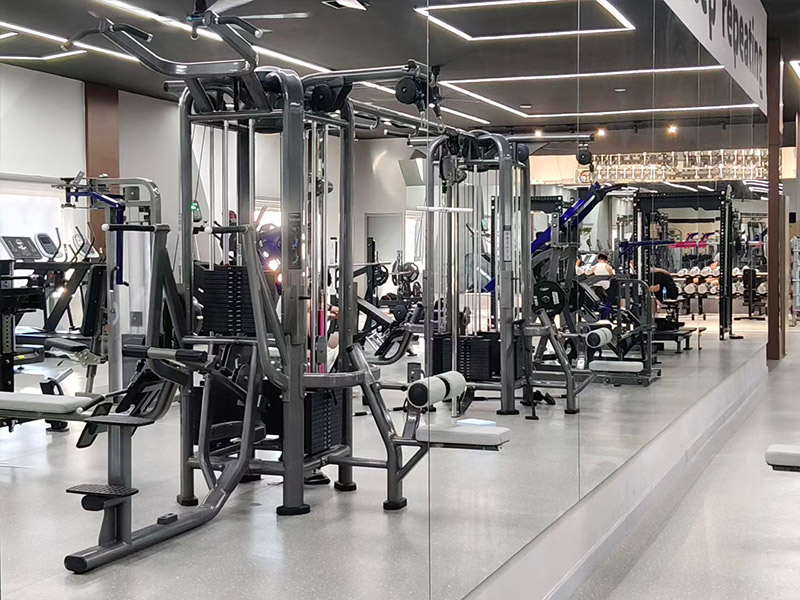
Larger systems may include several separate workout stations connected through a shared frame or integrated structure. This arrangement can allow multiple users to exercise at the same time.
Independent stations are particularly useful in commercial gyms, residential developments, and corporate fitness centers where several people may train during the same period.
Before purchasing this type of multi station gym equipment, review the total footprint, traffic flow, user capacity, and whether the stations can operate independently without interfering with one another.
| Equipment Type | Main Advantage | Important Consideration | Best Fit |
|---|---|---|---|
| Compact home system | Space-efficient training | Exercise range may be limited | Home gyms |
| Commercial system | Built for shared training environments | Requires evaluation of durability and service support | Fitness centers |
| Weight stack system | Convenient resistance selection | Stack dimensions and maintenance | Commercial and home settings |
| Cable-based system | Flexible movement options | Pulley adjustment and attachment compatibility | Users seeking exercise variety |
| Independent-station system | Supports multiple users | Larger footprint and layout planning | Gyms and shared facilities |
The most suitable multi station gym equipment is not necessarily the largest or most expensive model. It is the system that provides the right combination of exercise functions, resistance, space efficiency, and long-term reliability.
Essential Features to Look for in Multi Station Gym Equipment
When choosing multi station gym equipment, buyers should evaluate the features that directly influence usability, safety, durability, and training performance.
Strong and Stable Frame Construction
The frame supports the user and the resistance system during exercise. A stable structure helps the equipment maintain its intended position during normal operation.
Buyers should review the frame material, structural design, connection points, finish, and published specifications. For commercial equipment, ask the manufacturer about applicable testing procedures and recommended operating conditions.
Do not judge frame quality by visual size alone. Construction details, manufacturing consistency, and appropriate design specifications are also important.
Smooth Resistance Performance
Resistance should move consistently through the intended exercise path. On weight stack systems, cables, pulleys, bearings, and guide rods all influence performance.
Unusual friction, excessive noise, jerking, or inconsistent movement may indicate poor design, incorrect setup, or maintenance problems.
Whenever possible, test multi station gym equipment before purchasing it. If an in-person demonstration is not available, request detailed product videos and technical documentation.
Adjustable Seats and Backrests
Adjustable seats and backrests help users of different heights find a suitable position. This is particularly important when the equipment will be shared by many people.
A user should be able to set up the machine without awkward stretching or excessive repositioning. Adjustment mechanisms should operate smoothly and lock securely.
For commercial gyms, simple adjustment systems can improve the overall member experience and reduce confusion between exercises.
Durable Upholstery and Comfortable Padding
Seats, backrests, and leg pads should provide appropriate support without feeling unstable. Upholstery should also withstand repeated use, regular cleaning, and contact with sweat.
Commercial buyers should ask about upholstery materials, replacement options, and cleaning recommendations. Replacing worn padding should be manageable without requiring the entire machine to be taken out of service for an extended period.
Versatile Attachments
Handles, bars, ropes, and other attachments can expand the exercise options available on multi station gym equipment.
Before purchasing, confirm which attachments are included and which are optional. Check whether they are compatible with the machine’s connection points and whether additional attachments are supported by the manufacturer.
More attachments do not always mean better value. Choose the accessories that support the exercises your users are likely to perform.
Appropriate Resistance Range
The resistance range should match the intended users. A residential system may prioritize manageable resistance increments for general fitness, while a commercial system may need to accommodate a wider range of abilities.
The available load should also be appropriate for each exercise function. A system may have sufficient resistance for one movement but offer a less useful range for another, depending on its pulley ratios and mechanical design.
Safety and Maintenance Features
Multi station gym equipment should include secure adjustment points, appropriate cable connections, stable loading components, and clear operating instructions.
The machine should also allow routine inspections and maintenance. Easy access to relevant components can help facility managers identify wear before it leads to more serious problems.
| Feature | Why It Matters | What to Verify |
|---|---|---|
| Frame stability | Supports reliable operation | Construction and structural specifications |
| Resistance smoothness | Improves exercise control | Cable travel and pulley performance |
| Seat adjustment | Accommodates different users | Adjustment range and locking mechanism |
| Upholstery quality | Supports comfort and durability | Materials and replacement options |
| Attachment selection | Expands exercise variety | Included accessories and compatibility |
| Resistance range | Supports different training levels | Stack capacity or loading configuration |
| Maintenance access | Helps reduce downtime | Inspection procedures and spare parts |
| Supplier support | Helps with long-term ownership | Warranty, service, and technical assistance |
How to Choose Multi Station Gym Equipment for Your Needs
The right multi station gym equipment depends on the training environment, user expectations, and available budget. A home user may need only a few essential exercise functions, while a commercial gym may require more extensive capabilities and greater durability.
Define Your Training Goals
Start by identifying the main purpose of the equipment. If your priority is general full body training, look for a system that supports chest pressing, back pulling, arm exercises, and suitable lower-body movements.
If your goal is bodybuilding, you may prefer more direct muscle isolation options. If the equipment is intended for a family gym, adjustable resistance and straightforward operation may be more important.
Commercial buyers should also consider the needs of their target members. A facility serving beginners may value simple adjustment and clear instructions, while a strength-focused gym may prioritize resistance range and training versatility.
Measure the Available Space
Measure the installation area before selecting a model. Check the equipment’s length, width, and height, and account for the clearance needed for users to sit down, stand up, change attachments, and move through the intended exercise range.
For systems with high pulleys or overhead structures, ceiling height can be especially important. Buyers should also consider delivery access, doorways, stairways, and the route required to move the equipment into position.
A carefully planned layout can help prevent installation problems and create a more comfortable training environment.
Consider the Number of Users
A private home gym generally has different usage demands from a commercial fitness center.
For a household, a compact multi station gym equipment system may be sufficient if the users can share the machine and wait between sets. In a commercial facility, multiple independent stations may help reduce waiting time during busy periods.
Estimate the number of users, frequency of operation, and likely maintenance demands before deciding which equipment category is appropriate.
Compare Exercise Functions
Create a list of the exercises you want the equipment to support. Then compare that list with each model’s documented capabilities.
For example, if you want to train both the chest and back, confirm that the system includes suitable pressing and pulling functions. If leg training is essential, check for the relevant lower-body attachments rather than assuming they are included.
This approach prevents buyers from paying for unnecessary features while overlooking important functions.
Evaluate Total Cost
The purchase price is only one part of the total cost of multi station gym equipment. Delivery, installation, maintenance, replacement parts, and warranty conditions may affect the long-term investment.
For international buyers, freight charges, import duties, taxes, and unloading arrangements may also be relevant. Request a detailed quotation that specifies what is included.
A machine with a higher initial price may provide better value if it meets the intended needs, offers dependable performance, and can be maintained efficiently.
Full Body Workout Plan Using Multi Station Gym Equipment
A well-designed multi station gym equipment system can support a full body workout that targets the major muscle groups. The following example is intended for generally healthy adults who already understand basic exercise technique. Beginners should start with manageable resistance and adjust the plan to their experience and recovery.
Chest Press
The chest press targets the pectoral muscles while involving the triceps and front deltoids.
Adjust the seat so the handles begin around an appropriate chest-level position according to the machine’s instructions. Keep your back supported, grip the handles securely, and press forward without forcefully locking the elbows. Return the handles under control.
An example starting prescription is two or three sets of 8 to 12 repetitions.
Lat Pulldown
The lat pulldown emphasizes the back muscles, particularly the latissimus dorsi, while also involving the biceps.
Sit securely, position the thighs under the support pads if provided, and grip the bar at a comfortable width. Pull the bar toward the upper chest according to the machine’s instructions, avoiding excessive backward leaning. Return the bar gradually to the starting position.
An example starting prescription is two or three sets of 8 to 12 repetitions.
Seated Cable Row
The seated row trains the back through a horizontal pulling movement.
Sit with your feet supported, maintain a stable torso, and pull the handle toward your torso without using momentum. Allow the shoulders to move naturally through a comfortable range while keeping control of the resistance.
An example starting prescription is two or three sets of 10 to 12 repetitions.
Cable Triceps Pushdown
A high pulley can support triceps pushdowns when the appropriate attachment is available.
Stand in a stable position, keep the elbows near the torso, and extend the elbows to move the attachment downward. Return slowly without allowing the shoulders or torso to swing excessively.
An example starting prescription is two sets of 10 to 15 repetitions.
Cable Biceps Curl
A low pulley can be used for biceps curls with a compatible handle or bar.
Stand upright, maintain a stable torso, and curl the attachment by bending the elbows. Avoid leaning backward to move a heavier load. Lower the resistance under control.
An example starting prescription is two sets of 10 to 15 repetitions.
Leg Extension
If the multi station gym equipment includes a leg extension attachment, it can be used to target the quadriceps.
Adjust the seat and leg pad according to the manufacturer’s instructions. Extend the knees smoothly, then lower the resistance gradually. Avoid swinging the legs or forcing the knees into lockout.
An example starting prescription is two or three sets of 10 to 15 repetitions.
Example Full Body Training Schedule
| Exercise | Primary Muscle Group | Example Sets | Example Repetitions |
|---|---|---|---|
| Chest press | Chest, triceps, front shoulders | 2–3 | 8–12 |
| Lat pulldown | Back and biceps | 2–3 | 8–12 |
| Seated cable row | Back and biceps | 2–3 | 10–12 |
| Cable triceps pushdown | Triceps | 2 | 10–15 |
| Cable biceps curl | Biceps | 2 | 10–15 |
| Leg extension | Quadriceps | 2–3 | 10–15 |
This sample routine does not cover every movement pattern or muscle group. A more comprehensive program may need exercises for the hamstrings, glutes, calves, and core. Some of these movements may require additional equipment or exercises using body weight.
Users should select resistance that allows good technique and leave enough recovery between sessions. Training frequency and total volume should reflect individual experience, goals, and recovery capacity.
Multi Station Gym Equipment for Home Gyms
Home fitness has become an important consideration for people who want flexible training schedules and convenient access to strength equipment. Multi station gym equipment can help create a practical home workout area without filling the room with numerous individual machines.
Maximize Limited Space
Many home gyms operate in spare rooms, garages, basements, or compact residential areas. A multi station gym equipment system can provide several exercise options within one integrated structure.
Before purchasing, measure the available area and compare it with the equipment’s complete dimensions. Allow additional clearance for exercise movement, adjustment, access, and maintenance.
Foldable or compact designs may be useful in some settings, but buyers should verify the actual dimensions and operating requirements rather than relying only on marketing descriptions.
Support Consistent Training
A home multi station gym equipment system can reduce the need to travel to a fitness facility. This convenience may make it easier to maintain a regular workout schedule.
Users can create repeatable routines, track resistance and repetitions, and adjust exercises as their goals change. Consistency remains more important than purchasing the largest or most feature-rich machine.
Choose Easy-to-Use Controls
For home users, straightforward resistance selection and adjustment mechanisms can improve the training experience. If several family members share the machine, adjustable seating and accessible controls become even more important.
Read the instructions carefully and ensure that all users understand how to change resistance, secure attachments, and operate the machine safely.
Balance Features and Budget
A home user may not need every function available on a large commercial system. Focus on the movements you intend to perform regularly and choose a machine that supports those exercises comfortably.
It is also worth considering future needs. A system with suitable attachment compatibility and a useful resistance range may provide more flexibility as training experience increases.
Multi Station Gym Equipment for Commercial Fitness Centers
Commercial gyms require equipment that supports repeated use by different people throughout the day. Multi station gym equipment can help facility managers provide varied strength training options while managing floor space and operating costs.
Improve Facility Layout
An integrated system can combine several exercise functions within a defined area. This may simplify gym layout planning and help create clear strength training zones.
However, commercial buyers should consider user movement, access to other machines, and the space needed for changing attachments. The goal is not simply to fit more equipment into the room but to create a functional and safe training environment.
Accommodate Different Fitness Levels
Commercial facilities often serve beginners, experienced lifters, older adults, and people returning to exercise after a period of inactivity.
Multi station gym equipment with clear adjustments and a suitable resistance range can accommodate a wider range of users. Staff should also provide appropriate instruction, particularly when members are unfamiliar with the machine.
Prioritize Durability
Frequent use can increase wear on cables, pulleys, upholstery, adjustment mechanisms, and other components.
Buyers should review the manufacturer’s maintenance recommendations and ask how replacement parts can be obtained. Commercial equipment should be selected according to documented specifications and expected usage rather than appearance alone.
Plan for Maintenance
Preventive maintenance can help identify wear before it causes significant disruption. Facility managers should establish inspection schedules for structural components, cables, pulleys, adjustment points, and upholstery.
Clear maintenance documentation and access to technical support can make equipment ownership easier. When evaluating suppliers, ask about service procedures, warranty coverage, and the availability of replacement components.
Common Mistakes When Buying Multi Station Gym Equipment
Choosing the wrong multi station gym equipment can lead to wasted space, limited exercise options, unnecessary expense, or maintenance difficulties. Avoiding common purchasing mistakes helps buyers make more informed decisions.
Focusing Only on Price
The cheapest model may not provide the durability, adjustment range, or exercise functions required for long-term use.
Compare the specifications, warranty, construction, and service arrangements of different options. Consider the total ownership cost instead of choosing solely on the initial purchase price.
Ignoring Important Exercise Functions
A machine may look versatile but still lack a function that is essential to your training program.
Review the exercise list carefully. If you need leg training, for example, confirm that the system includes suitable leg attachments or determine whether additional equipment will be necessary.
Underestimating Space Requirements
A machine may fit physically into a room but still be difficult to use if there is insufficient clearance around it.
Measure the equipment, account for overhead height, and plan space for exercise movement and access. For commercial facilities, also consider how users will move between stations.
Overlooking Adjustment Quality
Poorly designed adjustment mechanisms can make multi station gym equipment uncomfortable or difficult to share.
Check whether the seat, backrest, pulley positions, and other adjustable parts can accommodate the intended users. Make sure the mechanisms are secure and straightforward to operate.
Neglecting After-Sales Support
Equipment problems can be expensive when spare parts are unavailable or supplier communication is unreliable.
Before purchasing, confirm warranty conditions, technical support arrangements, expected lead times for replacement parts, and maintenance requirements. These factors are especially important for commercial gyms and overseas buyers.
Maintenance Tips for Multi Station Gym Equipment

Regular maintenance helps preserve the performance and service life of multi station gym equipment. Maintenance procedures vary by design, so follow the manufacturer’s documentation.
Inspect Cables and Pulleys
Check cables for visible fraying, damage, or unusual movement. Inspect pulleys and related components for wear, noise, or resistance changes.
Damaged components should be addressed according to the manufacturer’s instructions. Do not continue using equipment if a cable or other essential part appears unsafe.
Check Bolts and Structural Connections
Inspect accessible fasteners, frame connections, and adjustment points at the recommended intervals. Look for looseness, unusual movement, or visible damage.
Repairs should follow the manufacturer’s procedures, and damaged structural components should be evaluated before the equipment returns to service.
Clean Seats and Handles
Seats, backrests, grips, and attachments should be cleaned regularly using suitable products. Avoid cleaning agents that may damage upholstery or surface finishes.
Commercial facilities should establish cleaning procedures that match their operating conditions and follow the manufacturer’s recommendations.
Test Adjustment Mechanisms
Check that seat adjustments, locking pins, cable positions, and other mechanisms move and secure correctly.
If a mechanism does not lock properly or becomes difficult to operate, arrange inspection and repair as appropriate.
Keep Maintenance Records
Record routine inspections, repairs, and replacement parts, particularly in commercial facilities. These records can help managers identify recurring problems and plan preventive maintenance.
A supplier that offers clear documentation and access to replacement components can make long-term equipment management more efficient.
How to Select a Reliable Multi Station Gym Equipment Manufacturer
For gym owners, distributors, wholesalers, and fitness equipment importers, choosing the right manufacturer is an important part of the purchasing process. Product quality and after-sales support can influence customer satisfaction and long-term business performance.
Review Product Specifications
A professional manufacturer should provide clear information about dimensions, resistance systems, materials, adjustment functions, included accessories, and installation requirements.
Request technical documentation for the exact model you intend to purchase. Avoid relying on general descriptions that do not explain the equipment’s actual capabilities.
Evaluate Manufacturing Quality
Ask about production procedures, quality control, inspection standards, and the way the manufacturer manages product consistency.
Where possible, inspect a sample or arrange a demonstration. Review frame construction, cable movement, upholstery, adjustment mechanisms, and overall finishing.
Confirm Customization Options
Some manufacturers offer customization options such as branding, upholstery colors, packaging, or configuration changes. These options may be useful for distributors, commercial fitness chains, and private-label buyers.
Confirm which customizations are available, whether they affect the minimum order quantity, and how they influence production lead time and price.
Check Warranty and Spare Parts
Ask the manufacturer to explain the warranty terms and identify components that may require periodic replacement.
For multi station gym equipment, cables, pulleys, upholstery, handles, and adjustment components may need attention over time. Access to replacement parts can help reduce downtime.
Assess Communication and Delivery
For international purchases, communication quality, packaging, shipping coordination, and technical documentation are important considerations.
Buyers should confirm production timelines, shipping terms, packaging dimensions, installation guidance, and the documents required for delivery. Clear communication can reduce uncertainty throughout the purchasing process.
| Manufacturer Evaluation Factor | Questions to Ask |
|---|---|
| Product documentation | Are complete specifications available for each model? |
| Quality control | What inspections are performed before shipment? |
| Customization | Are branding and configuration options available? |
| Warranty | What parts and service costs are covered? |
| Spare parts | How can replacement components be ordered? |
| Production capacity | Can the supplier meet the required order volume? |
| Delivery | What are the production and shipping arrangements? |
| Technical support | Is assistance available after installation? |
A reliable supplier should be able to explain its products clearly and provide realistic information about performance, lead times, support, and maintenance.
If you need fitness equipment or other services, please contact us!
Email: zhiningfitnessoffical@zhiningfitness.com
WhatsApp: +86 17852510552
Facebook: https://www.facebook.com/profile.php?id=61594381827546
Conclusion
Multi station gym equipment is a versatile solution for people who want to perform a wide range of strength training exercises with one integrated system. By combining functions such as chest presses, lat pulldowns, seated rows, cable exercises, and selected leg movements, multi station gym equipment can support a practical full body training routine.
For home users, the main advantages include convenience, space efficiency, and the ability to train several muscle groups without purchasing many separate machines. For commercial fitness centers, multi station gym equipment can help improve floor planning, expand exercise options, and serve members with different training goals.
However, choosing the right system requires careful evaluation. Buyers should consider frame construction, resistance performance, adjustment options, exercise functions, dimensions, maintenance requirements, and after-sales support. Commercial buyers should also assess the manufacturer’s production capabilities, warranty conditions, spare-part availability, and delivery arrangements.
The best multi station gym equipment is not necessarily the model with the most features. It is the system that matches the intended users, training requirements, available space, and long-term budget.
By comparing specifications carefully and maintaining the equipment correctly, users and facility managers can make a more informed investment in multi station gym equipment that supports consistent, effective, and convenient full body training.
FAQ
What Is Multi Station Gym Equipment?
Multi station gym equipment is an integrated strength training system that allows users to perform multiple exercises using one machine or connected set of stations. Depending on the design, it may include chest presses, lat pulldowns, seated rows, cable exercises, arm training functions, and selected leg exercises.
Is Multi Station Gym Equipment Suitable for Full Body Training?
Yes, multi station gym equipment can support full body training when it includes suitable exercises for the major muscle groups. Buyers should check that the system offers appropriate pushing, pulling, and lower-body functions. Some models may require additional equipment to create a more complete training program.
Is Multi Station Gym Equipment Good for Home Gyms?
Multi station gym equipment can be a practical choice for home gyms because it combines several exercise functions in one setup. Before purchasing, measure the available space, check the resistance range, and confirm that the machine supports the exercises you plan to perform regularly.
How Do I Choose Commercial Multi Station Gym Equipment?
When selecting commercial multi station gym equipment, evaluate frame construction, resistance smoothness, adjustment options, exercise variety, dimensions, and maintenance requirements. Also review warranty terms, spare-part availability, manufacturer quality control, and technical support to assess long-term value.
How Often Should Multi Station Gym Equipment Be Maintained?
Multi station gym equipment should be inspected and cleaned according to the manufacturer’s recommendations and the frequency of use. Regular checks should cover cables, pulleys, fasteners, upholstery, and adjustment mechanisms. Commercial facilities may need more frequent inspections because the equipment is used by more people throughout the day.