Introduction
Choosing the right commercial gym equipment manufacturer is one of the most important decisions for gym owners, fitness center operators, gym equipment distributors, and commercial fitness investors. The quality of your equipment directly affects the training experience, facility reputation, maintenance costs, and long-term profitability of your business. With numerous manufacturers offering different products, prices, and services, finding a reliable manufacturing partner requires careful research and evaluation.
A professional commercial gym equipment manufacturer does more than produce exercise machines. A reliable manufacturer should understand the needs of commercial fitness facilities, provide durable products, maintain consistent quality standards, offer suitable customization options, and deliver dependable after-sales support. These factors become especially important when purchasing equipment in bulk or developing a long-term supply relationship.
Whether you are opening a new gym, upgrading an existing fitness center, launching a fitness equipment distribution business, or sourcing products for multiple locations, selecting the right commercial gym equipment manufacturer can help you reduce purchasing risks and build a competitive advantage.
However, the lowest quotation does not always represent the best investment. Buyers must evaluate manufacturing capabilities, product specifications, quality control procedures, delivery schedules, warranty policies, and the supplier’s ability to meet future requirements. A manufacturer that offers the right balance of quality, functionality, price, and service can become a valuable partner as your business grows.
This guide explains how to choose a commercial gym equipment manufacturer, what factors to evaluate before placing an order, which questions to ask potential suppliers, and how to avoid common purchasing mistakes. By following these practical steps, you can make informed decisions and establish a reliable supply chain for your commercial fitness equipment needs.
Understand Your Commercial Gym Equipment Requirements
Before searching for a commercial gym equipment manufacturer, define your purchasing requirements. Understanding what your business needs will make it easier to compare manufacturers, evaluate quotations, and select equipment that supports your operational goals.
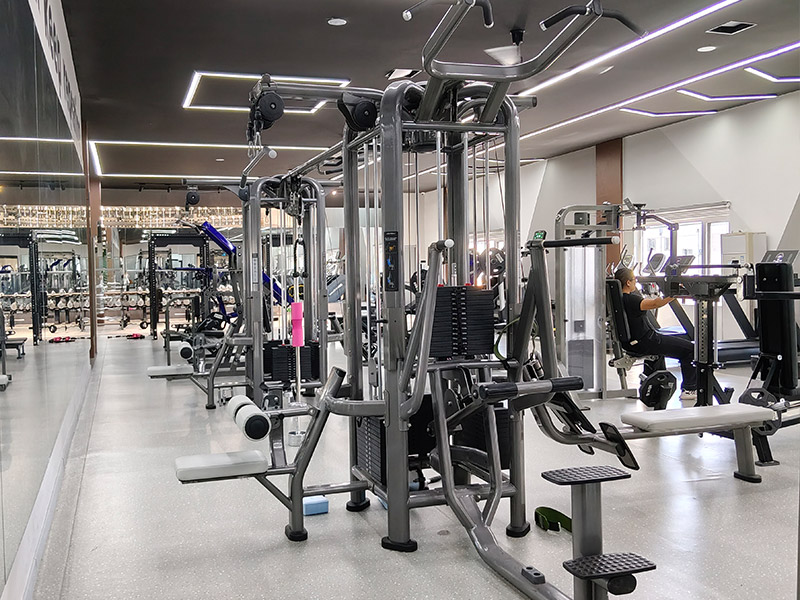
Different fitness facilities require different equipment combinations. A bodybuilding gym may prioritize plate-loaded strength machines and free weights, while a hotel fitness center may need compact cardio equipment and easy-to-use resistance machines. A fitness equipment distributor may require a broader product range, competitive wholesale pricing, and consistent supply capacity.
Identify Your Target Customers
The first step is to understand who will use the equipment. Your target customers determine the types of machines, resistance systems, sizes, and features you should prioritize.
For example, a commercial gym serving experienced strength athletes may need a comprehensive collection of chest press machines, shoulder press machines, rowing machines, leg presses, squat machines, and free weights. A community fitness center may require a balanced selection of strength and cardio equipment that accommodates beginners and experienced users.
If you operate a hotel, apartment complex, or corporate fitness room, available space and ease of use may be more important than having an extensive range of specialized machines.
A commercial gym equipment manufacturer should be able to explain the differences between its product categories and help you identify suitable options for your target market. However, buyers should establish their requirements first rather than relying entirely on a supplier’s recommendations.
Determine the Equipment Categories You Need
Commercial gym equipment generally includes several major categories, each serving different training purposes.
| Equipment Category | Common Products | Main Application |
|---|---|---|
| Strength training machines | Chest press, shoulder press, lat pulldown | Structured resistance training |
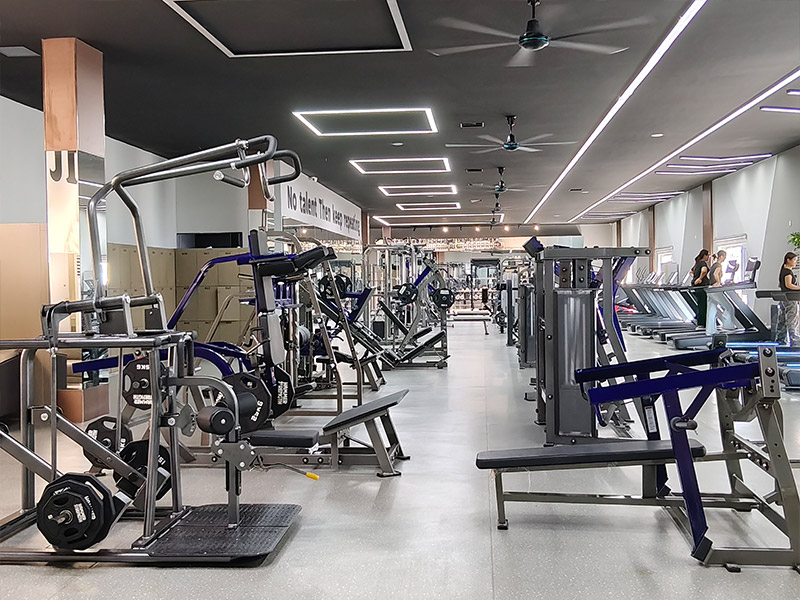
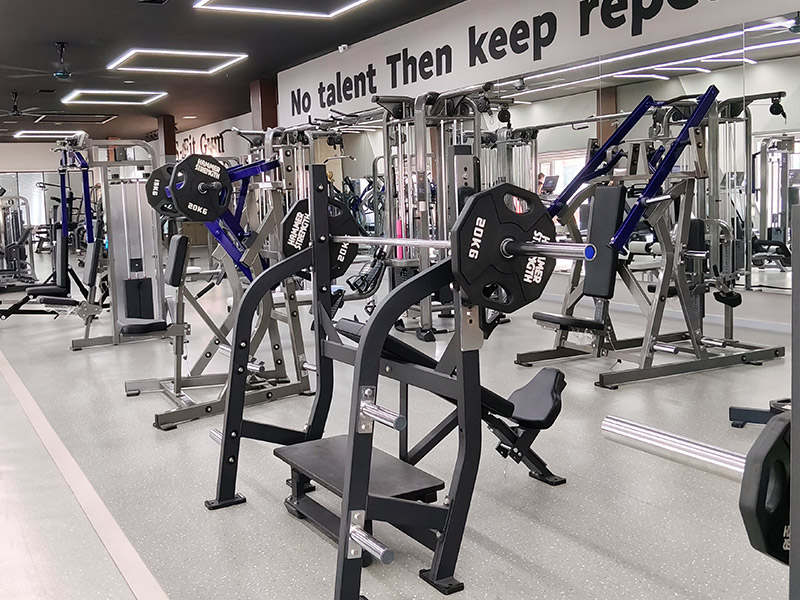
| Plate-loaded machines | Iso-lateral row, incline press, leg press | Progressive strength development |
| Selectorized machines | Leg extension, leg curl, seated row | Convenient weight adjustment |
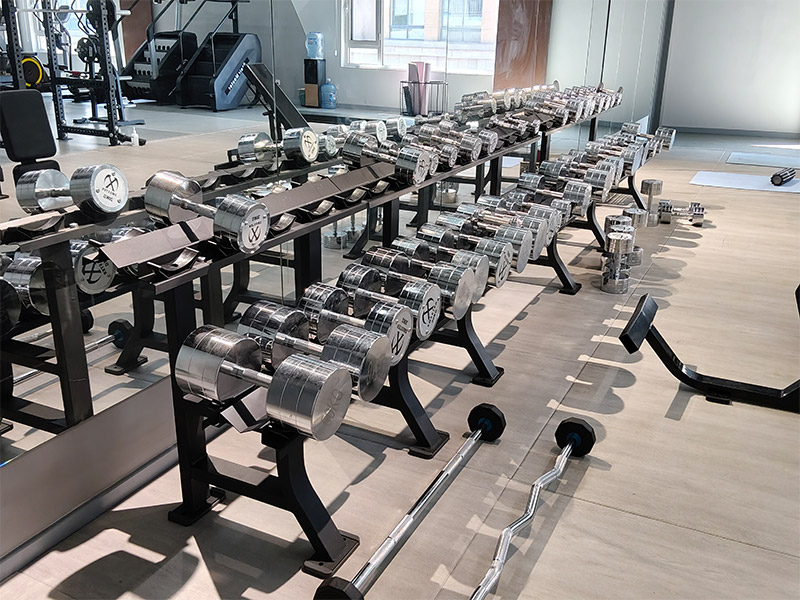
| Free weights | Dumbbells, barbells, weight plates | Flexible strength training |
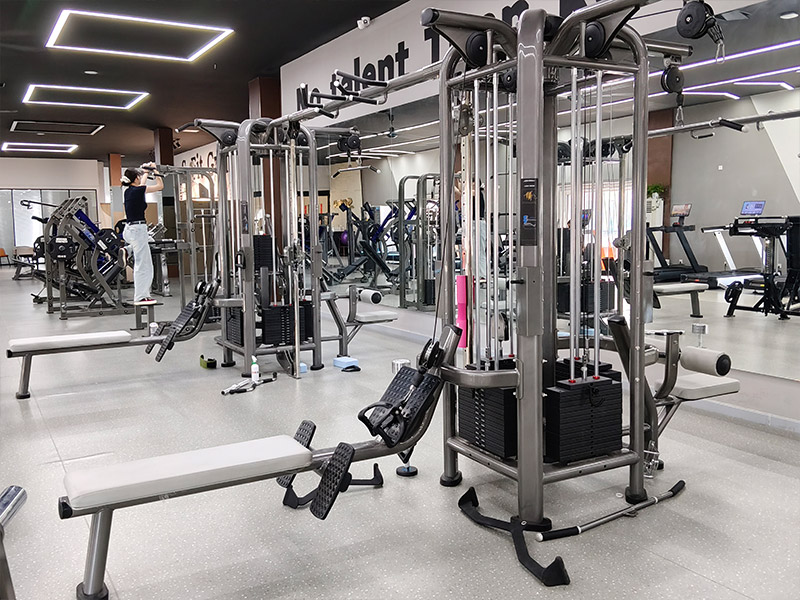
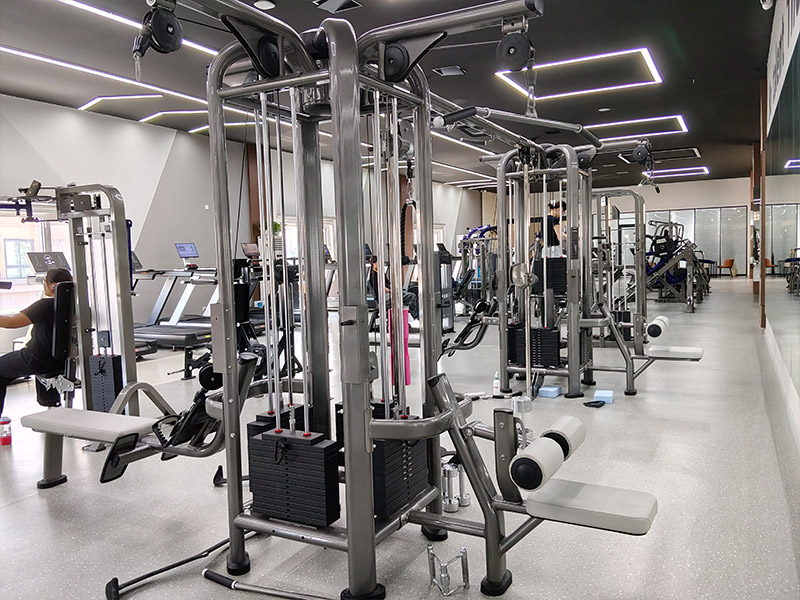
| Functional training equipment | Cable crossover, functional trainer | Multi-angle resistance exercises |
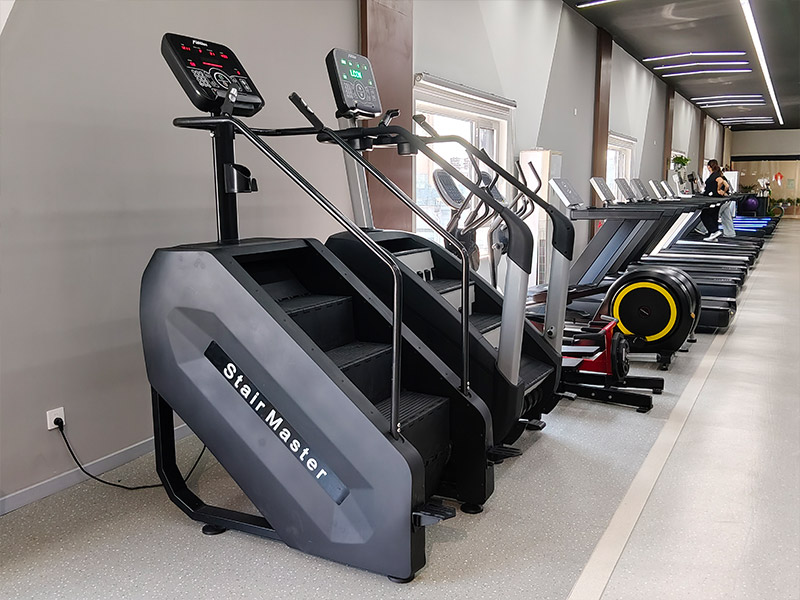
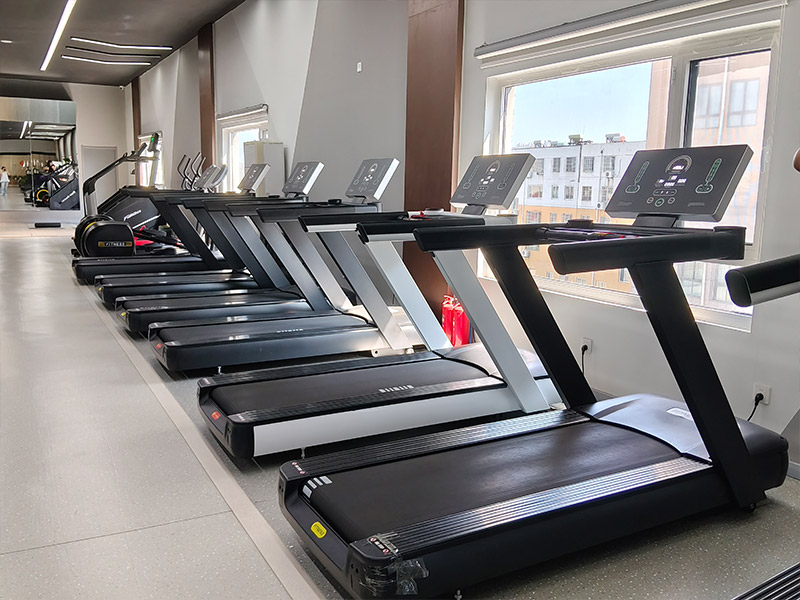
| Cardio equipment | Treadmills, exercise bikes, ellipticals | Cardiovascular conditioning |
| Benches and racks | Adjustable benches, squat racks | Free-weight and compound exercises |
| Specialty equipment | Smith machines, assisted pull-up machines | Specific training requirements |
When comparing commercial gym equipment manufacturers, check whether they offer the categories you need. Purchasing from a manufacturer with a suitable product range may simplify product selection, shipment coordination, spare-parts management, and future expansion.
Establish Your Budget and Purchasing Volume
Your budget should include more than the equipment purchase price. Shipping, customs duties, installation, accessories, spare parts, and maintenance may increase the total investment.
You should also determine whether you need a small initial order or a large wholesale shipment. Some manufacturers are better suited to customized projects, while others specialize in standardized production and large-volume orders.
Provide potential suppliers with a clear purchasing list that includes equipment categories, quantities, required specifications, and delivery expectations. This makes quotations easier to compare and reduces the risk of receiving prices based on different assumptions.
Evaluate the Manufacturing Capabilities of a Commercial Gym Equipment Manufacturer
Manufacturing capability is a major factor when selecting a commercial gym equipment manufacturer. A supplier may have an attractive website and extensive product catalog, but buyers still need to understand how the company produces, assembles, inspects, and delivers its equipment.
A capable manufacturer should demonstrate that its production processes can meet your quality requirements and expected order volume.
Verify Factory Operations
If possible, visit the manufacturer’s factory or arrange a live video tour. Observe the production environment, assembly areas, storage facilities, and quality inspection procedures.
Relevant manufacturing processes may include metal cutting, welding, machining, surface treatment, upholstery production, assembly, and functional testing. Not every manufacturer performs every process in-house, so ask which operations are managed internally and which are outsourced.
A factory visit can help you understand whether the manufacturer has suitable production resources. It can also provide insight into how the company manages raw materials, work in progress, finished products, and production scheduling.
If an onsite visit is not practical, request recent factory photographs, production videos, product inspection records, and a live demonstration of representative equipment.
Check Production Capacity
Production capacity matters when you are ordering multiple machines, managing a distribution business, or planning a gym opening around a fixed date.
Ask the commercial gym equipment manufacturer about its normal production lead time, available production capacity, and ability to handle seasonal demand or larger orders. Clarify whether lead times begin after deposit confirmation, final specification approval, or another milestone.
It is also useful to ask how the manufacturer manages production delays, raw material shortages, and urgent replacement orders.
A supplier should provide realistic delivery estimates rather than promising unusually short lead times without explaining how they will be achieved.
Assess Research and Development Capabilities
A manufacturer with product development capabilities may offer greater flexibility when you need specialized equipment, improved ergonomics, or customized configurations.
Research and development can include frame design, resistance mechanism development, product testing, adjustment improvements, and the introduction of new machines.
For example, an experienced commercial gym equipment manufacturer may offer iso-lateral strength machines with independent movement arms, adjustable cable systems, or equipment configurations designed to fit different training spaces.
If customization is important to your business, ask whether the manufacturer can modify existing designs, develop new products, or produce equipment according to approved drawings and technical specifications.
Confirm Whether the Supplier Is a Manufacturer or Trading Company
Both manufacturers and trading companies can serve commercial equipment buyers, but their capabilities may differ.
A direct manufacturer may provide closer access to production information, technical staff, and customization decisions. A trading company may offer a wider selection from multiple factories and help coordinate purchasing across different product categories.
Neither business model is automatically better. The key is to understand the supplier’s role and determine whether it matches your requirements.
| Evaluation Factor | Direct Manufacturer | Trading Company |
|---|---|---|
| Production control | Often has direct control over its own production | Depends on partner factories |
| Product customization | May offer direct engineering coordination | Depends on factory relationships |
| Product range | May focus on its own catalog | May combine products from multiple suppliers |
| Pricing structure | May provide direct factory quotations | May include sourcing and coordination costs |
| Quality management | Should demonstrate factory inspection procedures | Should explain supplier selection and inspection processes |
| Order coordination | Can manage its own production schedule | May coordinate multiple factories and shipments |
Regardless of the business model, verify the company’s legal identity, business history, product knowledge, and ability to fulfill the order. A reliable commercial gym equipment manufacturer or sourcing partner should provide clear documentation and transparent communication.
Examine Product Quality and Durability
Product quality is one of the most important factors when choosing a commercial gym equipment manufacturer. Commercial fitness equipment may be used by dozens or hundreds of people each day, making durability, stability, and consistent performance essential.
A low initial purchase price may become expensive if machines require frequent repairs, develop structural problems, or need replacement earlier than expected.
Inspect Frame Materials and Construction
The frame supports the machine’s structure and influences its stability during exercise. When evaluating commercial gym equipment, ask the manufacturer about the materials, frame dimensions, load specifications, welding procedures, and surface treatment.
Do not assume that a thicker frame or heavier machine is automatically better. The design must be appropriate for the intended loads, movement patterns, and operating conditions.
Look for consistent workmanship, properly finished joints, secure connections, and a stable base. Where applicable, ask whether structural components have been tested according to relevant requirements.
The commercial gym equipment manufacturer should be able to provide technical specifications rather than relying solely on general claims such as heavy-duty construction or premium quality.
Evaluate Resistance Systems and Moving Components
Resistance systems affect how equipment feels during use and how reliably it operates over time.
For selectorized machines, inspect the weight stack, selector pin, guide rods, cable routing, pulleys, and adjustment mechanisms. For plate-loaded machines, evaluate the lever arms, bearings, loading sleeves, pivot points, and movement path.
Moving components should operate smoothly and should not produce unusual noise, excessive looseness, or inconsistent resistance during normal operation.
For cardio equipment, examine the drive system, moving surfaces, adjustment controls, console components, and service requirements.
Ask the commercial gym equipment manufacturer which components are considered wear parts and how replacements can be ordered. This information is particularly important for businesses operating several facilities or managing large equipment fleets.
Check Upholstery, Handles, and Adjustability
Contact points influence comfort, usability, and maintenance requirements. Seats, backrests, pads, handles, and foot supports should be designed for repeated commercial use.
Check whether upholstery is durable, seams are properly finished, and padding provides appropriate support. Handles should offer a secure grip, while adjustment mechanisms should be easy to operate and lock securely into position.
Commercial gym equipment should accommodate users with different body sizes and training experience. Adjustable seats, clear setting indicators, and practical starting positions can improve accessibility.
Before purchasing large quantities, request a sample machine or arrange a demonstration if the order value justifies it. Actual use can reveal problems that may not be obvious from photographs or catalog descriptions.
Request Product Testing and Quality Documentation
A reliable commercial gym equipment manufacturer should explain how its products are inspected before shipment.
Depending on the equipment type, quality checks may include:
- Visual inspection of materials and finished surfaces.
- Verification of dimensions and assembly.
- Functional testing of moving components.
- Inspection of cables, pulleys, bearings, and adjustment systems.
- Verification of applicable safety labels and warnings.
- Review of packaging and shipment protection.
Ask for relevant test reports, declarations, certifications, or compliance documents where applicable. Verify that any claimed certification covers the specific product and relevant market requirements.
Do not rely on an unsupported claim that all products meet international standards. Request the documentation needed for your intended market and installation environment.
Compare Commercial Gym Equipment Manufacturers by Total Cost
Price is an important purchasing consideration, but the lowest quotation is not necessarily the best option. Buyers should compare the full cost of acquiring, installing, maintaining, and operating commercial gym equipment.
A reliable commercial gym equipment manufacturer should provide a clear quotation that identifies the products, quantities, specifications, accessories, and commercial terms.
Understand What the Quotation Includes
When comparing quotations, ensure that each supplier is pricing equivalent products.
One manufacturer may quote a machine with a particular weight stack, upholstery configuration, or accessory package, while another may exclude those items. Differences in packaging, delivery terms, and warranty coverage can also affect the final cost.
Ask each supplier to itemize the quotation and identify any optional charges.
| Cost Component | What Buyers Should Verify |
|---|---|
| Equipment price | Model, quantity, configuration, and included accessories |
| Packaging | Export packaging and protection during transit |
| Shipping | Freight charges and delivery arrangements |
| Customs and taxes | Applicable import duties, taxes, and clearance fees |
| Installation | Assembly requirements and professional installation costs |
| Spare parts | Price and availability of replacement components |
| Maintenance | Recommended servicing and associated costs |
| Warranty | Coverage, exclusions, and claim procedures |
| Payment terms | Deposit, balance, and payment milestones |
For international orders, also clarify the delivery term under the agreed Incoterms rule, the named delivery location, and the allocation of transport-related responsibilities.
These details make it easier to calculate the total landed cost and avoid unexpected expenses.
Compare Total Cost of Ownership
Total cost of ownership includes the expenses associated with purchasing and maintaining equipment throughout its useful life.
Consider two hypothetical machines. Machine A has a lower purchase price but requires more frequent maintenance and has expensive replacement components. Machine B costs more initially but offers better serviceability and more accessible spare parts.
Machine B may provide better long-term value if the reduction in maintenance costs and downtime outweighs the additional purchase price.
Use the following formula as a simplified planning tool:
Total cost of ownership = Purchase cost + Delivery and installation + Maintenance and repairs + Replacement components + Downtime-related costs
Actual service life and maintenance costs vary by product, usage intensity, and operating environment. Request realistic information from the manufacturer instead of assuming that a higher-priced machine will always last longer.
Evaluate Value Rather Than Price Alone
A professional commercial gym equipment manufacturer should explain the value behind its pricing.
This may include better component specifications, improved ergonomics, more reliable production processes, easier maintenance, or stronger after-sales support.
For distributors, value may also include stable wholesale pricing, consistent product availability, and support for product marketing.
The objective is to select a supplier that meets your quality and business requirements at a sustainable cost, rather than simply choosing the cheapest quotation.
Review Customization and OEM/ODM Services
Customization can be important for gym chains, distributors, fitness brands, hotel groups, and businesses that want a consistent visual identity across their facilities.
Not every commercial gym equipment manufacturer offers the same level of customization. Some provide standard color choices, while others support more extensive product modifications or OEM/ODM projects.
Frame Colors and Brand Identity
Many manufacturers allow buyers to select frame colors, upholstery colors, or logo placement. These options can help a fitness facility maintain a consistent brand identity.
Before confirming customization, request a color chart, sample finish, or approved visual proof. Ask whether custom colors require minimum order quantities or additional production time.
For larger projects, approve the final specifications in writing before manufacturing begins.
Product Design and Configuration
Depending on its engineering capabilities, a commercial gym equipment manufacturer may be able to modify dimensions, handles, adjustment systems, accessories, or other design elements.
However, changes to structural components or resistance mechanisms should be assessed carefully. Customization must not compromise the machine’s stability, intended use, or compliance with relevant safety requirements.
If you require a nonstandard product, provide drawings, dimensions, intended loading conditions, and functional requirements. Ask the manufacturer to confirm feasibility and document the approved design.
OEM and ODM Manufacturing
OEM and ODM services can be useful for fitness equipment brands and distributors.
OEM arrangements generally involve manufacturing products according to a buyer’s specifications or established design. ODM arrangements generally involve a manufacturer providing its own product design for sale under an agreed branding or commercial arrangement.
The precise scope depends on the contract. Before starting a project, clarify ownership of designs, tooling, trademarks, technical drawings, and any customized components.
Also confirm minimum order quantities, sample approval procedures, production lead times, quality standards, and the handling of defective products.
| Customization Area | Questions to Ask |
|---|---|
| Logo | Can the manufacturer apply the buyer’s logo? |
| Frame finish | Are custom colors and coatings available? |
| Upholstery | Can seat and pad colors be selected? |
| Product dimensions | Can approved dimensions be modified? |
| Accessories | Can additional handles or attachments be supplied? |
| OEM production | Can the equipment be produced to buyer specifications? |
| ODM services | Are manufacturer-designed products available for private labeling? |
| Design ownership | Who owns drawings and custom design elements? |
| Minimum order | What quantities are required for customization? |
| Production time | How does customization affect delivery schedules? |
A capable commercial gym equipment manufacturer should explain the available options, limitations, costs, and production implications before accepting the order.
Assess Warranty and After-Sales Support
After-sales support is essential when purchasing commercial gym equipment. Even well-manufactured products require maintenance, and components may eventually need adjustment or replacement.
For a commercial facility, equipment downtime can interrupt training programs, reduce available workout stations, and create additional operating costs.
Review Warranty Coverage Carefully
Ask the commercial gym equipment manufacturer to provide its warranty terms in writing. Check the coverage period for structural frames, moving parts, cables, upholstery, electronics, and other major components.
Different components may have different warranty periods, and some items may be excluded because they are considered consumable or subject to normal wear.
Also clarify whether the warranty covers parts only or includes labor, transportation, technical support, and onsite service.
For international buyers, understand who is responsible for shipping replacement parts and whether local service providers can assist with repairs.
Check Spare Parts Availability
Replacement parts should be available within a reasonable period. This is especially important for cable machines, selectorized strength machines, and cardio equipment with electronic components.
Ask for a spare-parts list and identify components that may require periodic replacement. Confirm whether the manufacturer can provide part numbers, installation instructions, and technical documentation.
For large projects, consider purchasing a small inventory of essential spare parts to reduce the impact of unexpected failures.
A commercial gym equipment manufacturer with organized parts management can make long-term maintenance easier and more predictable.
Evaluate Technical Support
Technical support may include troubleshooting instructions, remote assistance, repair guidance, and replacement component coordination.
Before placing an order, ask how support requests are handled and what information the service team requires. Confirm business hours, response procedures, communication channels, and the availability of technical documents.
If you operate in a different time zone, consider whether the manufacturer’s support arrangements are suitable for your business.
Strong after-sales support is not simply an additional benefit. It is part of the overall value of the equipment and should be included in your supplier evaluation.
Check Certifications and Safety Compliance
Commercial gym equipment must be suitable for its intended environment and comply with applicable requirements in the destination market. Certification and documentation should therefore be considered before purchasing.
A commercial gym equipment manufacturer should identify the standards or regulatory requirements relevant to its products and intended markets. Buyers should independently verify important claims rather than assuming that a manufacturer’s general statement establishes compliance.
Verify Relevant Standards
Different product categories and countries may have different requirements. Strength machines, treadmills, exercise bikes, and other equipment may be subject to different technical standards, electrical requirements, labeling rules, or installation conditions.
Ask the manufacturer which standards apply to the specific equipment you plan to purchase. Request the relevant declarations, test reports, or certificates where required.
Check that the documents identify the correct manufacturer, product model, scope, and applicable standard. If certification is important for import approval, insurance, or contractual obligations, consult the appropriate local authority or qualified compliance professional.
Review Product Safety Features
Safety features vary by equipment type. Commercial strength machines may require secure adjustment systems, protected moving components, suitable loading limits, and clear warning labels.
Cardio machines may include emergency stops, speed controls, safety keys, or other features appropriate to the product design.
Buyers should also review installation instructions, maintenance requirements, user warnings, and recommended operating conditions.
A responsible commercial gym equipment manufacturer should provide documentation that helps the buyer install, operate, inspect, and maintain the equipment appropriately.
Consider Installation and Facility Requirements
Even compliant equipment can be unsuitable if the facility is not prepared for its installation or use.
Check floor loading, anchoring requirements, electrical connections, ceiling clearance, access routes, and operating space. For heavy strength equipment, ensure the flooring is suitable for the expected loads and movement.
Follow manufacturer instructions and applicable building and workplace safety requirements. Appropriate planning reduces installation delays and supports safer daily operation.
Evaluate Delivery Reliability and International Export Experience
For overseas buyers, the ability to deliver commercial gym equipment reliably is a major part of supplier selection. Manufacturing quality alone is not enough if the shipment arrives late, packaging is inadequate, or documentation is incomplete.
A commercial gym equipment manufacturer with relevant export experience may be better prepared to coordinate international orders, but buyers should verify its capabilities rather than relying on claims alone.
Confirm Production and Delivery Lead Times
Ask for a realistic production schedule that identifies major milestones, including specification approval, manufacturing, inspection, packaging, and dispatch.
Clarify which events may affect the schedule and how the supplier will communicate delays. If your gym opening depends on a fixed date, allow sufficient time for shipping, customs clearance, installation, and unexpected disruptions.
Avoid committing to an aggressive opening schedule based solely on the manufacturer’s estimated factory completion date.
Review Export Packaging
Commercial gym equipment may contain heavy frames, protruding components, cables, electronic consoles, and delicate finishes. Packaging should protect the products during handling and transportation.
Ask how equipment is disassembled, secured, labeled, and packed. Confirm whether components are protected against moisture, impact, and surface damage as appropriate for the shipping method.
For large shipments, request packaging photographs and verify that the packing list identifies the contents of each package or crate.
Check Export Documentation
International shipments may require commercial invoices, packing lists, transport documents, certificates of origin, or other documentation depending on the destination and transaction.
The exact requirements vary by country and product. Before shipment, agree on the documentation responsibilities between the buyer, manufacturer, freight forwarder, and customs broker.
Also confirm the shipping term, named destination, insurance arrangements, and procedures for handling transit damage or missing items.
These details help reduce avoidable delays and disputes.
Compare and Evaluate Commercial Gym Equipment Manufacturers
Once you have identified several potential suppliers, use a consistent evaluation process. Comparing manufacturers against the same criteria is more reliable than making decisions based on a single quotation or sales presentation.
Create a Manufacturer Comparison Table
A supplier scorecard helps buyers organize information and identify strengths and weaknesses.
The following example uses an illustrative scoring system. Assign each manufacturer a score from 1 to 5 for each criterion, where 1 indicates poor performance and 5 indicates excellent performance. Weightings can be adjusted according to your priorities.
| Evaluation Criterion | Suggested Weight | What to Evaluate |
|---|---|---|
| Product quality | 25% | Construction, components, testing, and durability |
| Manufacturing capability | 15% | Production resources and order capacity |
| Price and total cost | 15% | Equipment price, shipping, and ownership costs |
| Product range | 10% | Coverage of required equipment categories |
| Warranty and service | 15% | Warranty terms and technical support |
| Delivery reliability | 10% | Lead times and shipment coordination |
| Customization | 5% | Branding and product modification options |
| Communication | 5% | Response quality and documentation |
| Total | 100% | Overall supplier assessment |
To calculate a weighted score, multiply each criterion’s score by its weighting and add the results. If the weights are expressed as percentages, divide the total by 100 when using whole-number scores.
For example, a manufacturer with strong product quality but weak after-sales support may not be the best choice for a large facility that depends on continuous equipment availability.
The scorecard supports decision-making but should not replace verification of essential safety, quality, and contractual requirements.
Request Samples or Arrange a Demonstration
For significant orders, consider evaluating a representative machine before purchasing an entire equipment package.
A sample or demonstration can help you assess assembly quality, adjustment convenience, movement smoothness, user comfort, and the clarity of operating instructions.
If you cannot test the equipment in person, request a live video demonstration and detailed product documentation. Ask specific questions about the features that matter most to your facility.
For distributors, testing representative models can also provide useful information for future customer demonstrations and product training.
Verify References and Business Credentials
Ask the commercial gym equipment manufacturer whether it can provide relevant customer references or examples of completed projects. Where possible, speak with buyers who have purchased similar equipment in comparable quantities.
Useful questions include whether deliveries were completed on time, whether products matched the approved specifications, how warranty claims were handled, and whether replacement parts were available.
You should also verify the supplier’s legal business information, payment details, contract terms, and the consistency of the company information provided across its documents.
Reference checks cannot guarantee future performance, but they can help identify potential risks before a large commitment is made.
Common Mistakes to Avoid When Choosing a Commercial Gym Equipment Manufacturer
Selecting a supplier can become complicated when buyers face tight budgets, competing quotations, and demanding delivery schedules. Avoiding several common mistakes can significantly improve the purchasing process.
Choosing the Cheapest Manufacturer Without Comparing Specifications
Two machines may look similar but differ in frame design, resistance systems, included accessories, warranty coverage, and service arrangements.
Always compare equivalent specifications. If a quotation is significantly lower than competing offers, ask the supplier to explain the differences rather than assuming that the lower price represents better value.
Relying Only on Catalog Photos
Product photographs can show the general design but cannot fully demonstrate durability, movement quality, assembly accuracy, or maintenance requirements.
Request technical drawings, detailed specifications, inspection documentation, and demonstrations. For high-value purchases, consider sample evaluation or independent inspection.
Ignoring Communication Problems
Unclear answers, inconsistent specifications, and delayed responses during the sales process may create additional difficulties after an order is placed.
A reliable commercial gym equipment manufacturer should communicate clearly, document agreed requirements, and explain limitations honestly.
Before placing an order, make sure the supplier understands the products, quantities, delivery schedule, and quality requirements.
Overlooking Warranty Exclusions
A long warranty period may appear attractive, but its value depends on what it covers. Some warranties exclude particular components, labor, transportation, or damage caused by improper installation or maintenance.
Read the complete terms and confirm the process for making a claim. Do not compare warranty periods without comparing their coverage and conditions.
Failing to Confirm the Final Specifications
Changes made during ordering can lead to disputes if the buyer and manufacturer have different expectations.
Before production begins, approve the model list, dimensions, colors, resistance specifications, accessories, branding, packaging, and delivery requirements in writing.
For customized equipment, retain the approved drawings and specifications as part of the purchase documentation.
Questions to Ask Before Placing an Order
Before choosing a commercial gym equipment manufacturer, prepare a list of questions covering manufacturing, product quality, pricing, delivery, and after-sales service.
| Question | Why It Matters |
|---|---|
| Are you the manufacturer or a trading company? | Clarifies the supplier’s role and production responsibilities |
| What equipment categories do you produce? | Confirms product suitability |
| What is your normal production lead time? | Supports project scheduling |
| Can you provide technical specifications? | Allows accurate product comparison |
| What quality inspections do you perform? | Helps assess manufacturing controls |
| What warranty coverage is included? | Clarifies long-term support |
| How can replacement parts be ordered? | Supports maintenance planning |
| What customization options are available? | Determines branding and design flexibility |
| What is the minimum order quantity? | Helps plan purchasing volume |
| Which export documents can you provide? | Supports international shipping and compliance |
| What payment and delivery terms do you offer? | Clarifies financial and logistical responsibilities |
| Can you provide customer references? | Helps verify supplier performance |
The answers should be specific and supported by documentation where appropriate. A supplier that understands your questions and provides consistent information is easier to evaluate than one that relies on broad promotional claims.
Building a Long-Term Partnership with a Commercial Gym Equipment Manufacturer
Choosing a commercial gym equipment manufacturer should not be viewed as a one-time transaction. For gym chains, distributors, and fitness equipment brands, a long-term relationship can simplify future purchasing and support business expansion.
Establish Clear Purchasing Procedures
Agree on how quotations, specifications, purchase orders, production approvals, inspections, and shipments will be managed.
For repeat orders, maintain consistent product specifications and identify approved models. This helps reduce variation across facilities and simplifies spare-parts management.
If product modifications become necessary, document the changes and confirm whether they affect compatibility with previously purchased equipment.
Monitor Supplier Performance
After receiving an order, record delivery performance, product condition, assembly issues, warranty claims, and communication quality.
This information can help you determine whether the manufacturer consistently meets your expectations. It can also support discussions about corrective actions or improved service arrangements.
For distributors, customer feedback can provide additional insight into equipment usability, common maintenance needs, and future product opportunities.
Plan for Future Growth
Your equipment requirements may change as membership increases, new facilities open, or customer preferences evolve.
Discuss future production capacity, product availability, customization, and spare-parts support with potential suppliers. A manufacturer that can support repeat orders and consistent specifications may offer practical benefits as your business expands.
At the same time, avoid relying entirely on one supplier without considering business continuity. For critical equipment categories, maintaining alternative qualified suppliers may help reduce supply risks.
If you need fitness equipment or other services, please contact us!
Email: zhiningfitnessoffical@zhiningfitness.com
WhatsApp: +86 17852510552
Facebook: https://www.facebook.com/profile.php?id=61594381827546
Conclusion
Choosing the right commercial gym equipment manufacturer requires a comprehensive evaluation of product quality, manufacturing capability, pricing, customization, delivery reliability, warranty coverage, and technical support.
The best manufacturer is not necessarily the one offering the lowest price or the largest catalog. It is the supplier that can consistently meet your equipment requirements, provide transparent documentation, deliver products according to agreed specifications, and support your business after the sale.
Start by identifying your target customers, equipment categories, budget, and purchasing volume. Then compare manufacturers based on construction quality, production capacity, relevant compliance documentation, total cost of ownership, and after-sales service. Request detailed quotations, verify supplier credentials, and consider samples or demonstrations before committing to large orders.
For international buyers, export experience, packaging, shipping terms, and documentation are also essential considerations. Clear communication and written specifications can help prevent misunderstandings and reduce purchasing risks.
By following a structured evaluation process, gym owners, distributors, and fitness investors can identify a commercial gym equipment manufacturer that offers dependable products and long-term business value. A carefully selected manufacturing partner can help you build a professional fitness facility, maintain consistent equipment quality, and support sustainable growth in the competitive fitness industry.
FAQ
How do I choose a reliable commercial gym equipment manufacturer?
Start by checking the manufacturer’s business credentials, factory capabilities, product specifications, quality control procedures, and customer references. Compare warranty coverage, spare-parts availability, delivery reliability, and total ownership costs. For large purchases, request a sample or demonstration and verify important claims before signing a contract.
What is the difference between a commercial gym equipment manufacturer and a supplier?
A manufacturer produces equipment directly, either through its own factory or managed production operations. A supplier is a broader term that can include manufacturers, distributors, wholesalers, and trading companies. The most suitable partner depends on your requirements for customization, product range, purchasing volume, pricing, and technical support.
How can I verify the quality of a commercial gym equipment manufacturer?
Request technical specifications, product testing documentation, quality inspection records, and relevant compliance documents. Inspect representative products where possible, evaluate construction and moving components, and confirm how defects are handled. Customer references and independent inspections can provide additional evidence for high-value orders.
Is buying directly from a commercial gym equipment manufacturer cheaper?
Buying directly from a manufacturer may reduce some intermediary costs, but it does not guarantee the lowest total price. Shipping, minimum order quantities, customization, installation, spare parts, and warranty arrangements all affect the final investment. Compare equivalent specifications and total landed costs before making a decision.
What should I confirm before placing a bulk order with a commercial gym equipment manufacturer?
Confirm the final product specifications, quantities, pricing, payment terms, production schedule, packaging, delivery conditions, warranty coverage, and spare-parts arrangements. For customized orders, approve the final drawings, colors, branding, and configuration in writing. International buyers should also clarify export documentation, customs responsibilities, and procedures for handling damaged or missing items.